



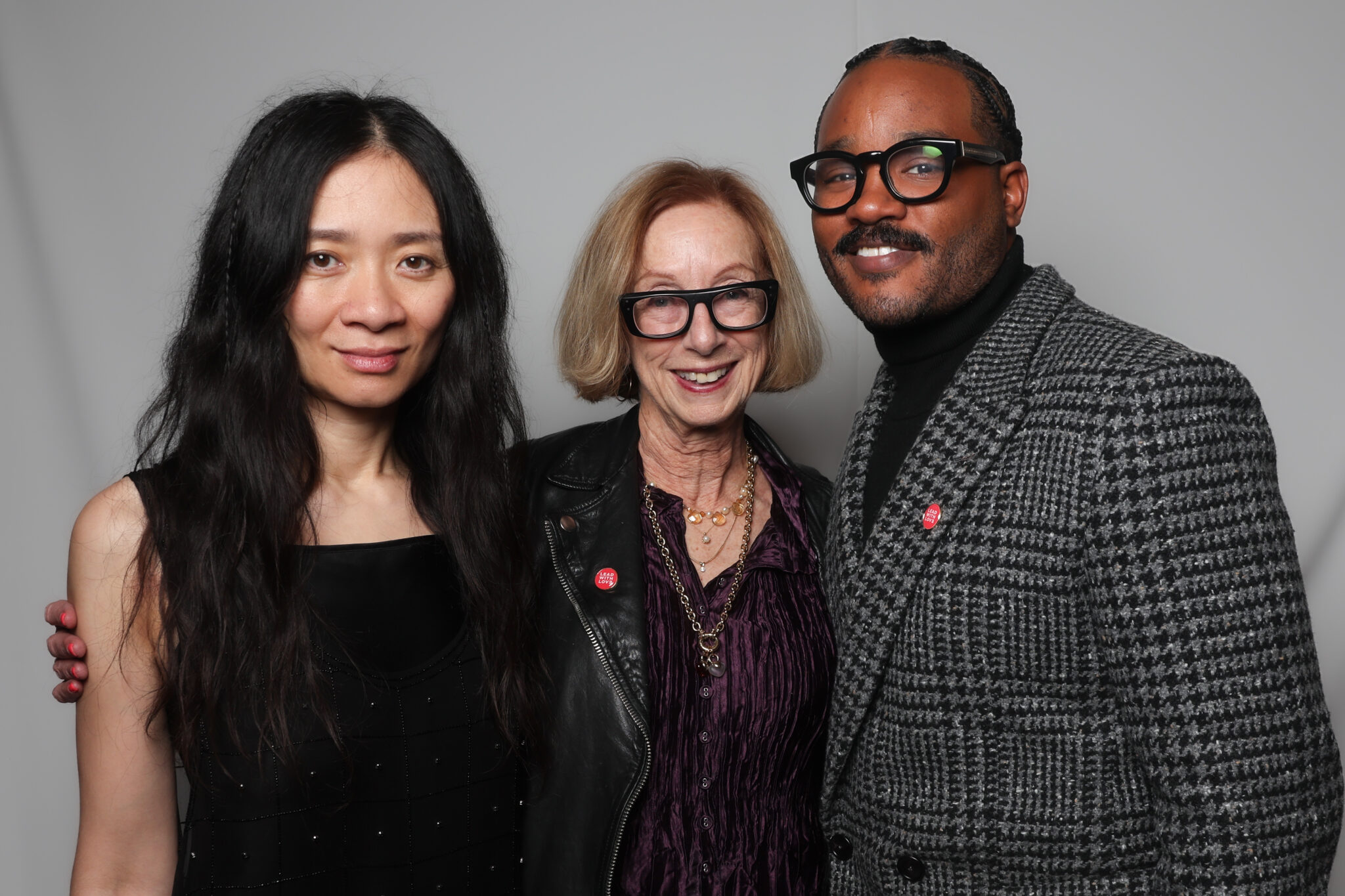
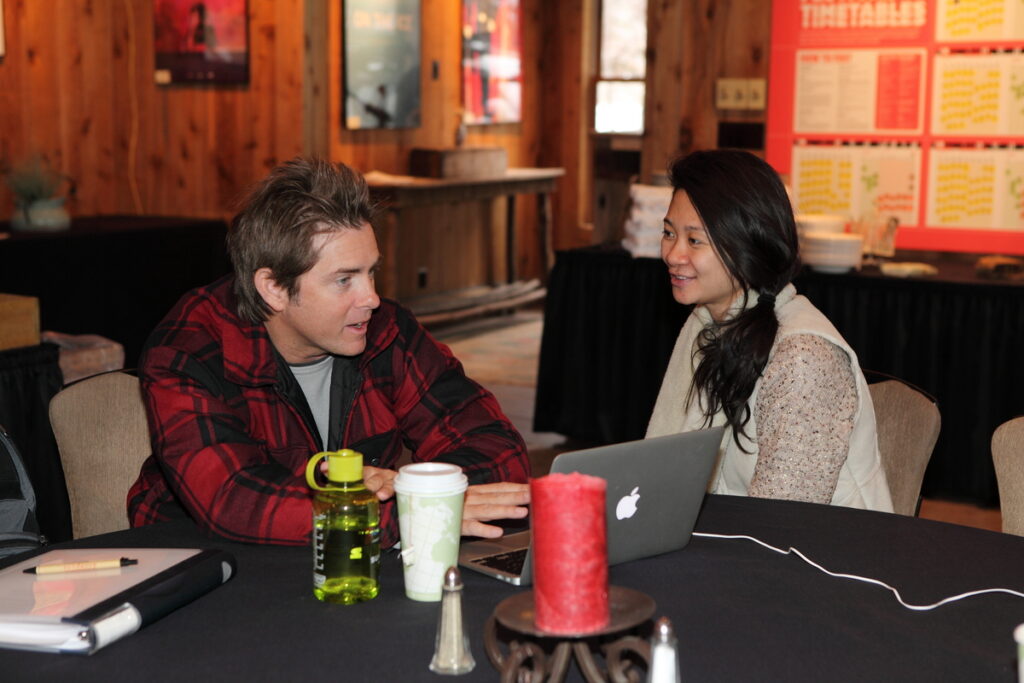
Zhao developed Songs My Brother Taught Me, her first feature film, as a 2012 Screenwriters Lab fellow and participated in the 2012 Directors Lab and Creative Producing Summit.
Zhao, in conversation with Sundance Collab during the Finding Your Way as a Filmmaker Spotlight event in 2020, on identifying with her characters: “I try to live through the people I capture on screen. I try to make sense of who I am through them. I think when I meet interesting people that have an aspect of who they are that they’re struggling with, and it’s a question that I have for myself, I use that opportunity to to tell their story, and as a result, I usually walk away with something that can give me a sense of who I might be in that moment. It is almost like making films is a way for me to figure out who I am.”
Zhao, when asked by Barry Jenkins on the Directors Guild of America’s Director’s Cut podcast why she wanted to make Hamnet: “The first four films I made in my 30s. In my 30s I was very interested in chasing the horizons. I couldn’t stay still. The cameras are always searching, trying to catch anything that was exciting. I didn’t want to miss anything. I was like a treasure hunter. And then, after Eternals, I went through a four-year mid-life crisis — after Nomadland and Eternals back-to-back. In these four years I realized that I’m no longer drawn to the horizon. I became very interested in the underworld. So I’m curious what it’s like to trap myself in one frame and one stage, sitting with myself in silence. And there is nowhere for me to go but to go inward, to descend into myself.”

Zhao, in Vanity Fair’s Notes on a Scene, on using a wide frame when Jessie Buckley (Agnes Shakespeare), took an impromptu swing at Paul Mescal (William Shakespeare) in Hamnet: “In moments like this, when emotions are so charged, the camera will restrain itself from pushing for emotions because the space is like a bomb about to explode, and we actually want to stand back because we want the audience to feel the impact of the shockwave. Because when you go in there, for some reason, it actually does the opposite. So we stayed wide.”
Zhao, in The New York Times, when asked what someone can learn from watching her work: “How to embrace chaos. Hamnet was created that way. For example, when Hamnet died — on that day, Jessie Buckley and I did not talk about the scene. In the morning, she would do fever writing about her dreams and then would pick some music, and as soon as I got to set, I would put the music on repeat so the whole set was harmonized to the vibration she wanted. Other than a conversation about which setup we want to do, we just go in there and do it. When she let out that very guttural scream of grief [in the scene of Hamnet’s death], that was not planned. But I believe it didn’t just come from her; it came from the collective. When that happens, it’s the most exciting thing for me as a director, because there is no way any of us could have thought of that. That is truth happening in the moment.”
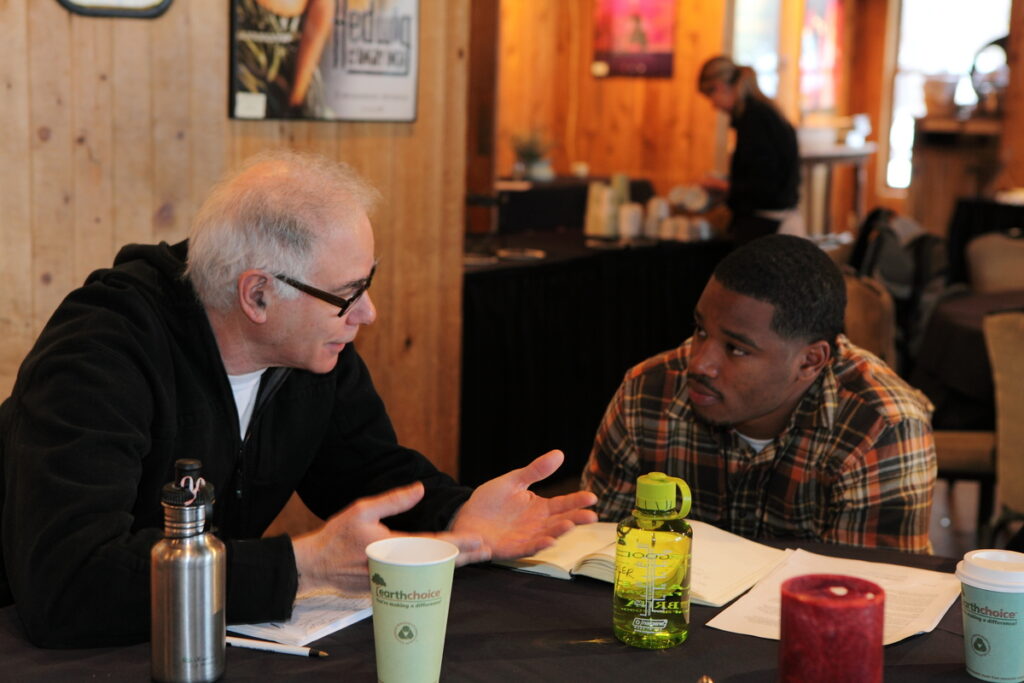
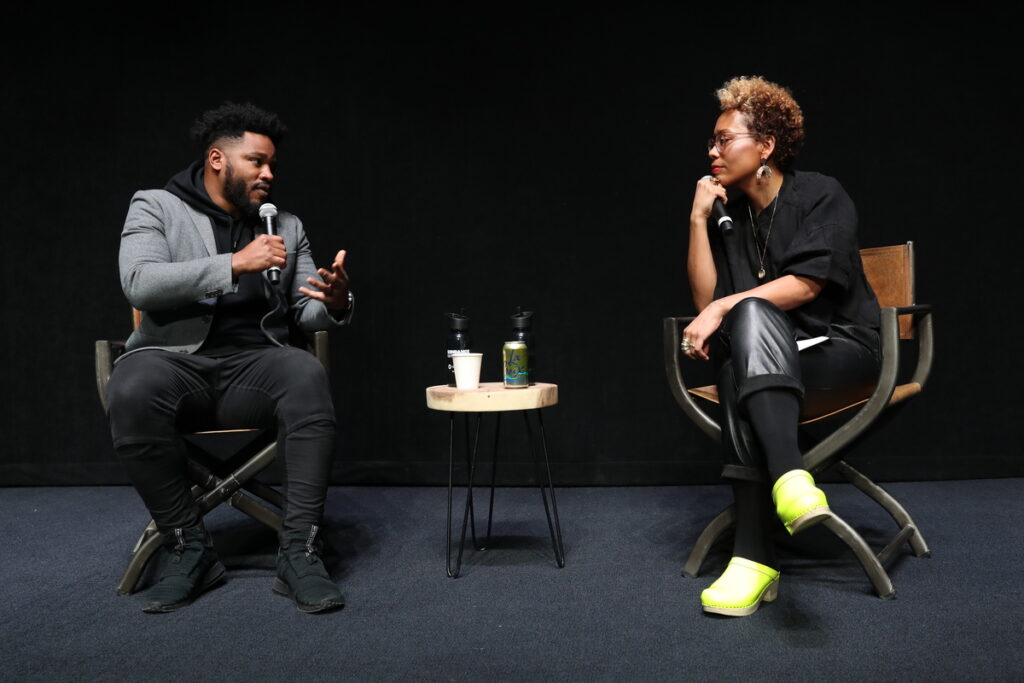
Coogler, during the Sundance Institute Talent Forum, on how he tempered the pressure for Black Panther: Wakanda Forever to be a hit: “I remember the first time I saw the number that we had to make, that the film had to make in order to be considered profitable and I felt physically sick. … But what always calmed me down and helped us keep our focus was like, yo, is this honest? Will the people who this story would affect the most be able to sit through this for a couple hours and feel involved? If I go play this in Oakland or if I go play this in Cape Town, will people feel it? Will people follow what we’re talking about? If it works for them, there is a good chance that it might work for other folks too.”

Coogler, in conversation with LeBron James in Interview magazine, on how his films are large in scope, but feel intimate: “A lot of it comes from being an athlete, bro. That’s what I was before I was a filmmaker. You’re obviously one of the most incredible athletes to ever draw breath, but I didn’t get to those heights. The last time I played was in college. I would have these massive games — for instance we played Cal one year, against Marshawn [Lynch] and DeSean Jackson, and it was 67,000 people in the stands at Berkeley. When they were screaming you could feel your face mask shaking.
“But somehow this game comes down to one or two plays, where the world somehow shrinks, bro. At the same time, it’s still 67,000 people watching. I get goosebumps just thinking about this shit. To me, that’s what filmmaking is. I got the whole movie, but it’s really built up out of microscopic moments. If you squint, it’s built up out of what we call beats. I’m constantly looking at the small things, and then I’m zooming out. You never want to get caught looking at one perspective for too long, because then you play yourself.”
Coogler, in conversation with The Black List’s Franklin Leonard for The Ankler, on how he developed the setting and characters in Sinners: “I was circling blues music and music in general and I had a pretty good idea that my next movie would be rated R and a horror thriller. I was pretty sure about these things. And I was at home listening to music and I heard this song called ‘Wang Dang Doddle’ and it became very clear to me what the movie was going to be. Howlin’ Wolf I’m listening to and he has this really intimidating voice and this kind of presence. You can hear his sighs and his danger whenever he opens up his mouth. And he talking about getting together all of these characters that have all these crazy nicknames and they are going to get together and throw this wildly dangerous party. They are going to destroy the building that they’re in. Like, part of the fun of the party is going to be the danger that everybody is going to be in.
“So I was like, oh if the movie is going to be a bunch of dangerous ne’er-do-wells getting together and throwing a rager — because when you’re out with a bunch of people who can hold their own, you feel oddly safe. It’s a strange thing, like, oh, we’re good here. We’re going to be all right because everyone here can hold their own. And if that gets met with the ultimate danger, I was like, oh that’s the movie.”
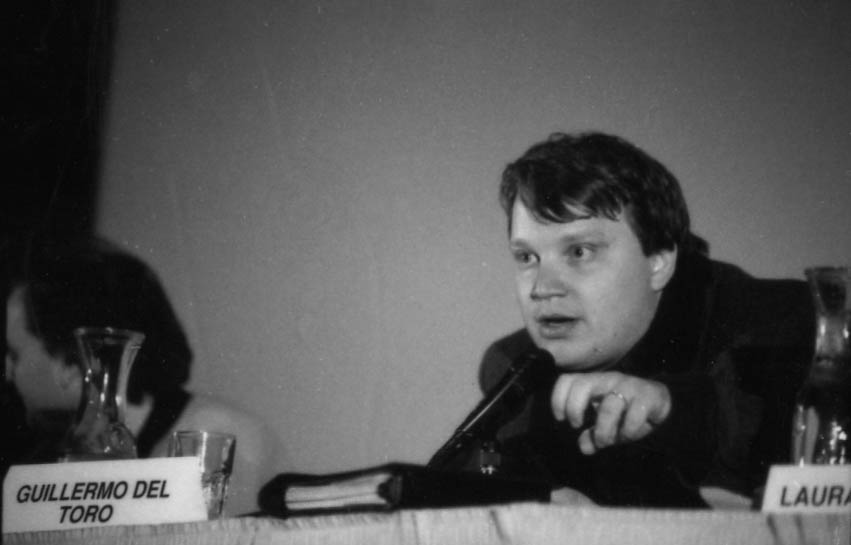
del Toro developed The Devil’s Backbone, his third feature film, in 1993 Guadalajara Mexican Screenwriters Lab.
del Toro, in conversation for Still Watching Netflix: “For me, every part of the process has to be emotion. What do I feel about it because if you feel about an image, then the audience will react to that image emotionally. I try to first think about that before I think of the aesthetics, and then they start informing each other. I’m like a high school kid on a date. I make a playlist. The worst part and also the hard part is the screenplay. So what I do is I put a soundtrack or a piece of baroque music or a romantic composer. When you’re listening to that, you’re listening to emotion. Every image aspires to have music in it, every dialogue has rhythm.”
del Toro, in conversation for Still Watching Netflix, on Oscar Issac, Jacob Elordi, and Mia Goth being the right actors for Frankenstein: “Fifty percent of working with actors is casting them, and I always say — and I mean it — I cast eyes. The eyes of the actor is what makes the character. In order to know that Victor is a genius and he thinks he’s doing good, and he’s driven, you need Oscar’s eyes. In order for the creature to have innocence, you need Jacob’s eyes. In order to understand that she understands the designs of God, you need Mia’s eyes.
“Then what I do is I talk to them and I send them books, I send them six, seven, eight, 10 books that are pertinent to the character. I sent Mia a wardrobe from the 1800s. And then if they want, I send them a biography, and the biography includes everything from their birth to the end of their life. And then, if they want rehearsal — Oscar and Mia, we did a lot of rehearsals. Then what I do, systematically, is as many social dinners as we can. I don’t like the personality of the director, the star. I don’t like mystique. I think mystique is a lie. You have to be a human being that screws up. And then on the day, actors are completely different.”

del Toro, following the Park City Legacy screening of Cronos at the 2026 Sundance Film Festival, on how his childhood influenced Frankenstein: “I was raised Catholic; I was already fucked. The reason syncretism worked for the Spanish conquistadors is because if you look at the Philippines or Mexico, they made the Catholic imagery extra bloody. And we went, ‘I like that.’ Interesting, but it was extra bloody. So you know, the Jesus in my church had an exposed bone in the knee and it was like purple with beatings, and in fact one of the scenes we’re restoring on Frankenstein is we reproduced the Christ in my church as a child. We reproduced it. We went to Guadalajara, photographed it, and reproduced it for a scene. And, for example, the prayer Victor Frankenstein recites to the archangel is a prayer I used to recite to my guardian angel.”
del Toro, following the Park City Legacy screening of Cronos, on how his inner child continues to shape his work: “The idea of Pacific Rim is that in all of us [are] giant robots that we fabricate. I’m a director. I’m not a director; I’m Guillermo. I have fabricated this character to be able to exist in the world. Inside of me controlling this robot is a little child. But he’s afraid. Everybody in this room has that child, and it controls you. When you feel that you’re gonna be abandoned — you cannot be abandoned; you’re over 30. That you are neglected — you cannot be neglected. You walk, you talk, you are able to get a credit card, maybe, you know? All those feelings are that kid. … Childhood for me is not just the state of chronological age, it’s also a state of the soul. So in Frankenstein, Victor is perennially 11, emotionally 11. And we all know guys in their 40s, highly successful, that are 11!”