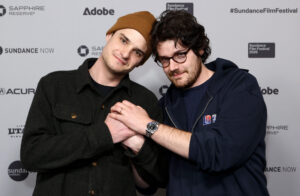




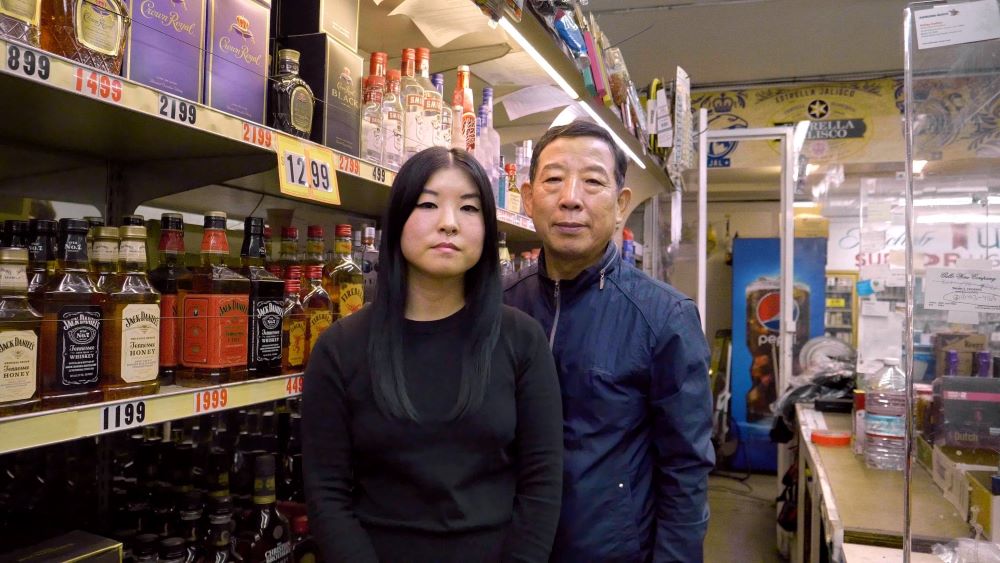
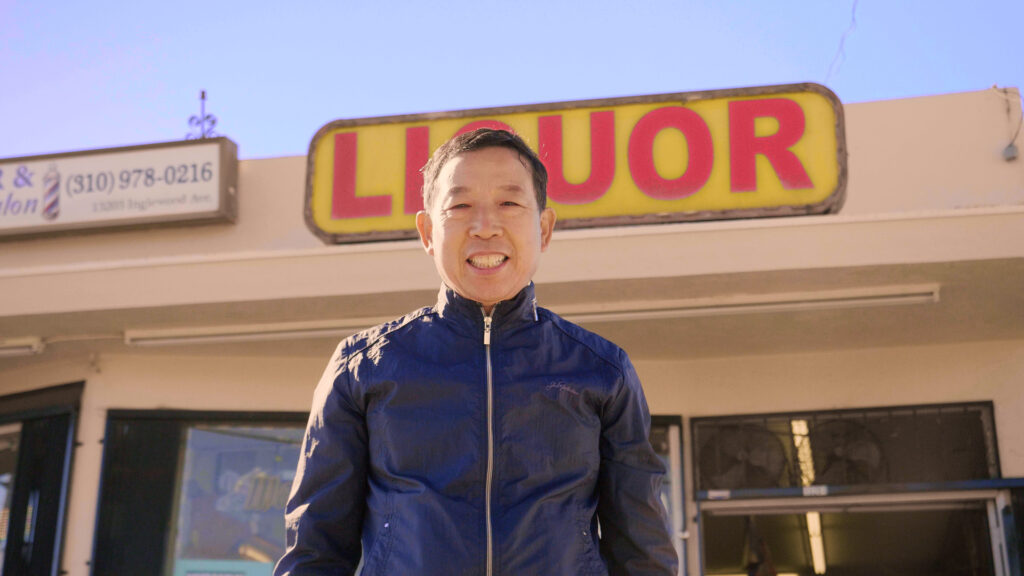
So Yun Um and her father, Hae Sup Um, pose in their Los Angeles liquor store. (Photo courtesy So Yun Um)
By Vanessa Zimmer
Just a few minutes into her documentary Liquor Store Dreams, director So Yun Um confesses: “I am a liquor store baby, and I have big dreams.”
But make no mistake: This is not an entirely personal film. Um has something globally meaningful to say. It’s appropriately similar to Rodney King’s plea during the 1992 Los Angeles riots: Can’t we all just get along? Appropriate, because the LA riots are key to this story, as are tensions between Korean Americans and the Black community.
The documentary centers on So Yun Um, her friend Danny Park, and their families. Um and Park are both liquor store babies — the children of Korean immigrants who bought and ran liquor stores in America, in their case in South LA. They grew up with their parents working incredibly long hours 365 days a year — cooking simple meals in the back room and resting on improvised cots. As teens and young adults, they helped out.
Park gave up a job in Portland, Oregon, doing branding work for Nike — he insists he doesn’t feel like he “sacrificed” his dreams — to return home and run the store once his father died. Blessed with a caring leadership style, he devotes himself to unifying his neighborhood and giving everyone a sense of belonging.
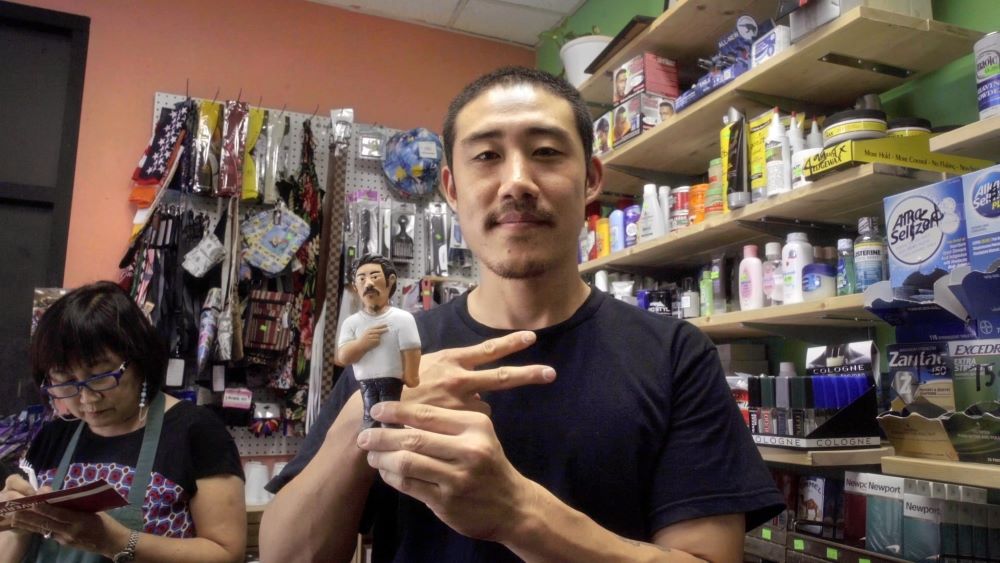
Um attended California State University Long Beach to study film and has set her sights on a career in the industry. She made a short film called Liquor Store Babies for an assignment under an Armed With a Camera Fellowship, and the short was so well-received at film festivals that she resolved to make a feature-length version. The documentary, which received support from a 2021 Sundance Documentary Film Grant, comes to POV on PBS in July.
For Um, the focus is largely on her father, Hae Sup Um, who came to the United States in 1981. He insists life is much better here, despite the long hours. “In America, there’s a chance,” he says in the film. “This country rewards hard work. When the rich eat a hamburger, I can also eat a hamburger. That’s not the case in Korea.”
Making the film opened a new “portal” in the relationship between father and daughter, Um says. They had never talked about immigration before, or racial tensions. The murder of George Floyd in 2020 revived her father’s painful memories of the 1992 Los Angeles riots, when many Korean businesses, including all six of his relatives’, were burned down. He quickly shut down the store after hearing of Floyd’s death and went home, where he watched the fallout on TV. He agitatedly asks as the footage rolls on the TV screen: Why do people steal when someone dies? Koreans don’t protest when Koreans die, he says.
Um argued with her father at the time, but she now understands his point of view more clearly. When he contends that discrimination exists wherever you go, she understands where he’s coming from.
“History repeats itself all the time, and it’s so hard to prevent it, especially if you don’t teach our youth or whoever about history,” she says in a Zoom interview. “But I think for me, the stance that I had to make was, there can be some change … when we think about slavery or civil rights or just us as human beings and human rights, things changed because we fought for them so hard.
“Sure, things might regress back to how things may have been a hundred years ago, but I think that so much of our lives is fighting consistently to maintain everything that we’ve accomplished.”
She has taken her parents along on the film festival circuit as she presents the documentary around the world. Recently, at a festival in San Francisco, a young Korean American woman wept as she thanked them for telling their story.
Um muses: “My dad’s story is mostly the ideal version of what [many Korean Americans’] parents’ story could be, whereas a lot of people come and be like, ‘My parents never got to retire. They actually passed away because they work so much.’”
Um’s mother and father — who couldn’t understand why she would film their “ordinary” lives while she was shooting — are seeing the impact and scope of their daughter’s project.
“I made [Liquor Store Dreams] so people could have a very different perspective than what they’ve learned from the media and really be a little bit more empathetic to their neighbors,” Um says in the interview. “I think in this day and age where … people love canceling people left and right and calling people out … I think there’s such a disconnect that I hope that it hopefully brings people together, that they are a little bit more empathetic — and even on a personal level, I hope it helps people talk to their parents more.”
Throughout the documentary, her parents repeatedly urge her to get married and have children. The other day, her father surprised her by asking, “What’s your next film?” For the record, they still focus on the marriage agenda as well. “Every day,” Um elongates every syllable.
From her earliest days as a filmmaker, Um has had two ambitions: To create change and to represent Korean Americans. Those are constant.
“It’s a lot of responsibility to be a representative of one community,” she concedes. “But I felt, well, why can’t I just tell my story? Because there might be some truth in talking about my own experience.”
And, in answer to her father’s question: Um has been thinking about a narrative film rather than a documentary, perhaps based on her mother’s story, to explore the experience of a Korean American woman in the United States.
“I want to continue telling really challenging and personal stories that represent me as a Korean American filmmaker and a person in America. I feel like that sounds like a lot, but also very simple at the same time.”
Liquor Store Dreams is available to buy and rent on Google Play, Amazon, and iTunes. It will have its broadcast premiere on PBS’ POV on July 10 with Korean subtitles available.