



By Jessica Herndon
The 1990s are back, and the obsession with the era is showing no signs of slowing down. Baby tees and baggy denim have been back in rotation. Pixie cuts and blunt bangs are feeling fresh. Tiny sunglasses have reclaimed their place on our faces, while film cameras, Walkmans, and other analog relics have found new fans in a generation that barely remembers — or wasn’t around for — their first act. Even the decade’s grainy, imperfect visual aesthetic has become something to chase.
But long before ’90s style became mood-board material, filmmakers were capturing the decade as it happened. Throughout the era, films that premiered at the Sundance Film Festival reflected the culture: young people figuring out who they were, counterculture colliding with pop culture, and independent filmmakers experimenting with how those stories could look and sound onscreen.
The result is a collection of films that now double as irresistible time capsules. Think the organic texture of physical film stock, dramatic slow motion, Dutch angles, and the occasional wink straight into the camera. Then there are the clothes — babydoll dresses, chunky boots, and oversize silhouettes — and soundtracks pulsing with new jack swing, alternative and industrial rock, house, shoegaze, and more.
From New Jack City and Reality Bites to Party Girl, Kids, and The Doom Generation, these Fest premieres didn’t just capture the ’90s; many helped define the attitude, style, and visual language of the decade. So whether you lived through the era or discovered it later, consider this your invitation to rewind. No VHS player required.
Clerks (1994 Sundance Film Festival, winner of the Filmmaker Trophy Dramatic)
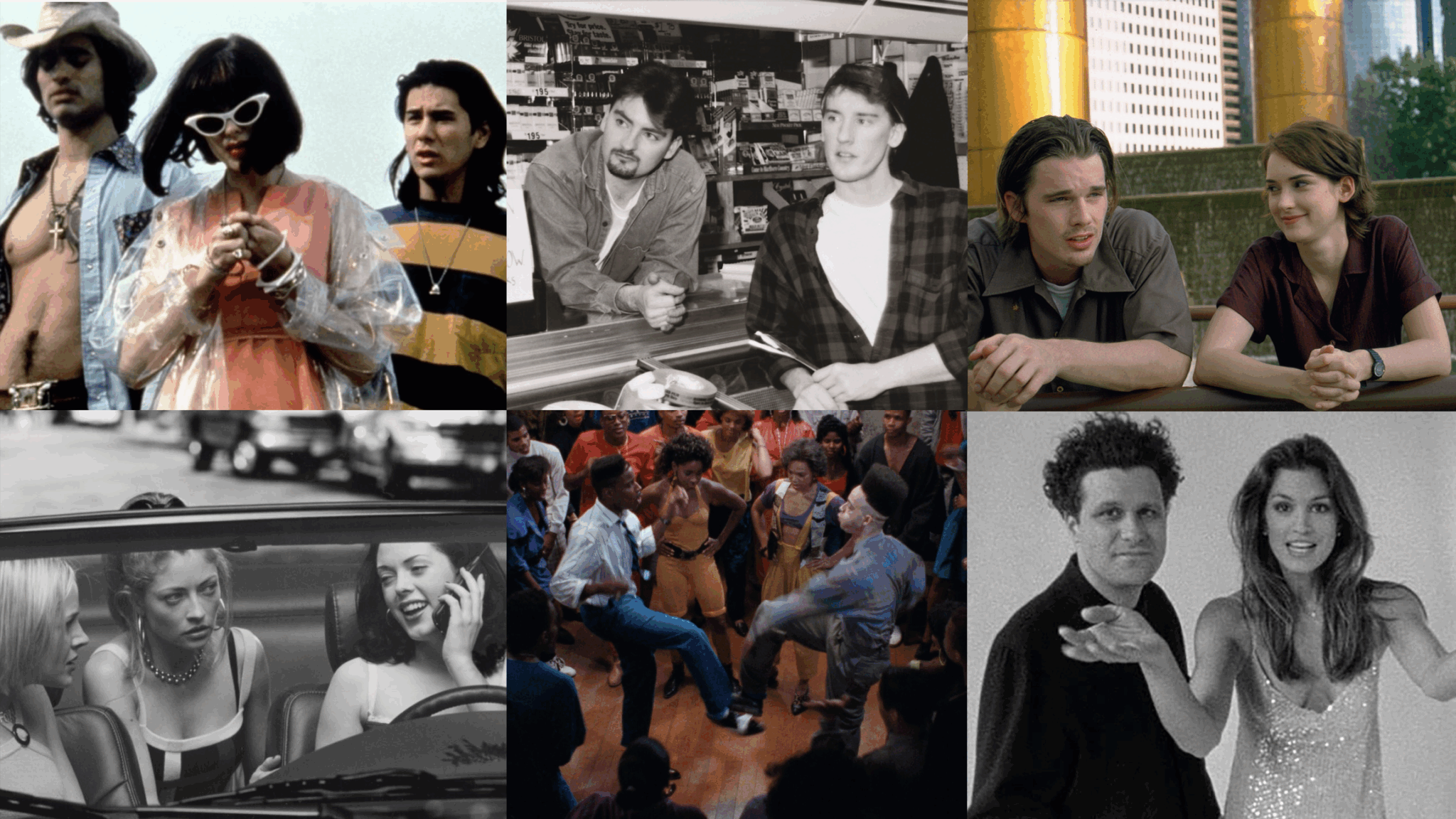
Shot entirely on black-and-white 16mm film, Kevin Smith’s comedy embraces the organic grain of physical film stock, giving the Quick Stop convenience store an appropriately raw look. Brian O’Halloran and Jeff Anderson star as Dante and Randal, two bored New Jersey clerks who spend their shifts dealing with customers, debating relationships, and searching for the philosophical elements of trivial pop culture. Made for less than $30,000 and filmed largely at the convenience store where Smith actually worked, Clerks helped launch Smith’s career. Its raw aesthetic, slacker sensibility, endlessly quotable dialogue, and unapologetic fixation on everyday life made it a defining indie of the decade. Plus, it was proof that a movie didn’t have to look polished to make a cultural mark. Click here for viewing options.
Hav Plenty (1998 Sundance Film Festival)
Written and directed by Christopher Scott Cherot, the romantic comedy stars Cherot as struggling writer Lee Plenty opposite Chenoa Maxwell’s Havilland Savage, the longtime friend he’s secretly in love with. The film also features cameos from Nia Long, Shemar Moore, Mekhi Phifer, Lauryn Hill, and TLC’s Chilli. And the decade’s R&B and soul royalty — from Babyface to Teddy Riley, Faith Evans, SWV, and Erykah Badu — are on the soundtrack. And the fashion is classic ’90s, with women rocking high-rise, relaxed straight-leg jeans and oversize blazers. Together, the music, clothes, and romantic entanglements make Hav Plenty a stylish portrait of Black culture at the end of the decade. Click here for viewing options.
House Party (1990 Sundance Film Festival, winner of the Filmmaker Trophy Dramatic and Excellence in Cinematography Award: Dramatic)
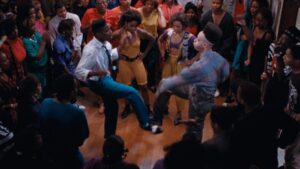
The high-top fades alone would earn House Party a spot on any quintessential ’90s watchlist. Reginald Hudlin’s comedy stars Christopher “Kid” Reid and Christopher “Play” Martin alongside Martin Lawrence, Tisha Campbell, and A.J. Johnson. At the heart of the film is the epic house party, complete with a DJ spinning infectious hip-hop and R&B by artists like LL Cool J and Lisa Lisa and Cult Jam on vinyl while the teens are in clothes in bold colors and geometric prints. And, of course, there’s that iconic dance-off between Kid ’n Play and Campbell and Johnson. The film captured the lives of young Black culture at the dawn of the ’90s, bringing an experience rarely centered in mainstream teen movies to the big screen. It became such a touchstone that it was added to the Library of Congress’ National Film Registry in 2022. Click here for viewing options.
Jawbreaker (1999 Sundance Film Festival)
With its candy-coated colors, sharp fashion, and a sick sense of humor, Jawbreaker put a wicked spin on the ’90s teen movie. Darren Stein’s 1999 dark comedy stars Rose McGowan, Rebecca Gayheart, and Julie Benz as a trio of popular girls whose birthday prank goes terribly wrong, with Judy Greer as the awkward classmate they transform into a glamorous new addition to their clique to keep her quiet. The fashion is a late ’90s extravaganza: capri pants, fitted cardigans, platform shoes, tiny handbags, and monochromatic looks drenched in statement shades of pink, purple, red, and lime green. Stein and costume designer Vikki Barrett pushed the heightened aesthetic beyond realism, creating a candy-colored high school universe that feels part fashion fantasy, part nightmare. Add a soundtrack packed with alternative rock and pop from The Donnas, Imperial Teen, and Shampoo, and it’s easy to understand how this one became a cult classic. Click here for viewing options.
Kids (1995 Sundance Film Festival)
Few films captured the rawness of ’90s youth culture quite like Larry Clark’s Kids, starring Chloë Sevigny, Rosario Dawson, Leo Fitzpatrick, and Justin Pierce. The film follows a group of New York City teenagers over one chaotic day. Clark and cinematographer Eric Edwards gave the film an almost documentary-like immediacy, using handheld camerawork and grainy celluloid imagery to follow the teens through city streets, skate parks, apartments, and house parties. The style feels equally authentic: baggy jeans, baby tees, backward caps, skater gear, and Sevigny’s tousled pixie cut. Released amid the AIDS crisis, the film’s frank depictions of teenage sex, drug use, and HIV made it deeply controversial, but also turned it into one of the decade’s most provocative portraits of adolescence. Click here for viewing options.
New Jack City (1991 Sundance Film Festival)
Wesley Snipes stars as impeccably dressed drug kingpin Nino Brown opposite Ice-T and Judd Nelson, who play cops working to take him down, in Mario Van Peebles’ crime drama set in Harlem during the 1980s crack cocaine epidemic. Van Peebles enhanced the action with dramatic slow motion, Dutch angles, and saturated color, giving the film an unmistakable early ’90s feel. The soundtrack featured a heavy dose of hip-hop, R&B, and new jack swing by artists including Guy, Keith Sweat, and Ice-T. Released as new jack swing was dominating the culture — the soundtrack hit No. 1 on Billboard’s Top R&B/Hip-Hop Albums chart and stayed there for eight weeks — New Jack City reflected the music and attitude of the era. Click here for viewing options.
Party Girl (1995 Sundance Film Festival)
If you want a ticket into New York’s ’90s underground club scene, Party Girl is it. Daisy von Scherler Mayer’s 1995 comedy stars Parker Posey as Mary, a stylish, sassy downtown club kid who throws parties to earn money to pay back her grandmother for bailing her out of jail. Shot on 16mm, the film has the textured look of ’90s indie cinema. Let’s also get into the clothes! Mary is a fashion icon in her own right, stepping out in leopard print, colorful tights, textured fabrics, and tiny sunglasses. And the soundtrack keeps the party going with house music woven throughout, including a scene where Mary vogues alongside real-life downtown party figure Natasha Twist to Cajmere’s “U Got Me Up (Underground Goodie Mix ’93)” featuring Dajae. Click here for viewing options.
Reality Bites (1994 Sundance Film Festival)
Ben Stiller’s feature directorial debut bottled the slacker cool of the ’90s like no other. The film stars Winona Ryder, Ethan Hawke, Janeane Garofalo, Steve Zahn, and Stiller as a group of 20-somethings navigating love, friendship, work, and the nagging question of what exactly they’re supposed to do with their lives after graduating college. The fashion is peak Gen X nonchalance: Ryder’s pixie cut and babydoll and slip dresses; Garofalo’s blunt bangs, Mary Janes, thrift store finds, and plenty of relaxed, lived-in layers that look effortlessly thrown together. That unpolished aesthetic extends to the film itself, as Ryder’s Lelaina documents her friends with a camcorder, giving us grainy, intimate footage. Lisa Loeb’s “Stay (I Missed You),” featured on the soundtrack and became a No. 1 hit on Billboard’s Hot 100 chart, while songs from Juliana Hatfield Three, The Knack, and U2 help give the film its alt-rock vibe. Click here for viewing options.
Relax…It’s Just Sex (1998 Sundance Film Festival)
Relax…It’s Just Sex isn’t shy about letting us in on the conversation. Yes, this film makes use of a classic ’90s technique: breaking the fourth wall. There are also moments featuring black-and-white video interviews with its characters, giving portions of the film a confessional feel. Written and directed by P.J. Castellaneta, the movie follows an eclectic circle of Los Angeles friends portrayed by Jennifer Tilly, Mitchell Anderson, Lori Petty, Cynda Williams, and T.C. Carson. The film’s blunt exploration of sex, love, and friendship among a multiracial group of gay, lesbian, bisexual, and straight friends came at a moment when independent cinema was expanding LGBTQ+ representation and conversations about AIDS. There’s plenty of irreverent humor along the way, but Castellaneta isn’t afraid to shift into much heavier territory.
The Doom Generation (1995 Sundance Film Festival)
Gregg Araki’s The Doom Generation is provocative, sexy, and delectably over the top. Rose McGowan, James Duval, and Johnathon Schaech star as Amy, Jordan, and Xavier, a trio of young outsiders whose increasingly surreal road trip unfolds in a hyperstylized world of saturated colors, skewed camera angles, graphic imagery, and dark humor. The fashion is pure alternative-era cool — tiny sunglasses, baby tees, leather, dark lipstick, and McGowan’s razor-sharp bob and blunt bangs — while the film’s abrasive visual style gives everything a punk, almost comic-book quality. Its soundtrack digs even deeper into the decade’s underground, featuring shoegaze, industrial, and alternative acts, including The Jesus and Mary Chain, Nine Inch Nails, Slowdive, and Cocteau Twins. Part of the New Queer Cinema movement that flourished around the Festival in the ’90s, Araki’s film pushed against conventional ideas about sexuality, identity, and what young people could look and sound like onscreen. Click here for viewing options.
Unzipped (1995 Sundance Film Festival, winner of the Audience Award: Documentary)
Documentary Unzipped wasn’t recreating the ’90s, it was capturing the decade’s fashion world as it was actually happening. Consider it your all-access pass to one of fashion’s most fabulous eras. Directed by Douglas Keeve, the documentary follows designer Isaac Mizrahi as he dreams up his fall 1994 collection, capturing the creative highs, backstage chaos, and personalities of New York fashion in the ’90s. Shot largely in textured black and white, the film offers intimate, fly-on-the-wall access to Mizrahi alongside supermodels Naomi Campbell, Cindy Crawford, Linda Evangelista, Kate Moss, and Christy Turlington. If you’re never seen it, a new 4K restoration of the film returns to U.S. theaters beginning September 25. Sashay, shantay!