



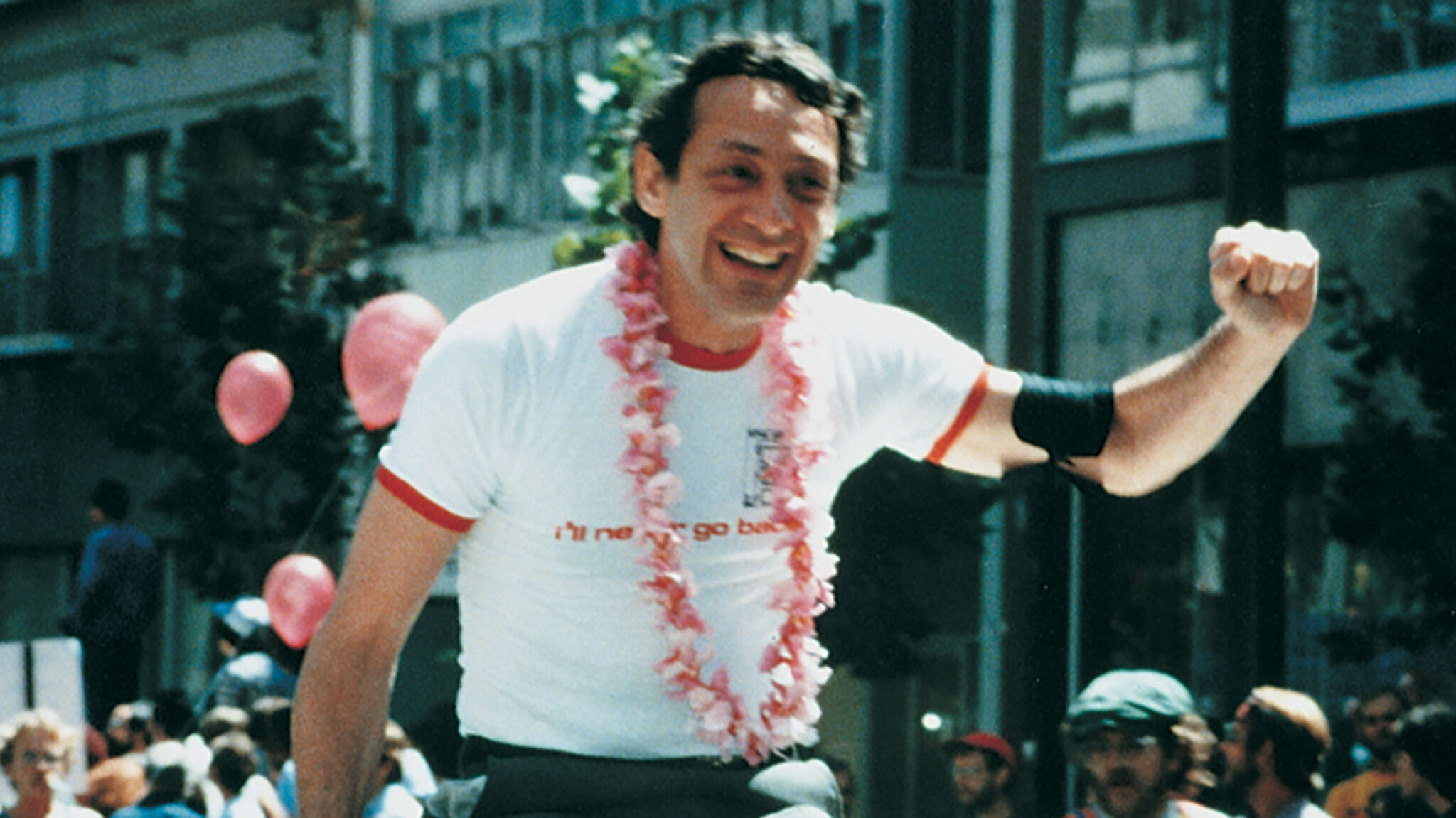
A still from “The Times of Harvey Milk” by Rob Epstein, an official selection of the 40th Edition Celebration Screenings Program at the 2024 Sundance Film Festival. (Courtesy of Sundance Institute)
By Lucy Spicer
On April 24, 1800, the U.S. Library of Congress was founded in conjunction with the government’s move to the new capital city. The library has since grown into one of the largest facilities of its kind in the world, containing many millions of items — including films selected for preservation. Established in 1988, the National Film Registry is a collection of films in the library deemed “culturally, historically, or aesthetically significant” by the National Film Preservation Board and therefore imminently worthy of preservation.
Every year, the general public nominates thousands of film titles they want to see in the registry, and together the National Film Preservation Board and the Librarian of Congress select 25 titles for preservation from the pool of nominees. To commemorate the Library of Congress’s 226th anniversary, we decided to count how many titles from our Sundance Film Festival 101 Watchlist appear on the National Film Registry. The count currently sits at 15 — that’s 15 Sundance Film Festival titles that come highly recommended by Festival programmers, the Librarian of Congress, and a good chunk of the general public. And within that list of 15 are auspicious directorial debuts, lyrical dramas, raucous comedies, authentic coming-of-age stories, and documentaries that capture cultural, social, and political movements of the day.
(And if you expand the count beyond our 101 Watchlist to all Sundance Institute–supported titles, check this out: Of the 173 titles that appear on the registry that were made starting in 1981 — the year the Institute held its first lab — 38 are supported by Sundance Institute. That’s roughly 22%!)
Read on to discover which influential film titles appear on both our programmers’ Sundance Film Festival 101 Watchlist and the National Film Registry.
The Times of Harvey Milk (1985 Sundance Film Festival; winner of a Special Jury Prize Documentary)
Inducted in 2012
Through interviews, archival footage, and news clips, director Rob Epstein’s essential documentary traces Harvey Milk’s career from neighborhood camera shop owner to LGBTQ+ activist to his status as the first openly gay man elected to office in California when he became a member of the San Francisco Board of Supervisors in 1977. The film also documents the assassination of Milk and Mayor George Moscone and how the aftermath affected the community. But evident — and crucial — throughout Epstein’s documentary is Milk’s invincible spirit and message of hope, a message that inspires repeat viewings of this powerful film. The Times of Harvey Milk would go on to win the Academy Award for Best Documentary Feature in 1985. Check here for viewing options.
Hairspray (1988 Sundance Film Festival)
Inducted in 2022
With Hairspray, writer-director John Waters proved that the “Pope of Trash” could crank out a flick for a broader audience and still retain the campy, wacky style that had become part of his artistic signature. Set in Baltimore in 1962, the film follows Tracy Turnblad (Ricki Lake), a “pleasantly plump” teenager whose big dreams, big dance moves, and even bigger hair are a real worry to her anxious mother, Edna (Divine). Tracy’s dance skills and magnetic personality take her all the way to The Corny Collins Show, a popular local TV program. And while her newfound stardom opens doors to romance and adventure, Tracy knows she can have it all and fight for racial integration at the same time. Featuring an ensemble cast also starring Ruth Brown, Jerry Stiller, Debbie Harry, and Sonny Bono, Hairspray has just enough weirdness — like hypnosis, cockroaches, and a bomb-concealing wig — to make it an undeniable Waters creation. The film would go on to be adapted into a stage musical in 2002. Check here for viewing options.
sex, lies, and videotape (1989 Sundance Film Festival; winner of the Audience Award: Dramatic)
Inducted in 2006
It wasn’t just the film that launched writer-director Steven Soderbergh — it was the film that launched what the National Film Registry calls “an independent film renaissance.” A study of human behavior and sexuality as it exists within and outside of relationships, Soderbergh’s debut revolves around a group of individuals in Baton Rouge, all of whom are lying to one another in some way. Successful lawyer John (Peter Gallagher) and his wife, Ann (Andie MacDowell), look happy from the outside, but their relationship isn’t what it seems. The arrival of John’s college friend, Graham (James Spader), shakes things up. He and John don’t relate much anymore, but Ann finds Graham intriguing — especially when she learns the contents of his stacks of video interviews. Check here for viewing options.
House Party (1990 Sundance Film Festival; winner of the Filmmaker Trophy Dramatic and the Excellence in Cinematography Award: Dramatic)
Inducted in 2022
When Play (Christopher “Play” Martin) announces to the high school cafeteria that he’s having a party at his place that night while his parents are out of town, Kid (Christopher “Kid” Reid) knows he just has to be there. The first step is to sneak past his sleeping Pop (Robin Harris), but that’s easier said than done. Once he does get out of the house, Kid encounters various other obstacles — bullies and cops among them — before he makes it to the party, where a dance contest and some pretty girls (played by Tisha Campbell and A.J. Johnson) await. But getting back home? That’s an even wilder adventure. Written and directed by Reginald Hudlin in his feature debut, House Party also stars Paul Anthony, Bow-Legged Lou, and B-Fine of Full Force. Check here for viewing options.
Daughters of the Dust (1991 Sundance Film Festival; winner of the Excellence in Cinematography Award: Dramatic)
Inducted in 2004
Credited as the first feature film directed by an African American woman to receive wide theatrical distribution in the U.S., Julie Dash’s Daughters of the Dust is also the first feature film to focus on the Gullah people. Set in 1902, Dash’s poetic film revolves around three generations of women in the Peazant family, descended from enslaved people and currently living in the South Carolina Sea Islands. The family’s matriarch, Nana Peazant (Cora Lee Day), is determined to remain on the island and preserve their traditional way of life, while others, like Viola (Cheryl Lynn Bruce), have already built a new life in cities elsewhere and are returning to the island for one last visit. Narrated by the spirit of the unborn child who will soon be born to Nana Peazant’s grandson’s wife, Eulah (Alva Rogers), the film’s lyricism is uniquely evocative. Check here for viewing options.
Paris Is Burning (1991 Sundance Film Festival; winner of the Grand Jury Prize: Documentary)
Inducted in 2016
For her directorial debut, Jennie Livingston spent years observing New York City’s ballroom subculture during the 1980s. Through insightful interviews and dynamic footage of ball competitions, Paris Is Burning turns the spotlight on Black and Latino individuals who found power, belonging, and artistic fulfillment among the various competing “Houses” of the time, even as their own birth families often rejected them for being gay men, trans women, or drag queens. But each House had an appointed Mother, creating a vital sense of family, just as the balls created a safe place for self-expression at a time in the U.S. when violence against members of the LGBTQ+ community was on the rise. Check here for viewing options.
El Mariachi (1993 Sundance Film Festival; winner of the Audience Award: Dramatic)
Inducted in 2011
In writer-director Robert Rodriguez’s feature debut, a man in black carrying a black guitar case (Carlos Gallardo) arrives in a Mexican border town with dreams of becoming a musician. Unfortunately for this unnamed Mariachi, the local drug lord, Moco (Peter Marquardt), has ordered the murder of an escaped criminal named Azul (Reinol Martínez) who also happens to be carrying a black guitar case around town — only his is filled with weapons. The two men’s similar descriptions result in action-packed misunderstandings that send the film in directions that defy expected genres. Initially made for just $7,000, El Mariachi — the first installment of what would become the filmmaker’s Mexico Trilogy — was filmed when Rodriguez was on a school break while studying at the University of Texas. Check here for viewing options.
Clerks (1994 Sundance Film Festival; winner of the Filmmaker Trophy Dramatic)
Inducted in 2019
At 23 years old, writer-director Kevin Smith took a shoestring budget, some black-and-white film stock, and a cast and crew largely made up of friends and family to shoot a movie called Clerks at the convenience and video stores where he was employed by day. The plot follows sardonic convenience store clerk Dante Hicks (Brian O’Halloran) as he’s forced to work on his day off. Between visits from his slacker best friend, Randal (Jeff Anderson), fights with his girlfriend, shoplifting drug dealers, and a hockey game on the roof, it’s not exactly a quiet day. Endlessly quotable (“I’m not even supposed to be here today!”), Clerks became an indie classic, spawned sequels, and would go on to rack up the most public votes in the National Film Registry balloting for the year that it was inducted. Check here for viewing options.
Hoop Dreams (1994 Sundance Film Festival; winner of the Audience Award: Documentary)
Inducted in 2005
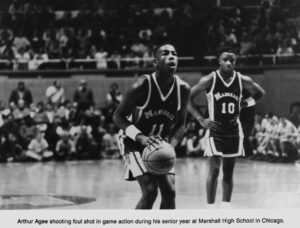
Filmed over five years, this acclaimed documentary directed by Steve James chronicles the high school careers of William Gates and Arthur Agee, two Black Chicago teenagers who are recruited to attend the prestigious St. Joseph High School based on their impressive basketball skills. The film follows the boys and their families as their ambitions to play for the NBA encounter obstacles both on and off the court. Their divergent paths create a snapshot of American life and opportunity, highlighting how issues of education, wealth disparity, and race affect dreams of the future. Hoop Dreams would go on to win a Peabody Award in 1995. Check here for viewing options.
Smoke Signals (1998 Sundance Film Festival; winner of the Filmmaker Trophy Dramatic and the Audience Award: Dramatic)
Inducted in 2018
With a screenplay by Sherman Alexie based on his short story collection The Lone Ranger and Tonto Fistfight in Heaven, this road movie directed by Chris Eyre follows athletic Victor Joseph (Adam Beach) and eccentric Thomas Builds-the-Fire (Evan Adams) as they travel from Idaho to Arizona when they learn that Victor’s estranged father has died in Phoenix. There’s plenty of time for both comedy and introspection about Native American identity and family structure along the way. Considered the first feature-length film to be directed, written, and produced by Native Americans, Smoke Signals is a landmark work supported by Sundance Institute’s 1995 Directors Lab. Check here for viewing options.
Love & Basketball (2000 Sundance Film Festival)
Inducted in 2023
In writer-director Gina Prince-Bythewood’s charismatic coming-of-age debut, Quincy (Omar Epps) and Monica’s (Sanaa Lathan) relationship has its ups and downs, but one thing remains constant: basketball. The two first meet as children on the neighborhood basketball court, bonding over their dedication to the game. As their athletic skills grow throughout the years, so do their romantic feelings for each other — though the course of true love never did run smooth. Things are more complicated by the time they’re adults, but a lot can be settled over a game of one-on-one. Love & Basketball was developed with support from Sundance Institute’s 1998 Directors and Screenwriters Labs. Check here for viewing options.
Memento (2001 Sundance Film Festival; winner of the Waldo Salt Screenwriting Award)
Inducted in 2017
In writer-director Christopher Nolan’s breakout film, the audience knows as much about recent plot events as the protagonist, Leonard Shelby (Guy Pearce) does — which is to say, very little. Leonard has anterograde amnesia and cannot form new memories, but it seems he’s been working on a project, because he’s surrounded himself with notes and photos, not to mention the reminders he’s had tattooed on his person. What he determines is that the injury that caused his memory loss also resulted in the murder of his wife, and apparently he’s on her killer’s trail. Nolan’s nonlinear neo-noir follows Leonard as he repeatedly tries to add pieces to the puzzle before his memory “resets,” and all the while he can’t be sure if the characters he encounters (in memorable performances by Carrie-Anne Moss and Joe Pantoliano) who claim to have met him beforehand are helping or harming him. Check here for viewing options.
Real Women Have Curves (2002 Sundance Film Festival; winner of the Audience Award Dramatic and a Special Jury Prize for Acting for America Ferrera and Lupe Ontiveros)
Inducted in 2019
Ana García (America Ferrera) should feel excited for the future: She’s about to graduate high school, and her teacher thinks she has what it takes to get into Columbia University. But Ana’s mom, Carmen (Lupe Ontiveros), has a different path in mind. She believes Ana should work in the family’s tiny textile factory to help out with their finances. In fact, Carmen’s got a lot of opinions about what Ana should do — like lose weight and save herself for marriage. As a first-generation Mexican American teenager, Ana must reconcile her mother’s strict ideals with her own visions for the future. Director Patricia Cardoso’s feature debut is based on the play of the same name by Josefina López, who co-wrote the screenplay with George LaVoo. Check here for viewing options.
Pariah (2011 Sundance Film Festival; winner of the Excellence in Cinematography Award: U.S. Dramatic)
Inducted in 2022
In writer-director Dee Rees’ lyrical coming-of-age film, 17-year-old Alike (Adepero Oduye) is caught between two worlds. In one, she secretly frequently clubs where she can comfortably embody the butch identity she’s growing into. In the other, she dons a mask of femininity to placate her conservative mother (Kim Wayans) at home. As tensions mount within her family and a new friendship shows signs of blossoming into something more, Alike faces choices that will determine how she approaches the rest of her life. Based on her 2008 Sundance Film Festival short film of the same name, Pariah is Rees’ feature directorial debut and was supported by Sundance Institute’s Directors and Screenwriters Labs. Check here for viewing options.
20 Feet from Stardom (2013 Sundance Film Festival)
Inducted in 2023
Their voices have helped shape popular music for decades — and sometimes they sing the most memorable parts of the songs. But backup vocalists rarely become household names. In director Morgan Neville’s documentary, archival footage and contemporary interviews come together to give these singers their due, putting the spotlight on artists like Darlene Love, Lisa Fischer, Merry Clayton, Judith Hill, and more. Featuring conversations with the singers themselves as well as industry giants like Bruce Springsteen, Mick Jagger, and others, 20 Feet from Stardom is a must-watch for any music lover and won the Academy Award for Best Documentary Feature in 2014. Check here for viewing options.