




By Ramona Flume
One of the most exciting things about the Sundance Film Festival is having a front-row seat for the bright future of independent filmmaking. While we can learn a lot about the filmmakers from the 2026 Sundance Film Festival through the art that these storytellers share with us, there’s always more we can learn about them as people. We decided to get to the bottom of those artistic wells with our ongoing series: Give Me the Backstory!
“Reality,” says director Michał Marczak matter-of-factly when asked about the biggest inspiration behind his latest film. “It keeps reminding me, again and again, that it can be far stranger — and far more compelling — than fiction.” His documentary Closure, which premiered at the 2026 Sundance Film Festival, bears that belief out in a heartrending story about a father’s love and his dogged determination to find his son.
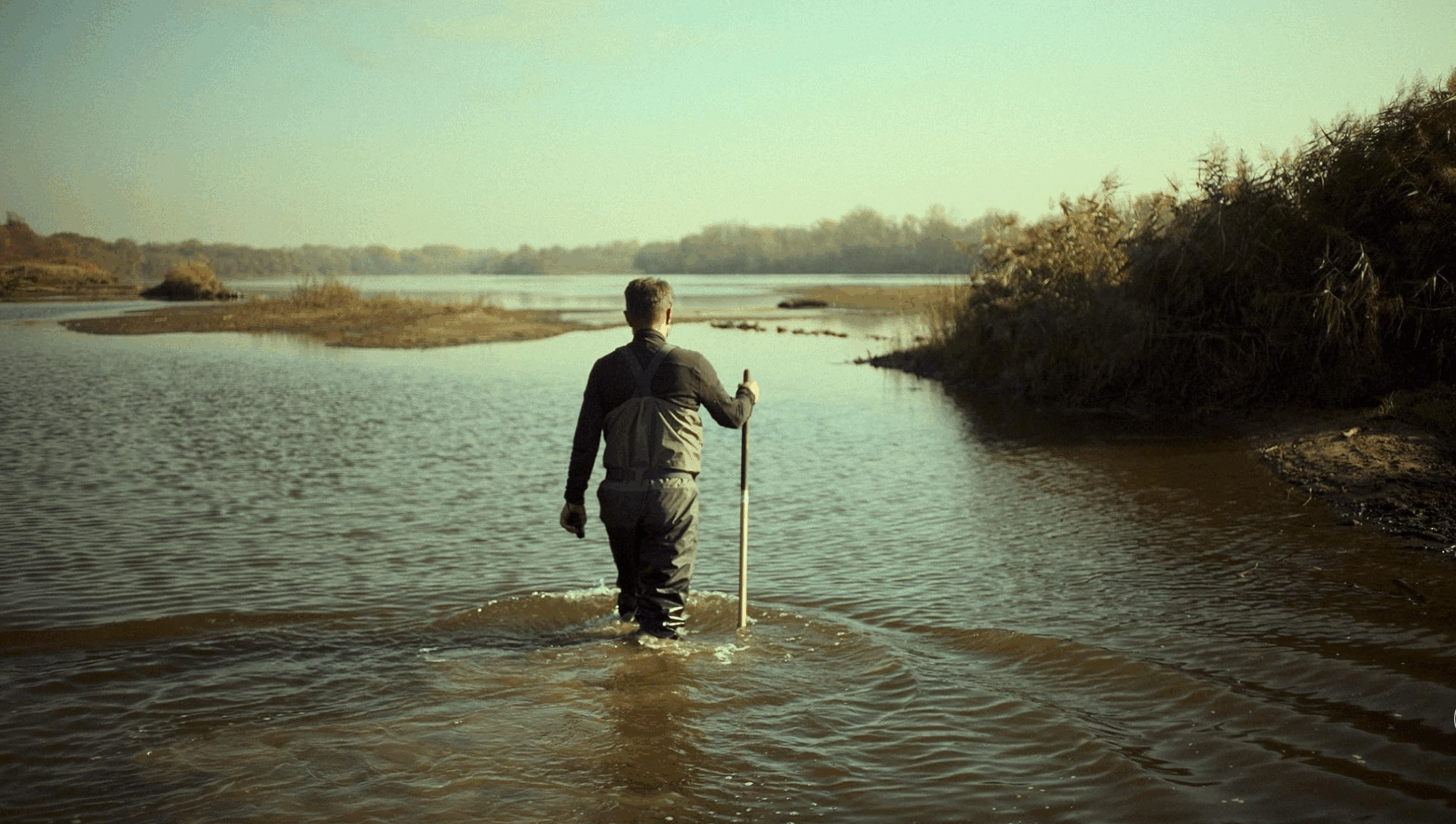
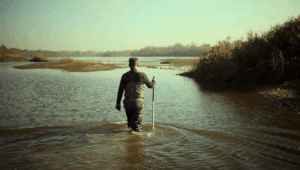
In 2023, 16-year-old Krzysztof Dymiński was last seen standing on a bridge over the Vistula, the longest river in Poland. Closure picks up one year later on that same winding waterway, where Krzysztof’s father, Daniel, continues his search long after the official missing-person investigation has ended. Whatever the hour or weather conditions, he hauls his boat to the Vistula — inspecting every debris pile, operating aerial and underwater cameras, and trudging waist-deep in the muddy banks for any trace of his son. As the film unfolds, his efforts expand to help other families who have lost loved ones of their own — and a private grief becomes a shared search, one that brings hope and connection amid profound loss.
Below, Marczak tells us why losing his own father at a young age made a camera his constant companion, how his son acted as the documentary’s “camera assistant,” and how an unlikely press pass gave him his first entrée to the Festival.
Films are lasting artistic legacies. What do you want yours to say?
I don’t care about legacies. What matters to me is having an impact on someone — just as certain films did when I was a kid. They struck me on a visceral level and allowed me to see the world through a different set of eyes.
Describe who you want this film to reach.
Everyone. I never saw this as a film for a particular group. It will probably move parents the most, but at its core, it’s meant for anyone open to it.
What is something that all filmmakers should keep in mind in order to become better cinematic storytellers?
The page will take anything. A great script or a great concept is important, but it isn’t everything. What truly matters is the magic that happens in front of the lens — and capturing it in the right way. That’s where the real power lies.
Tell us why and how you got into filmmaking.
I was drawn to documentary cinema after my father died when I was 11. Realizing I had almost no videos of him, I began filming my life obsessively, as if the camera could hold on to time for me. It became my constant companion. But very early I understood that pointing a camera at everything isn’t enough. For a scene to truly bring you back, it must be framed with precision, edited with intention. Only then can a single image carry the weight of many moments.
Who are your creative heroes?
Marcel Łoziński, Krzysztof Kieślowski, Werner Herzog, Jim Jarmusch
What was the last thing you saw that you wish you made?
Everything by Sean Baker!
Which of your personal characteristics contributes most to your success as a storyteller?
Curiosity. Attention to detail.
Tell us about your history with Sundance Institute. When was the first time you engaged with us? Why did you want your film to premiere with us?
It’s a wild but true story! At 17 — this was in 2000 — I forged press credentials because there wasn’t a single Polish journalist covering Sundance. Somehow, I ended up with one of the highest-access press passes as Poland’s official representative. Instead of proper interviews, I mostly asked directors for filmmaking advice. The funny twist was that once the actual media in Poland learned there was a “Polish journalist” at Sundance, they started hiring me to write reports.
Who was the first person you told when you learned you got into the Sundance Film Festival?
Maks — my 6-year-old. He was the camera assistant on the film. Charging all the batteries when I came back home from the shoot. For one year our flat became a mixture of a house and a camera rental facility. We had so much gear and Maks took great care of it.