




What was the biggest inspiration behind How to Divorce During the War?
Real events of what was happening in Lithuania when Russia invaded Ukraine. I think Lithuania, as a country that was occupied by Russia for almost 50 years, has a very different perspective on the war in Ukraine. We are so close to the war zone, and we are genuinely afraid for Ukraine, for our own country, and for the idea of Europe.
Tell us an anecdote about casting or working with your actors.
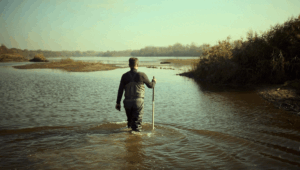
It’s probably not really an anecdote, but rather an interesting story. We had to shoot a “performance protest scene” with half-naked actors covered in blood. We were filming in one of the main squares of the capital city, Vilnius. And of course, it was very cold. I can only imagine how surprising it must have looked to passersby — 20 men covered in blood on a Sunday morning. Some passersby were on their way to church, because the location was right next to one. It was a truly surreal morning in the center of Vilnius.
And one more thing: I really want to thank all the actors again, because they were incredibly brave to do this scene in the freezing cold.
What was your favorite part of making How to Divorce During the War? Memories from the process?
Usually I enjoy writing the most. It was the first time I wrote a screenplay on my own, so it was a bit harder than usual. I also really enjoyed the post-production process. This film is co-produced by four countries, and because of that, I had the opportunity to stay in Prague, Dublin, and Luxembourg working in a very international environment — something I believe always enriches you and gives you a different perspective on both film and life.
What was a big challenge you faced while making How to Divorce During the War?
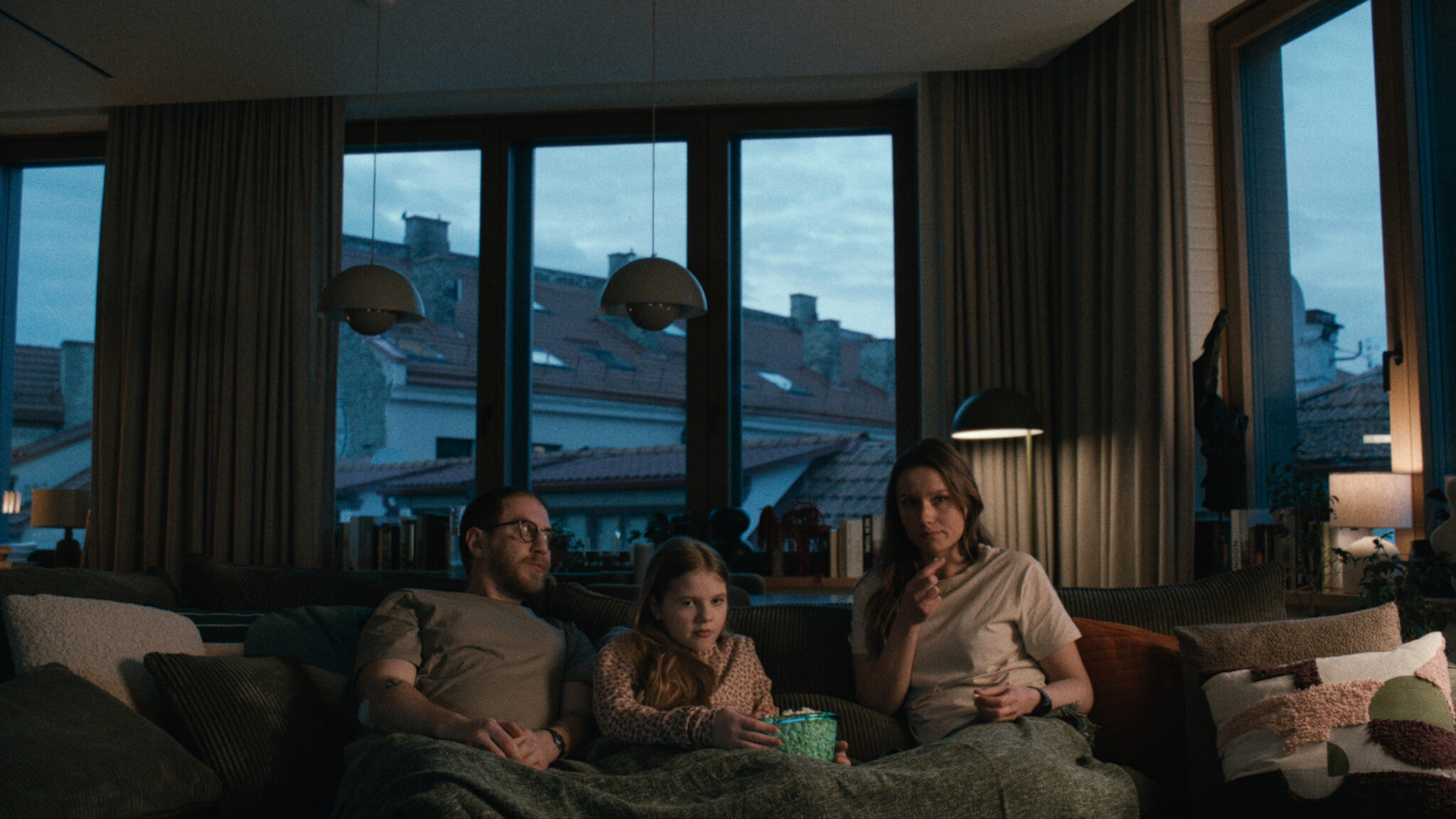
There are always many challenges, from writing and financing a project to having editing disagreements with the editor and producers. But the biggest challenge was shooting long takes with a lot of dialogue and difficult acting. The actors had to do really demanding things because those scenes depended entirely on their performance. The editing within the shot was essentially done through their acting. The rhythm of the scene and even the composition of the frame were a big part of their responsibility.
Why does this story need to be told now?
I think Russia’s invasion of the independent country of Ukraine is extremely dangerous for the whole of Western civilization. I believe that if the Russian regime succeeds in this war, it could attack other European countries. It’s very important not to forget that war can change the lives not only of people living in Russia’s neighboring countries, but also of those in large and wealthy European nations. I’m afraid that our comfortable lives and everyday small problems can start to feel more important than a war in which people are dying.
Tell us why and how you got into filmmaking.
I have always loved films and storytelling. From an early age, I really enjoyed sharing stories with others. My older sister still says that I used to tell her what kind of story she should retell before going to sleep. I don’t know exactly why I love it so much. Maybe I need some good therapy to understand why it is so important to me.
Why is filmmaking important to you? Why is it important to the world?
Film is a very powerful medium. I believe that telling stories can change at least some people’s perspectives on life. I don’t believe we can change the whole world, but I do believe that films can change the world of one person — someone who may later have a significant impact on others. It’s important to question the reality we live in, if only to make it better. It’s also important to push the audience out of their comfort zone. Films have changed me and my perspective on the world, so they can change someone else’s as well.
What is something that all filmmakers should keep in mind in order to become better cinematic storytellers?
Banal truth. Try to be sincere. If you try to tackle a trendy subject without being an expert in the field, you will probably fail. Sincerity, I think, is necessary to tell an authentic and interesting story. You also need to be patient and work hard.
Who are your creative heroes?
At different stages of my life, I’ve had different heroes. Kafka has always been a constant for me since I was 16. I also love Paul Thomas Anderson and the Coen brothers. I appreciate that their films are quite different from one another. I don’t like it when a director’s style is repeated from one film to the next.
What was the last thing you saw that you wish you made?
A lot, but the main ones are The Zone of Interest (Jonathan Glazer), Sorry, Baby (Eva Victor), Showing Up (Kelly Reichardt).
One thing people don’t know about me is _____.
Once, I managed to name 48 out of 50 states. And I love Home Alone.
Which of your personal characteristics contributes most to your success as a storyteller?
Patience and a willingness to collaborate on every level of [the] filmmaking process.
Tell us about your history with Sundance Institute. When was the first time you engaged with us? Why did you want your film to premiere with us?
Sundance is one of the top film festivals in the world. It is a privilege and an honor to be selected. So many films are made and submitted to the Festival that getting in is extremely difficult — almost like winning the lottery. Sundance has launched the careers of many prominent filmmakers. I know all of this sounds cliché, but it’s true.
Who was the first person you told when you learned you got into the Sundance Film Festival?
My partner. She was driving at the time, which made it quite dangerous because she got very excited.
What’s your favorite film that has come from the Sundance Institute or Festival?
Impossible to answer, but from very recent ones: Sorry, Baby; Slow; Whiplash; 20 Days in Mariupol; Never Rarely Sometimes Always.