

What was your favorite part of making Bunnylovr? Memories from the process?
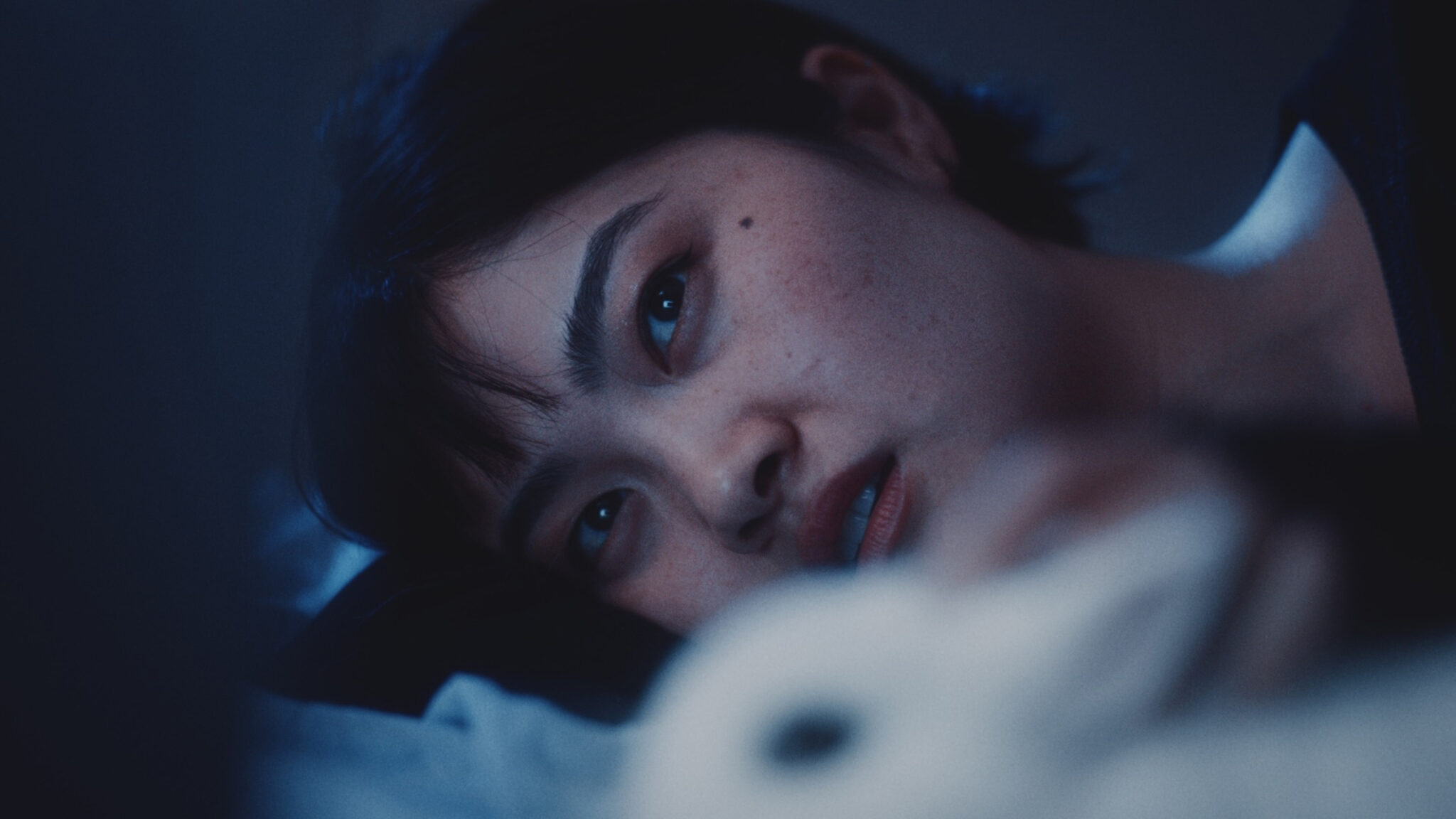
This whole experience was beyond a dream come true, but in particular, production itself felt really special. I was a little nervous because this was my first feature and I wasn’t sure if I would have the stamina to make it through. But I had such a generous, supportive, professional cast and crew who made every single day on set a joy. I remember telling my producers how afraid I was that the shoot wasn’t going well because of how seamless it felt and because I was having too much fun.
Describe who you want this film to reach.
Any lonely person who has sought connection online. Anyone who has or had a difficult relationship with one of their parents. Anyone who identifies as a secret freak. I also hope the film reaches young, Asian American women who have not seen themselves represented this way onscreen before.
Films are lasting artistic legacies. What do you want yours to say?
I want mine to say that vulnerability is strength, friendship — particularly female friendship — is essential and transformative. And that it’s ok to be messy, to feel deeply, and to seek connection.
What was a big challenge you faced while making Bunnylovr?
Working with a bunny proved to be more challenging than I imagined. Our second day on set, the bunny ran away and hid under the kitchen sink. We had to basically dismantle the entire kitchen to retrieve her. I remember pacing around the block just praying that the bunny was ok. Thankfully, she was completely unscathed, but we lost half the day. After that, the bunny and I locked in and it was smooth sailing.
Why does this story need to be told now?
I feel really lucky to be part of a generation of new Asian American filmmakers who are being given the opportunity to tell nuanced, authentic stories about Asian American characters that are not entirely predicated on their being Asian.
Tell us why and how you got into filmmaking.
I’ve always loved movies and I studied acting at NYU. During my junior year, I started auditioning professionally but wasn’t gaining much traction and the majority of the material I was auditioning for didn’t resonate with me. I had a bunch of friends in the film program who encouraged me to write, direct, and act in my own films. With their help, I wrote, co-directed, and acted in my first short — and just kept going from there.
Why is filmmaking important to you? Why is it important to the world?
It’s a way of living a thousand lifetimes in one lifetime. It’s an unparalleled tool for connection. It’s entertainment and education and art and so so so much more.
If you weren’t a filmmaker, what would you be doing?
I would be a homesteader or photographer.
What is something that all filmmakers should keep in mind in order to become better cinematic storytellers?
To always trust your instincts.
Who are your creative heroes?
Andrea Arnold, FKA Twigs, [Hirokazu] Kore-Eda, my brilliant and talented friends who also make movies.
What was the last thing you saw that you wish you made?
Werner Herzog’s Nosferatu the Vampyre.
One thing people don’t know about me is _____.
I’m a freelance video editor when I’m not writing/directing/acting.
Which of your personal characteristics contributes most to your success as a storyteller?
I think I have a pretty overactive imagination and I’m a highly sensitive person, which contributes to my ability to tell stories.
Tell us about your history with Sundance Institute. When was the first time you engaged with us? Why did you want your film to premiere with us?
The first time I engaged with Sundance was when I submitted the first short I wrote, directed, and starred in to Sundance Ignite. It didn’t get in, but now I get to premiere my first feature at Sundance, which I think more than makes up for it! Sundance was always the dream premiere for this film because of the Institute’s dedication to championing independent films and new filmmakers like myself.
What’s your favorite film that has come from the Sundance Institute or Festival?
It’s a tossup between Thirteen or Beach Rats, a big reference for Bunnylovr. But I feel like there are so many brilliant movies that have come from the Festival that I didn’t even realize had been a part of it.