



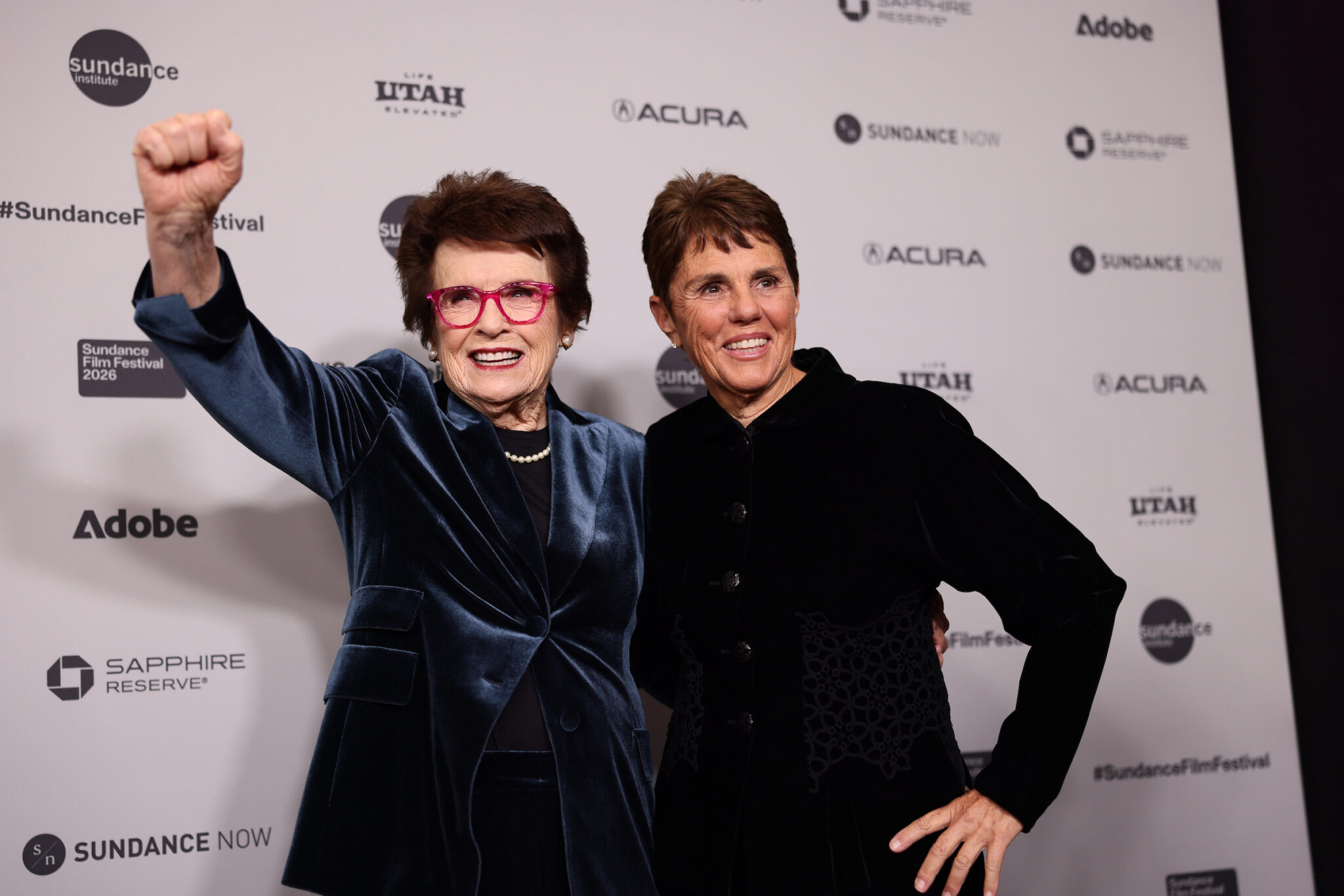
Billie Jean King and Ilana Kloss attend the premiere of Give Me the Ball! by Liz Garbus and Elizabeth Wolff, an official selection of the 2026 Sundance Film Festival. (© 2026 Sundance Institute | photo by Jemal Countess)
By Ramona Flume
“This film you’re about to see is an extraordinary documentary about a competitor, a world-champion tennis player, a social justice pioneer, a trailblazer, an icon… and one of the co-owners of the World Series champions, the Los Angeles Dodgers,” the Sundance Film Festival’s director of programming Kim Yutani says with a sly grin. “Sorry, I just had to get that in there.”
She’s speaking about Billie Jean King, of course, to a lively, sold-out crowd of fans that can’t contain their excitement for this icon’s definitive retrospective.
King’s quest to be the best — and to obtain the best for women — has been the work of a lifetime. And Give Me the Ball!, the documentary from directors Liz Garbus and Elizabeth Wolff, screening January 26 at the Eccles Theatre as part of the Sundance Film Festival’s Premieres section, does King a great honor — highlighting both her career and personal achievements, from Wimbledon to women’s rights, with a fun, fast-paced biopic filled with incredibly rare archival footage.
Co-director Garbus starts her introduction by expressing the indelible mark the Sundance Film Festival has made on her career and suggesting that Robert Redford shares the same DNA as Billie Jean King. “Bob Redford could have just starred in and directed movies and made lots of money. But what he did was he gave back to a community … and he created the careers of Ryan Coogler and Chloé Zhao and the folks in this room,” she says to thunderous cheers from the audience. “It wasn’t about self. It was about others.”
“Billie Jean King could have a lot more trophies on her wall, too. But for her it was always about the community. It was about holding hands.” In King’s life, she says, we see the life of an American hero — and it’s the kind of collaborative, “work from the bottom up” hero that we need today.
When co-director Wolff was making this film (her first at the Festival), she kept asking herself “What would Billie do?” “I found that when I followed her example, I felt braver, I felt more connected to the world, and more aware of my responsibility in it. And it is our hope that this film has the same effect on you.”
The tirelessly spunky Southern Californian has worked hard to be a representative for others — and we’re all better off because of it. She likes to say “Pressure is a privilege” — but she knows more than anyone that pressure doesn’t come without a price. The documentary sheds light on the private side of her struggles: having to remain closeted in the ‘60s and ‘70s, being outed against her will in 1981, losing all of her endorsement deals, and channeling her inner turmoil throughout the years with a hidden eating disorder.
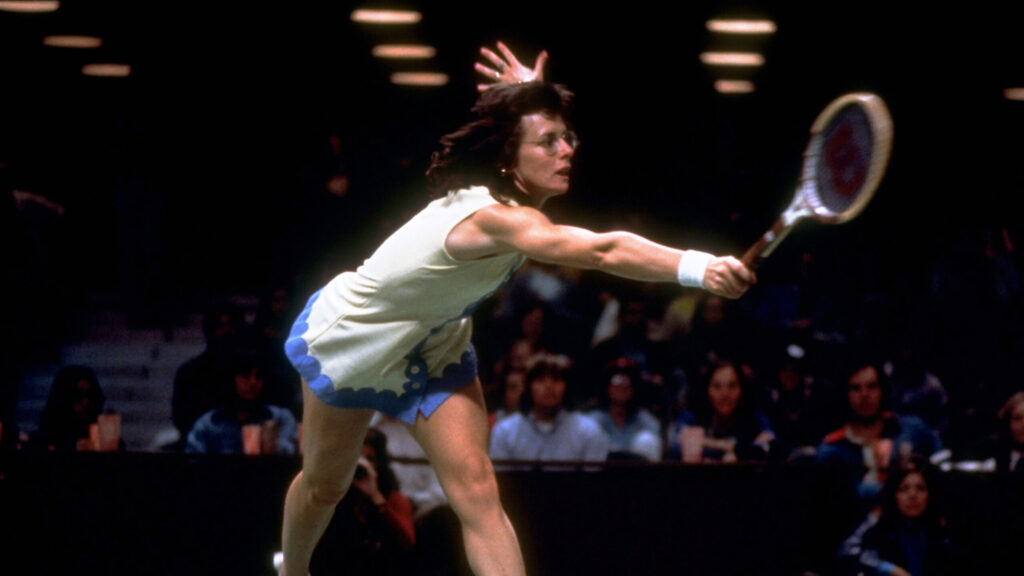
The directors chose to frame the film around 1973, a year of several significant events for King, including the infamous “Battle of the Sexes” match against Bobby Riggs. That was really just the beginning, though. “That was the platform she earned to change hearts and minds,” Wolff says, using the majority of the film to expound on King’s all-important work regarding equal rights and pay for women and LGBTQ+ issues.
King’s exterior might not appear controversial. Her look at the Eccles Theatre, in fact, (rocking a navy blue crushed velvet suit with hot-pink framed glasses) reads like a hip aunty or edgy librarian. But the legendary feminist advocate has become a lightning rod over the years, from hot-button issues like abortion to equal pay, making her life story just as interesting off the court.
Today, thanks to the groundbreaking efforts of King and her contemporaries, women’s place in society has evolved and some of the highest-paid athletes in the world are female tennis players. And King is continuing to live her dream: helping women and minorities in sports be accepted — and celebrated — all around the world. “I always tell people, know your history — because that’s how you shape the future. History repeats itself and it’s up to the new generations to fight it,” King says.
King’s excitement for the future is palpable. “I graduate in May!”, the 82-year-old says when someone asks about the history degree she’s currently pursuing at California State University. She stomps her feet and clasps her hands, throwing her head back with glee. “I’m just so excited. Always learning. That’s how we stay young.”
She’s adamant that she’ll never stop learning — or trying to take action. She recently spoke to two men’s prisons and is floored by our country’s dismal institutional statistics. She calls out another film from this year’s Festival, Dawn Porter’s When a Witness Recants, which she is going to see premiere the following day. “When 16-year-olds go to prison for years and years, there is something wrong with us. And these three guys were innocent. I’m sorry, we have to do something.”
“When we started making this film, it was less relevant than it is today,” Garbus says. “We’re handing this torch to the next generation and all of us are going to carry it. We’re going to work hard. We’re going to hold each other’s hands, and not let go.”
“We have to keep pushing and pushing and pushing to make the world a better place,” King says. “For everyone.”
The Festival moderator had to jump in for time, or else the tennis legend would have been happy to keep sounding off on all of her past and present passions. She cheerily got to her feet, however, capping the Q&A by lobbing several tennis balls into the ecstatic audience, who were scrambling over their seats, and each other, in order to catch one. As King raised her racket and squinted up at the house lights toward the balcony, screams of “Give me the ball!” echoed through the theater.