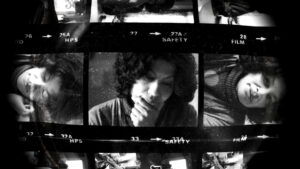





(L–R) Rafael Manuel and Isabel Sicat attend the “Filipiñana” premiere during the 2026 Sundance Film Festival at The Ray Theatre on January 23, 2026, in Park City, Utah. (Photo by Arturo Holmes/Getty Images for Sundance Film Festival)
By Lucy Spicer
On a sweltering summer’s day in the Philippines, it’s too hot to move quickly. Wiser to adopt a slow, measured pace — and maybe break up the day with a nap or two. This creeping energy is what fuels Filipiñana, the feature debut from Rafael Manuel based on his short film of the same name. Premiering at The Ray Theatre on January 23 as part of the 2026 Sundance Film Festival’s World Cinema Dramatic Competition, Filipiñana takes place over one day on the golf course of a sprawling country club in Manila. The setting is crucial — the golf course practically becomes a character in its own right.
“Golf in the Philippines has a very special relationship I think,” says Manuel during the film’s post-premiere Q&A. “The first golf courses in the Philippines were actually on American military bases, so there’s very much a colonial aspect to it. And then when the Americans left, the ruling elite kind of took over the golf courses and made them their spaces. So these are very much spaces of power, and that was only exacerbated during COVID, because golf was the only sport that was allowed. So the sport grew immensely during COVID, and it’s really popular in the Philippines. So for me, it just made so much sense as a metaphor for my country.”
The course is a space where the haves and have-nots are clearly separated. Uniformed women work as caddies for wealthy patrons and Chinese tourists. Even younger ladies — in different uniforms — act as tee girls at the driving range so that golfers don’t have to waste time placing new balls on tees. One of these tee girls is 17-year-old Isabel (Jorrybell Agoto). She’s new, so she’s still learning the ropes, like where on the course is off-limits and what to do when a less-than-gifted golfer hits you with a ball. When Isabel meets the club’s president, the enigmatic Dr. Palanca (Teroy Guzman), she finds herself drawn to him. Her quest to learn more about Dr. Palanca gradually takes her across the expanse of the country club, and along the way she commits small, personal acts of rebellion, like stealing a miniscule taste of an untouched cake lingering on a table that guests have abandoned.
For Manuel, these small instances of rebellion are powerful. “I think when we’re faced with the state of the world today, and how it’s very easy to be overwhelmed by it and be pessimistic and to fall into this trap of inaction, I hope that just like Isabel in the film, we all remember that no matter how small, even the tiniest of actions have the power to create something new,” says the filmmaker in his introduction to the screening.
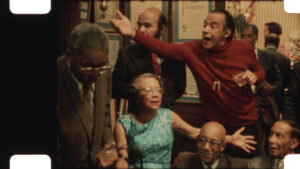
Isabel was born into a social class that makes up 70% of the Philippines, and vertical mobility is very limited, explains Manuel during the Q&A. This context amplifies the satirical nature of many background goings-on in the film. A band made of blind musicians is on hand to entertain guests, for example. Guests are also treated to a bizarre karaoke performance by the club president at one point.
A static camera and meticulous framing throughout Isabel’s wanderings suggest an eerie rigidity reflective of the rules of social standing. “There’s this structure and this system that’s in place,” says cinematographer Xenia Patricia during the post-premiere discussion. “And we really wanted to feel that through the precise camera movement. Like everyone has to have or should be in their place in that structure.”
But irrespective of class or social standing, every body — whether it belongs to a rich businessman or a lowly club employee — looks as still as death when it’s napping in the heat. A slow pace and overall quiet environment render the end of the film all the more shocking as Isabel recognizes unsavory connections that keep the club running as usual, with everyone in their proper place.
“Golf is not a fast game,” notes Manuel. “I think that what we wanted to do as well was build a very quiet world, and this quiet world that we wanted to build is almost like a church. And so the little things that Isabel does, they send ripples around the world. So when you set the ceiling of the volume or the pace low, then small reactions stand out more.”