



By Bailey Pennick
One of the most exciting things about the Sundance Film Festival is having a front-row seat for the bright future of independent filmmaking. While we can learn a lot about the filmmakers from the 2026 Sundance Film Festival through the art that these storytellers share with us, there’s always more we can learn about them as people. We decided to get to the bottom of those artistic wells with our ongoing series: Give Me the Backstory!
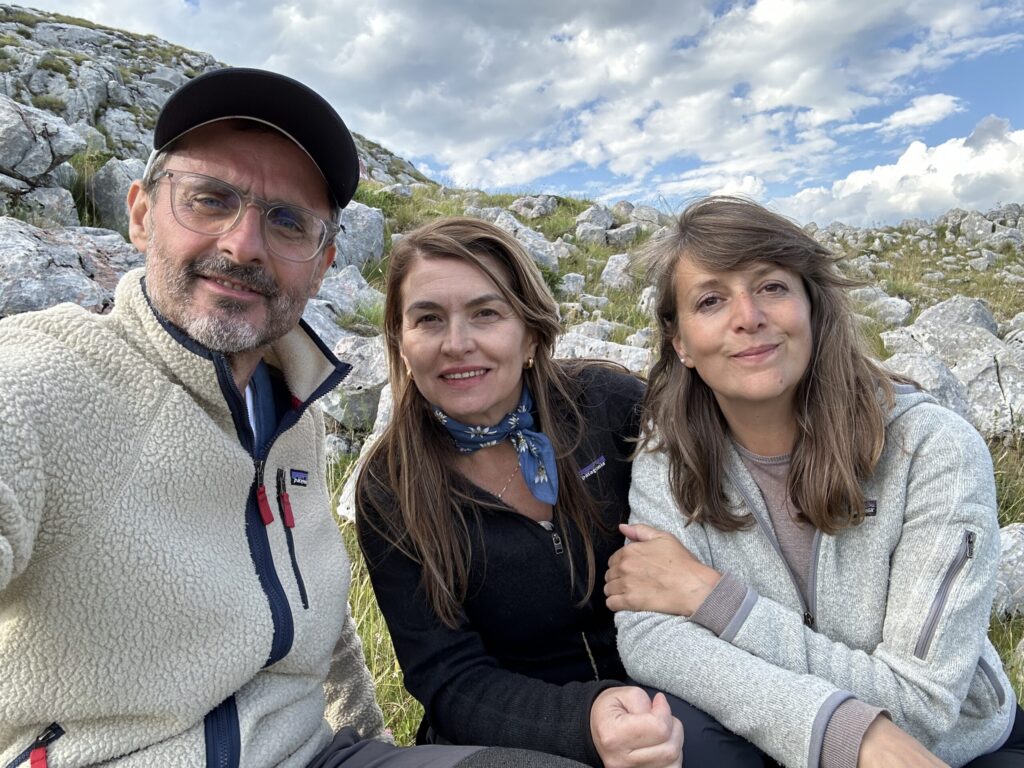
“Film, visual art, and literature have fascinated me since boyhood,” says Petar Glomazić when asked about how he first got into filmmaking. Glomazić is one half of the directing duo of To Hold a Mountain, a brand-new documentary premiering in the World Cinema Documentary Competition section of the 2026 Sundance Film Festival. The first-time filmmaker continues, “However, at one point, my dream of space exploration and flight took precedence, so I devoted myself to studying aerospace engineering and eventually built a career in aviation. When I met Biljana, my passion for storytelling and film finally took flight — and became a real possibility. Biljana opened the doors to the world of filmmaking in every sense. One day, I mentioned a story about Sinjajevina, and she said, ‘Then film it. Make a movie.’ That’s how it all began.”
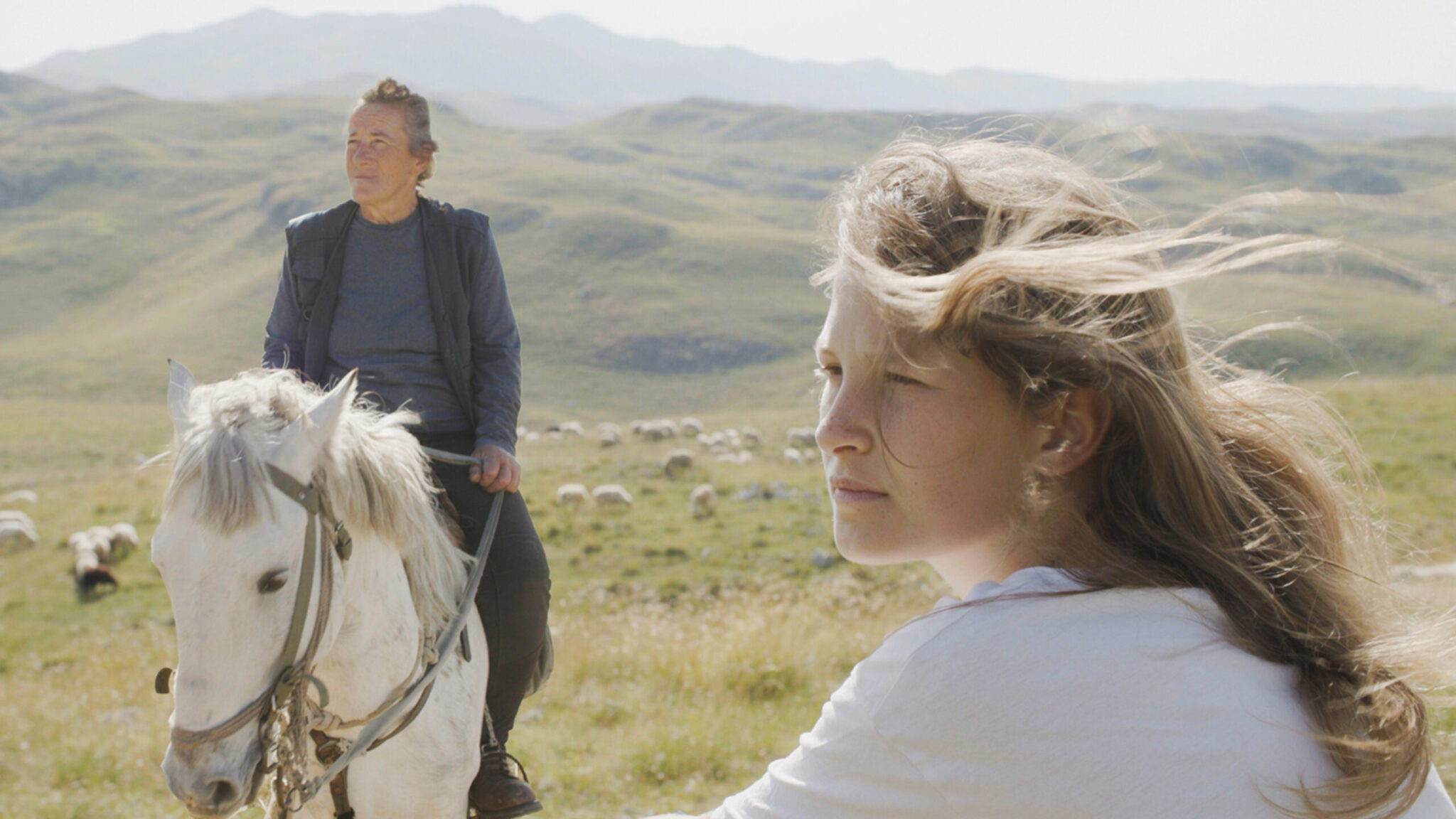
Thankfully Biljana Totorov, an accomplished filmmaker in her own right, saw the power and the possibility within Glomazić’s story about traditions and threats to the Sinjajevina mountain region in northern Montenegro. Together the duo brought to life a gorgeous portrait of life on the highlands, the evolving mother-daughter relationship of Gara and Nada, and more. “I was deeply inspired by the landscape — its geometry and its sounds — but also by people’s faces,” Totorov says about the film’s biggest inspiration. “Something strong and cinematic emanated from every element, and I felt a desire to study it through the camera and to understand the drama that emerged from the true vérité footage we collected. I love taking time in the process; I need time to explore and to understand. The film is, in a way, a trace of that long, collaborative process of learning how to be together in the same space and time — sharing, listening, and understanding one another. This relationship with the place and its people is also a profound source of inspiration for me.”
Below learn about the realities of production on the side of a mountain, the pair’s advice for new filmmakers, and why they wanted their film to premiere at the Sundance Film Festival.
Films are lasting artistic legacies, what do you want To Hold a Mountain to say?
Glomazić: It is important to me that we constantly remind ourselves that our lives, and our very being, are woven from our relationships with other people and with the world in which we exist. A human being is a network of relations that begins forming already in the mother’s womb. This is why love and care for others, and for the world around us, are the only truly meaningful and life-giving attitudes toward existence as a whole. Through the lives of our protagonists, the film speaks of this creative force that resists the destruction and hostility of the world.
Tutorov: I wanted the film to make the audience feel — rather than explain — that violence always has the same source and can never be justified. I also wanted to convey the suffering and the strength of women across time: this is not new, but today, in some places, it can finally be spoken about. Finally, I wanted to show the power of quiet resistance, and the deep connection between love and duty.
Describe who you want this film to reach?
Glomazić: I hope our film finds its way to the widest possible audience and is able to communicate across all meridians and cultures. We wanted to avoid the clichés of the culture we come from and instead speak about what is shared by all people — perhaps even by all living beings. At the same time, the film will be of particular interest to those who wish to question the place of modern humans in nature and their relationship to it, as well as to examine the position of women in society and the deeply ingrained, often invisible denial of women’s rights.
Tutorov: I hope the film reaches both cinephiles and general audiences. I am very proud of this work, which was long-term and deeply immersive, and I hope viewers can sense the many layers we sought to reveal. I also hope it speaks to local communities in our region and around the world, encouraging them to stand up for their rights and for equality.
Your favorite part of making the film? Memories from the process?
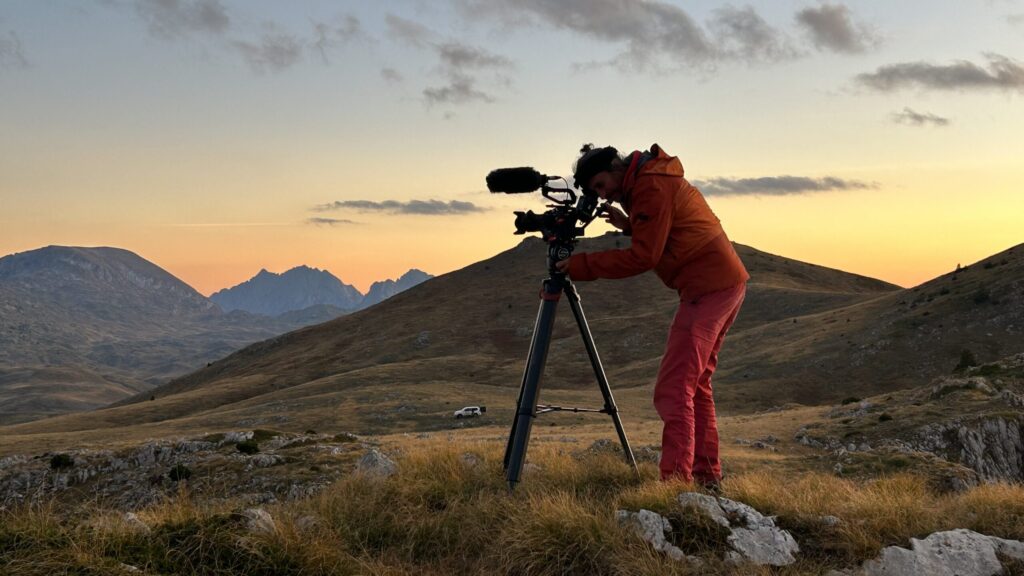
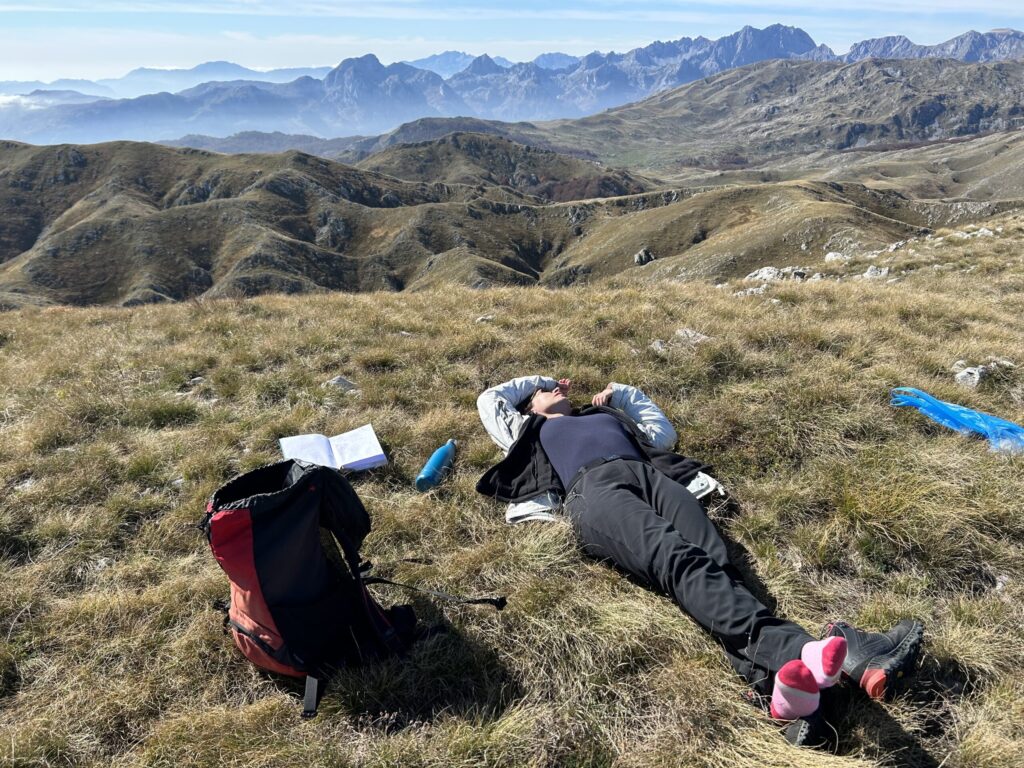
Glomazić: Over the course of eight years, we spent more than 230 shooting days in the mountains, living in a shepherd’s hut without electricity, internet, or phone signal, drinking water from a spring, and surrounded by wild animals. There was one spot in the forest, a few kilometres away, where we could get an internet signal, so we called it the “Internet Café.” That “café” was closed after we encountered a bear in its immediate vicinity.
Tutorov: I loved the sound work and the moments of quiet filming — waiting for a particular light or for clouds to pass — but also the in-between moments when we couldn’t film because we needed to help out or simply spend time with the locals. I remember the contrast between deep silence and the sudden reappearance of the voices of people and animals. I also greatly enjoyed the editing process, especially when I began to see the film taking shape.
I feel incredibly lucky and grateful for all the amazing people we met along the way. I cherish the exchanges with our executive producer, Megan Gelstein; the inspiring and supportive mentors we had the chance to work with in various contexts — Andrea Meditch, Kirsten Johnson, Tabitha Jackson, Amy Foote, Jean Tsien, Andrea Chignoli, Petra Costa, David Teague, and many others; as well as our fellow filmmakers, including Brittany Shine, Jeff Reichardt, Malika Zouhali-Worrall, Bret Story, and others. These encounters are something I will treasure forever.
What was a big challenge you faced while making To Hold a Mountain?
Tutorov and Glomazić: Our greatest challenge was finding boundaries and learning how to respect the intimacy of our protagonists. At the same time, they made their need to tell their story very clear: they felt protected by the film and encouraged us to be bold, capturing everything that unfolded with complete freedom. This long-term process demanded a great deal of focus and endurance, as well as a deep belief in our vision.
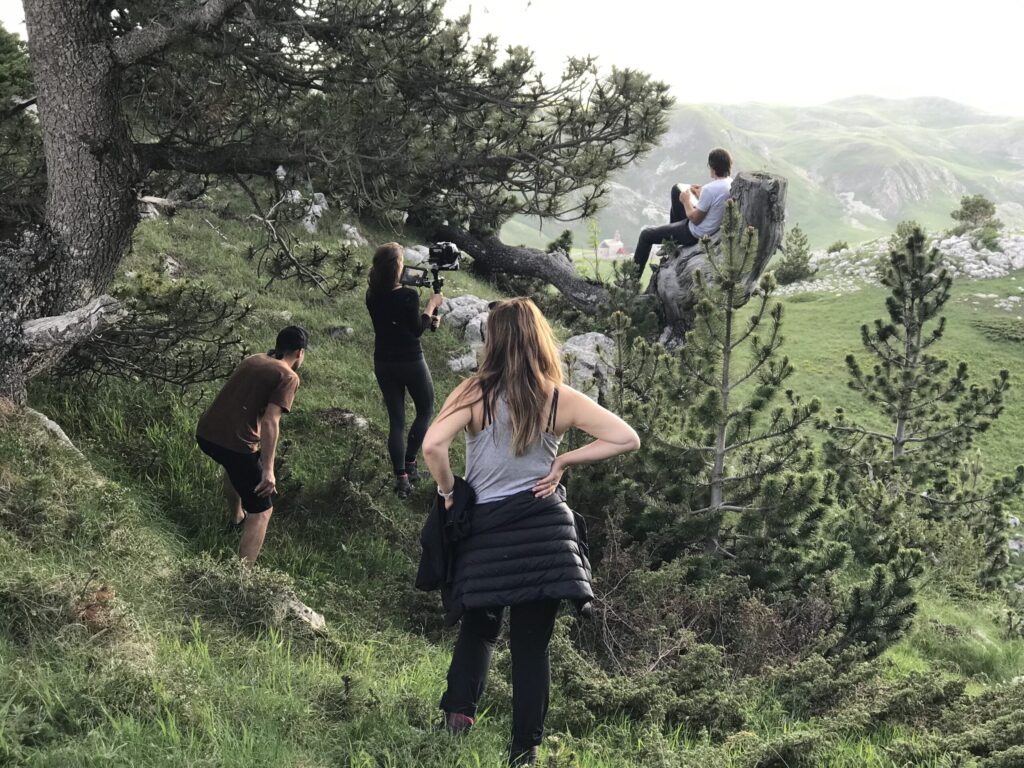
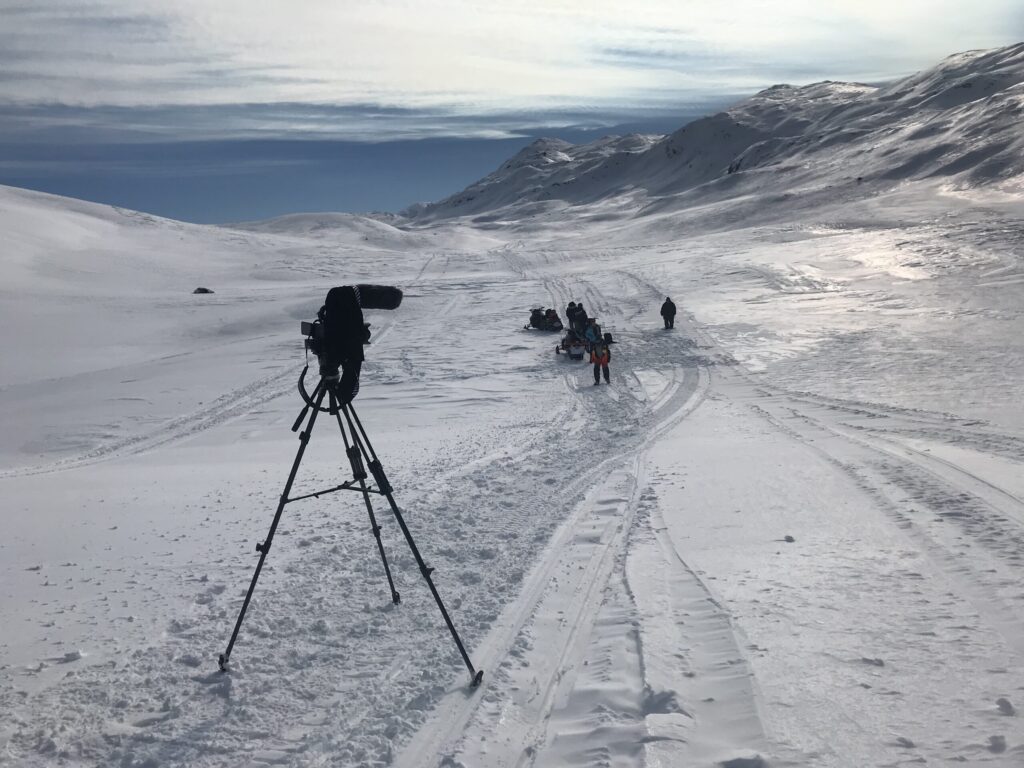
In addition, the weather was often harsh, and the working conditions extremely demanding. We worked off-road and lived in a shepherds’ hut without electricity or network coverage, relying on generators to charge batteries and back up the footage. Most of the time we were a very small team, carrying out multiple tasks — making fire, baking bread, bringing water from the spring, cooking, filming, staying attentive to when participants needed help, searching for lost animals, and much more.
Why does this story need to be told now?
Glomazić: This film grew out of our activism to protect Mount Sinjajevina, the second-largest alpine pasture in Europe and a UNESCO-protected area. Environmental protection has been our goal from the start, but we also intend to use the film as a tool to break the taboo surrounding women’s rights — especially in Montenegro, where femicide is a pressing issue and domestic violence remains alarmingly high.
Tutorov: As Petar said, our film touches on several important themes without being a topic-driven film. We explore the deep connections between women and the land, patriarchy and militarization, duty and love — questions that feel urgent and relevant in today’s world.
Why is filmmaking important to you? Why is it important to the world?
Glomazić: Filmmaking allows me to reflect on the world and life in all their complexity, and to communicate what cannot be expressed in any other form. It creates a space where emotion, thought, and experience merge into a single language that speaks beyond words.
Tutorov: Having been raised at a crossroads of different cultures, I’ve always been drawn to understanding iconography and exploring visual expression. For me, filmmaking belongs to that centuries old tradition of storytelling through images. Today, more than ever, it feels essential to understand the language of film and how it conveys emotions — it is part of the basic literacy of the 21st century. True film authors explore these meanings and make us aware of how historical narratives shape us. By experiencing films — especially in theatres with others — we learn about the power of images: how they can move us, but also how not to be naïve or manipulated.
What is something that all filmmakers should keep in mind in order to become better cinematic storytellers?
Tutorov: Even when we are super efficient, it is always a process that spans several years — from writing to fundraising to production and beyond. We need to keep going patiently, ploughing deeper and deeper. Patience is essential to finding and articulating a cinematic language.
Glomazić: Faith that even what reason deems impossible is, in fact, possible.
One thing people don’t know about me is that…
Tutorov: I dream of directing an opera.
Glomazić: I was the CEO of the national airline in Montenegro for several years.
Which of your personal characteristics contributes most to your success as a storyteller?
Tutorov: I’m interested in telling a story through light, atmosphere, and sound. Simply delivering information isn’t enough for me. I come from art, theatre, dance, and music, and I feel the need to bring all these dimensions—as well as my most intimate thoughts, politics, and philosophy—into the film. That’s what creates my “recipe.”
It’s always a challenge to understand how to tell the story, how to find its essential form. In that process, trusting the images and sounds helps enormously. I’m not afraid of a long path, of uncertainty, or of searching until the very last moment. This is something I learned from Peter Brook, one of the greatest theater directors, with whom I had the chance to study. I watched him shape and reshape a piece until the very last minute before the premiere. I have been working in the same spirit, shaping this story until the very end to carve it in the most powerful way possible.
Glomazić: Whether I am telling stories or explaining how a jet engine works, everything is infused with a passion for understanding the world and the joy of my own experience. I feel a deep need to find ways to reach other people and share it with them. In my storytelling, the rational and the emotional are inextricably intertwined, always forming a whole.
Tell us about your history with Sundance Institute. When was the first time you engaged with us? Why did you want your film to premiere/screen with us?
Tutorov and Glomazić: We’ve been following the Sundance Film Festival for as long as we can remember — both its fiction lineup, but especially its documentaries. Many films we’ve loved, such as The Edge of Democracy, American Factory, Hale County This Morning, This Evening, Taming the Garden, Seeds, and many others, premiered at Sundance before traveling the world. It offers one of the strongest platforms and the finest spotlight a documentary can have. We wanted our film — and the communities and people we filmed — to reach the world and make a real impact, so we couldn’t imagine a better place to begin.