



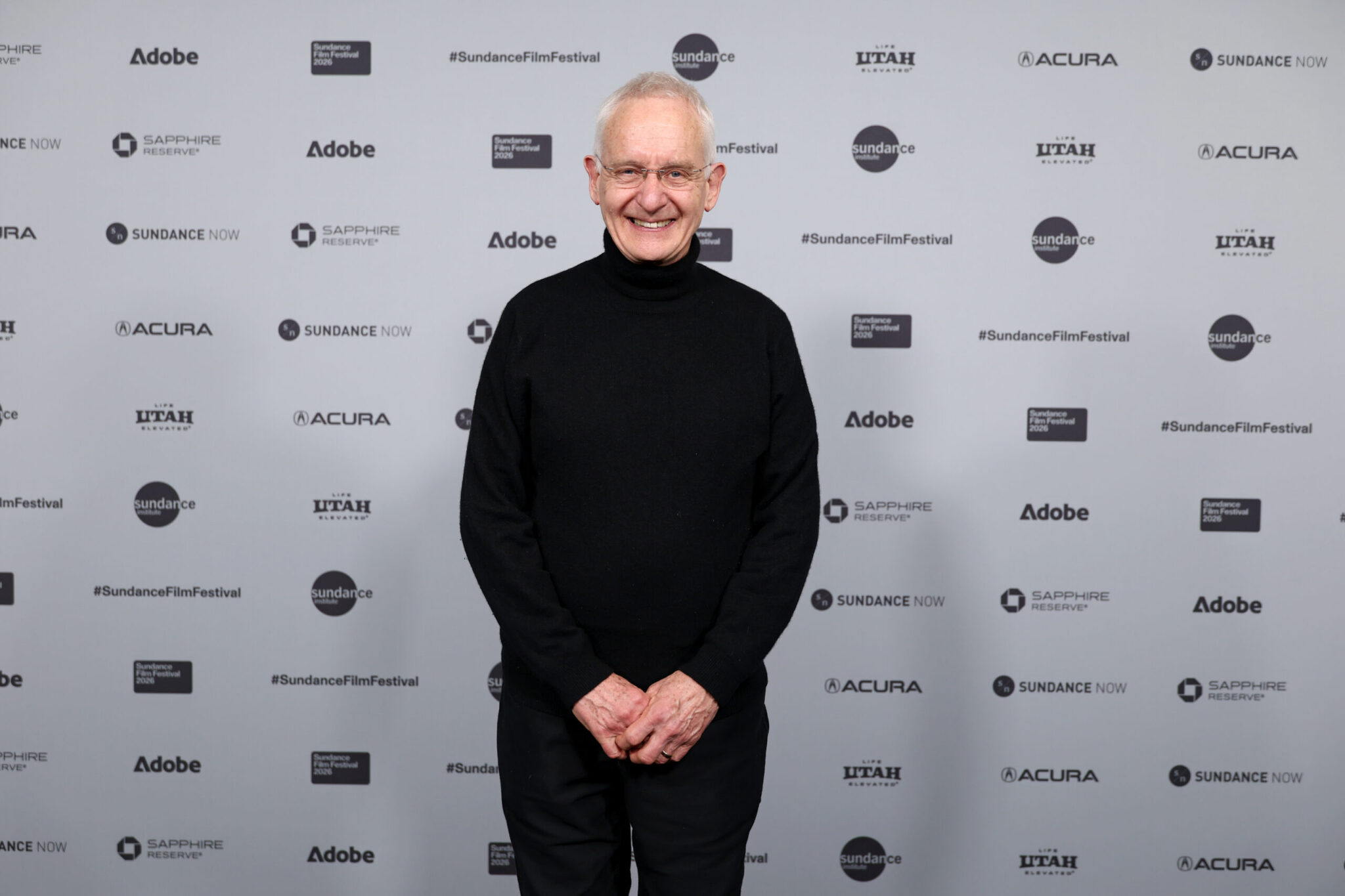
John Archer attends “The Story of Documentary Film” premiere during the 2026 Sundance Film Festival at The Yarrow Theatre on January 27, 2026, in Park City, Utah. (Photo by Cindy Ord/Getty Images)
By Cecilia Santini
From Mark Cousins, director of the monumental docuseries The Story of Film: An Odyssey, comes another work of ambition and scope, now journeying through the history of documentary film. The 2026 Sundance Film Festival premiered the first episode of this new 16-hour series, The Story of Documentary Film, on January 27 at The Yarrow Theatre, in the Special Screenings category.
“Half of all the films ever made have been documentaries,” Cousins says in the opening episode, which explores how documentaries have depicted the political, personal, extraordinary, and everyday, ever since the beginning of the form.
The episode takes the audience through the first decades of documentary filmmaking around the world, guided by Cousins’ poetic narration. Documentary opened up the world to people, Cousins argues. He calls some of these early works “What’s out there?” movies. Films from the 1890s captured life in Japan, Palestine, Egypt, and beyond, showing people what the world looked like before the advent of easier, more affordable forms of international travel.
Cousins called into a Q&A session at The Yarrow after the screening and discussed documentary’s internationalism. “There’s a sense here that the world is the world and we need to enjoy the fact that we’re all in this together,” he says. “Certainly for me as a working class Irish boy living in Scotland, I had no sense of living at the center of power. Power was always elsewhere, and therefore I’ve always been really interested in, [I] always ask the question, ‘What are other people doing? What do I not know?’ … I would call this the centrifugal imagination, the imagination outside yourself.”
Throughout the work, Cousins examines the relationship between documentary and power. Who gets to make a documentary? Who sees, and who is seen? From its earliest days, documentary both reflected and interrogated power, commerce, and class. We see how the anti-capitalist works of the early Soviet filmmakers critiqued the luxuries of the bourgeoisie and exalted ordinary workers, while fascist Italian film glorified the rise of Mussolini. Filmmaker Robert Flaherty showed threatened Indigenous cultures in Canada and Samoa, while a documentary sponsored by the Finnish government advocated Finland’s commercial interests.
“The 1960s chapter of this film is called ‘Not Willing to Obey.’ What if you’re not willing to obey, I think that’s a crucial thing. What if someone is killed on the streets like Alex Pretti?” Cousins asks, referencing the recent events unfolding in Minnesota while answering a question about the theme of power. “If you’re not willing to obey, what do you do with your camera? Whose hands hold it, and what story do they tell, and what evidence do they present? … This is a question for every filmmaker who points the camera at anything, I think.”
In the introductory episode, Cousins argues that early documentaries, regardless of perspective, are trying to engage with the world rather than escape from it. They explore the possibilities of the medium, using editing to draw associations and create ideas as well as drive emotion and energy, and playing with perspective and framing to humanize or distance.
“There’s something about documentary which was saying, ‘Here and now, look at this moment, look at everyday life and see somebody drinking a cup of coffee … look at the wind in the trees, look at the wind in a baby’s hair,’” Cousins says during the Q&A. “There was a new sense of being plugged into the world, I think, as a result of documentary. That’s why it’s such a great art form. … It’s got an ability to show what it’s like to be alive.”
From the excitement of capturing movement for the first time in early Lumière films to the boldness and exhilaration of Dziga Vertov’s Man with a Movie Camera, “Cameras grabbed the world,” Cousin narrates, drawing on Agnès Varda. “Documentary is the grab.”