



By Lucy Spicer
One of the most exciting things about the Sundance Film Festival is having a front-row seat for the bright future of independent filmmaking. While we can learn a lot about the filmmakers from the 2026 Sundance Film Festival through the art that these storytellers share with us, there’s always more we can learn about them as people. We decided to get to the bottom of those artistic wells with our ongoing series: Give Me the Backstory!
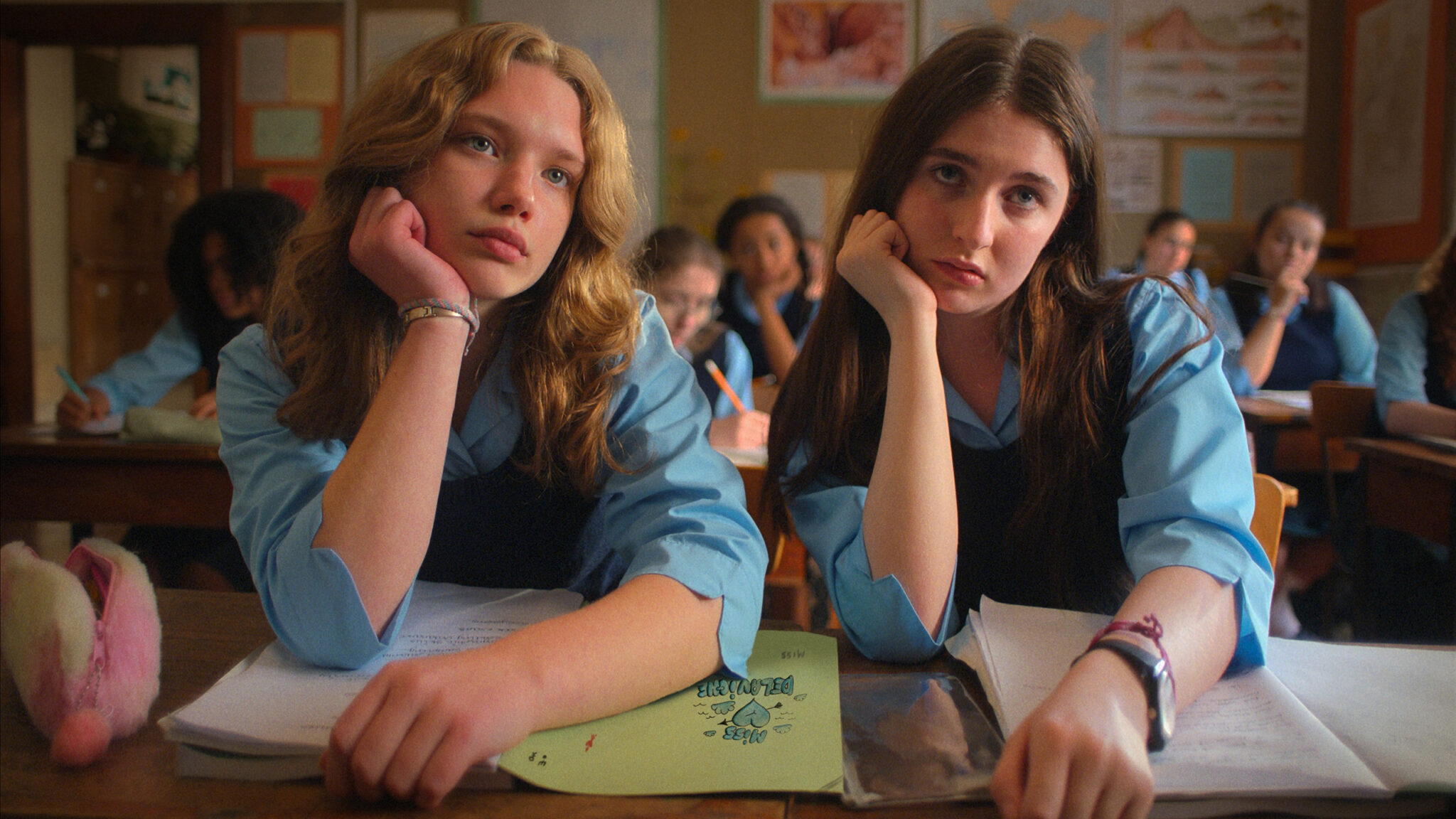
When you’re a teenager, there are few relationships that feel more crucial than the one you have with your best friend. And filmmaker Molly Manners wants us to remember that with Extra Geography, her feature directorial debut, premiering in the World Cinema Dramatic Competition at the 2026 Sundance Film Festival. “I think the biggest inspiration is teenage female friendship,” says Manners about her new film. “I drew a lot from my own experiences at an all-girls school growing up and how huge and exciting and painful and exhilarating and kind of everything these friendships felt. Now, looking back, I can see that they were love affairs in themselves and deeply formative.”
With a screenplay from Miriam Battye based on the short story of the same name by Rose Tremain, Extra Geography follows teenage Minna and Flic as they hatch a personal project during the lacrosse offseason: to fall in love with the next person they see. The target? Their geography teacher (played by Alice Englert). “It feels profound to me that the themes resonated so deeply and personally across the three generations of women that touched the film, from Rose to Miriam and myself to the young lead actors, Marni Duggan and Galaxie Clear,” explains Manners.
But these themes extend beyond the specific contexts of the film’s characters. After all, adolescent friendships — often codependent, sometimes competitive, deeply important until growing up knocks them out of sync — are formative relationships experienced by nearly everyone. “I think the themes are so universal that I hope it reaches a wide audience even though the story is so specific,” says Manners. “I hope it speaks to teenage girls who are in these feelings now, but also that it brings women — and indeed anyone — back to the intensity and importance of the defining friendships of their youth.”
Read on to learn more about Manners and Extra Geography, including the challenges and rewards of working with a young cast.

Films are lasting artistic legacies; what do you want yours to say?
That early female friendships are sacred. They are such an important part of our lives growing up; they shape us as women and how we interact in the world. They form such a huge part of girlhood and they deserve to be seen, explored, and revisited in all their beautiful, messy glory.
Tell us an anecdote about casting or working with your actors.
I worked with the incredible casting director Lucy Pardee and we scoured the country looking to uncover our two leads, Marni Duggan and Galaxie Clear. We knew we had found Flic in Marni because we started to only believe the words in her mouth. She just inhabited this character who wouldn’t change shape for the world so perfectly. Then there was just something about Galaxie that felt so Minna, we couldn’t quite put our finger on it, a sort of ease that contrasted perfectly with Marni’s Flic. When we brought them into the room together, they had this instant and palpable chemistry. It was electric. They were so in sync, but also there was this shifting and very specific power dynamic that became defining for Flic and Minna’s relationship. They also both had tuxedo cats, so that was a big factor.
Your favorite part of making Extra Geography? Memories from the process?
Finding and working with this young cast, both the leads and the supporting cast. I loved working on the scenes with all the teenagers together at the lock and in the play rehearsals and performance. It was just such a great energy — instantly alive and wild and natural and just funny. I often felt like Miss Hill, the drama teacher character from the film, trying to keep them under control and give direction.
What was a big challenge you faced while making this film?
I think again it was working with this young cast, but that challenge was also the most rewarding thing about it. I felt this huge responsibility to these two lead actors stepping on set for the first time ever. We spent a lot of time in the location rehearsing, improvising in character, and going through the technicalities of the shooting process ahead of time so they felt as ready as they possibly could by the shoot. We were also lucky enough to have their mums present to support them through the shoot and around the edges; it felt like such a special moment in their lives. It was a privilege to work with them and guide them and see them grow as they rose to the challenge and beyond. They astounded me day in and day out, and I’m just bursting with pride for them both.
Why does this story need to be told now?
I feel like these stories about women are so underrepresented on screen. It feels urgent to me to tell it because it holds up a mirror to how women are perceived in the world now and how self-image is formed so young. We learn so much from our friendships as we navigate growing up and growing pains.
Tell us why and how you got into filmmaking.
I began writing and directing promos and short-form content in-house at Channel 4, and it was there that I developed a stronger appetite and the confidence to feel like I could tell longer stories in film. I applied for funding through the British Film Institute to make my first short film on a scheme called Funny Girls. Through making this short, I got the opportunity to pitch to direct longer-form projects. I directed two TV shows that broke through (In My Skin [season 2] and One Day), and off the back of these I was able to return to the film space to direct my first feature film.
Why is filmmaking important to you? Why is it important to the world?
I studied psychology, and I’ve always been fascinated by the human condition and relationships, in the detail and minutiae of why we do what we do and why we’re attracted to certain people or things. I think in filmmaking I get to explore this by bringing stories and relationships to life with a group of people who are as into it all as me. I find the process incredibly powerful, exciting, and revealing, and on each project I learn something about myself. I also love that it’s an opportunity for people to see themselves reflected back in some form. Or just to get to laugh or cry and feel. I seem to get a kick out of that, like, oh, we’re relating to each other through this thing.
If you weren’t a filmmaker, what would you be doing?
I can’t imagine doing anything else now. Maybe a children’s book author or illustrator or a production designer. I love the craft of doing; I always have to hold myself back from moving things around on set, much to the amusement of the art department.
What is something that all filmmakers should keep in mind in order to become better cinematic storytellers?
Find the truth — do you feel it to be truthful in your gut, and does it resonate with you personally, does it make you really feel something? If so, you’re probably on the right track.
Who are your creative heroes?
That’s a tough one to pin down; there are too many across different art forms. I find so many different people and works so inspiring, not just the big, famous ones. So often it’s something small someone says to me. To name a few, I love the photography of Mary Ellen Mark and how Sofia Coppola depicts girlhood, and I’m just always inspired by Kate Bush.
What was the last thing you saw that you wish you made?
Past Lives and Poor Things
One thing people don’t know about me is _____.
I’m a massive Meat Loaf fan.
What’s your favorite film that has come from the Sundance Institute or Festival?