


By Lucy Spicer
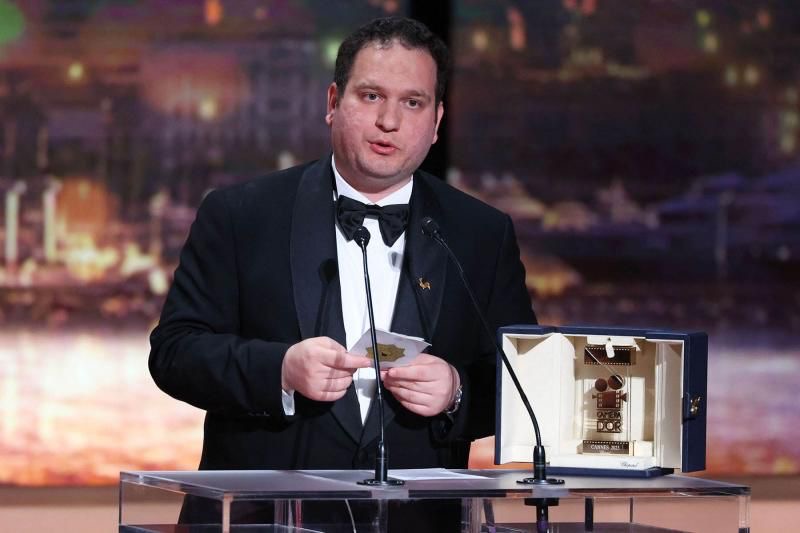
How does an emerging filmmaker get their first feature all the way to the Oscars shortlist? For writer-director Hasan Hadi, an award-winning premiere at the 2025 Cannes Film Festival certainly brought visibility to his project. But the journey really began years before, as many films do: with a great story.
“There are stories that you want to tell, and there are stories that call you to tell, you know?” Hadi says during a Zoom interview. “It was a story that I knew I just needed to tell. Like it wasn’t something I wanted. It’s so urgent. You cannot sleep, you cannot eat, you cannot drink, you cannot do anything unless you think about it at some point of your life, of your day.”
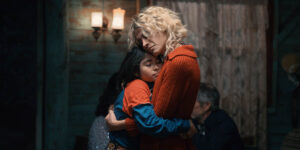
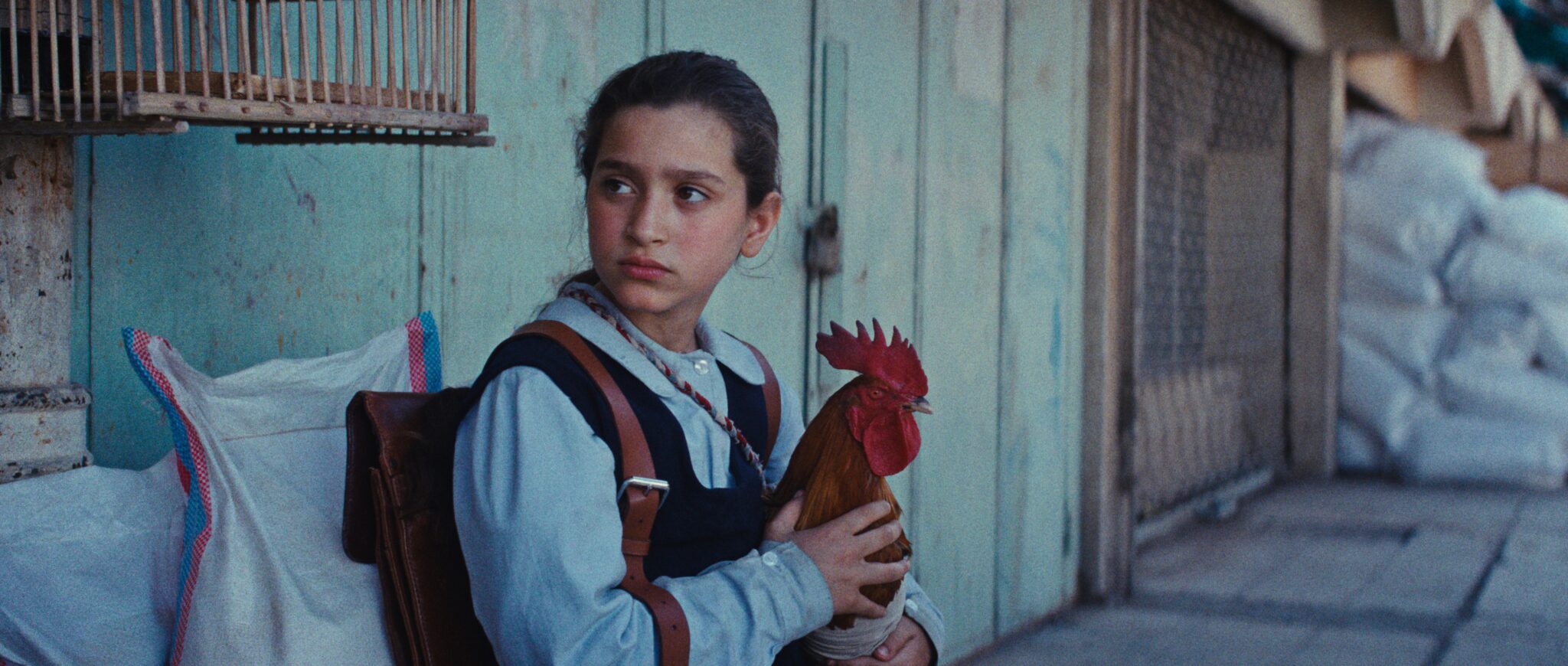
Set in Iraq in the 1990s, the story follows a young child tasked with baking a cake to celebrate Saddam Hussein’s birthday. It’s a simple tale on the surface, but The President’s Cake paints a layered portrait of a country surviving under sanctions with a totalitarian leader at the helm.
Hadi explains that the film’s setting and story were born out of familiarity. “It’s a mix of my memories growing up in Iraq,” he says. “But at the same time, it’s also a product of me questioning my childhood as an adult, and some questions about what happened, like what is moral, immoral when facing injustice? Does silence incriminate us when facing injustice? It was a collection of thoughts, questions, and memories that merge together to, in a way, give life to the film or give the film the tone, the structure that was executed eventually.”
Hadi’s decision to weave his memories with meditations on morality resulted in a film that, according to the director, has the tone of a fairy tale. For most of the story, we join 9-year-old Lamia (Baneen Ahmed Nayyef) in her quest to gather ingredients after she draws the short straw at school and gets saddled with the mandatory assignment of baking a cake to commemorate Saddam Hussein’s birthday. But Lamia lives with her grandmother, Bibi (Waheed Thabet Khreibat), among a poor community in the marshes. Procuring eggs, flour, and sugar means a trip into the city, and such a journey entails obstacles that loom large for a child. Accompanied by her pet cockerel, Hindi, and later her light-fingered school friend Saeed (Sajad Mohamad Qasem), Lamia navigates a bustling environment where resources are scarce and adults are often self-centered — and sometimes malevolent.
“When you’re in the film, you think it’s a film about children in the world of adults. Which is true, it is, but at the same time, I think if you look back at it, it’s a film where children are adults and adults are children. It’s like the president is the biggest child who is asking for a cake for his birthday, and the children are the grown-ups in the room who have to bake a birthday cake for him or do the real effort, in a way. So, as serious as sometimes it is, you can look at it as how ridiculous this could be perceived by some audience, too.” The film balances Lamia’s sincere search with moments of levity — a scene where she and Saeed squabble like a married couple outside a mosque is particularly charming — and the nuanced performances by the young actors are a driving force of the narrative. But the process of finding the right individuals to portray the film’s main characters was not a simple one.
“[Casting] was a lot, a lot, a lot of work,” admits Hadi. “Because we’re literally basically going around and looking for kids, looking for adults, because we don’t have acting schools — especially for children — in Iraq. So we knew early on if this was the film we wanted to make that this would be a nonactor situation.” Using nonactors definitely paid off. When the camera lingers on Lamia’s face, we can see the flickers of an inner turmoil that belies her years, a resounding struggle between the perceived safety of compliance, the youthful desire for fun, and the fear, confusion, and disappointment at encountering a world of adults who deal in deception.
“But even when I was trying to cast, I actually had lots of help from my mentors in the [Sundance Institute Directors Lab],” notes Hadi. “One of them was Joan Darling, and she was very, very, very helpful. She was amazing in reaffirming my instincts, my approach to the actors. So that was actually something I would say was such an important thing, especially when you’re doing things that people think you’re crazy for doing. You need someone to tell you that no, it’s not that crazy, and I think the lab and the Institute really provided me with that, which was something I’m so grateful for.”
The casting process wasn’t the only element of the film that the writer-director discussed with advisors at the Directors Lab — and the Directors Lab wasn’t the only Institute artist program to support The President’s Cake. The film was also supported by the Institute’s Screenwriters Lab as well as the Producers Program and Catalyst Forum. “There’s no filmmaker in the world that doesn’t know about the Sundance labs. It’s just such a strong presence and it has such an impact on independent cinema, to be honest. Some of the most important voices in cinema today came from the lab, you know? So being here, trying to tell the story, we always had this idea that the lab is where you wanna have people to help you make this story happen.”
Since their inception more than 40 years ago, the labs have indeed played a part in developing some of the most beloved titles in independent cinema — films like Reservoir Dogs, Love & Basketball, Beasts of the Southern Wild, and many more. For that reason, the Sundance Institute labs were an essential consideration for Hadi.
But what was it about these labs in particular that rendered them so meaningful? Hadi explains that the Director’s Lab allowed him to work on scenes from his film in a creative environment whose purpose was to support and build him up. His advisors weren’t there to judge or instill any sense of competition among fellows.
“That takes a huge load off your shoulders,” he says. “It’s like, OK, I’m not here to impress someone. No one is caring about me having the most impressive shot. It very much is about learning. And that’s where the whole experience becomes almost spiritual. You get to understand how to work with actors. You get to understand how to work on the scene. You get to understand how to work with your cinematographer, editor. All this comes suddenly to life in a very lovely but also protective environment that allows you to fail, that allows you to get embarrassed. But no one is here to judge you.”
Any impostor syndrome that fellows might bring with them to the labs is quickly dispelled once they realize that the creative advisors — no matter how experienced or well-known they may be — have volunteered their time because they know the power of a good story and they want to give back to the film community by helping emerging artists to thrive. “It comes from a place of love and interest to make your project better, to make you as an artist better,” says Hadi. “And lots of those sessions were therapeutic sessions, like it’s like therapy, you know? It opens up things in your life and aspects in your script that you have never seen before and that’s what’s really unique about the lab in a way.”
For filmmakers like Hadi who come from countries that don’t yet have an established presence in cinema, encouragement from industry veterans is invaluable to their project’s development. “This is the first Iraqi film to tell this story from this period of Iraq. And no other film has told a story from this period of Iraq, even though it’s such an important period because the impacts of it are still tangible now,” says Hadi of The President’s Cake. “This was an Iraqi film that I really think is told from an Iraqi perspective by Iraqi actors, written by an Iraqi writer, shot fully in Iraq, everything. And I think this just tells you how Sundance is about voice, is about storytelling and not about nationalities, in a sense, because they really supported a film from Iraq that I don’t think has an audience, you know, in the sense of ‘Iraqi cinema.’ There’s not. They are supporting a nonexistent cinema in a way. They are supporting [creating] cinema in a country that really struggles with that.”
“I really hope not only the government of the country or the state but also the community of artists understands how valuable this is for us,” he continues. “I don’t think I would be able to make the film as fast as I could if I didn’t have this kind of support, and I come from Iraq. I don’t get that support anywhere, almost, in the region.”
The late Robert Redford said, “Everyone has a story,” and that belief remains at the core of the Institute’s artist programs. “Being part of this community means that people are interested or want to be told [our stories],” says Hadi. “It’s just about reaching a wider audience, and I think platforms and institutions like Sundance really enable that. Once I got into the lab for the first time, I was like, ‘Oh, there is a real chance we can do this film now.’ This was before raising any funds, before raising any money.”
Voices like Hadi’s belong in cinema, not just for their storytelling talents but for their ability to offer authentic perspectives of life rarely portrayed on screen. “I hope when people see this film, it’s eye-opening for them about Iraq, transports them to Iraq in the 1990s,” he says. “How it felt to live there under those circumstances. It’s a film about love, strength of friendship, sacrifice — all that. And obviously politics are there, but it comes from the context.”