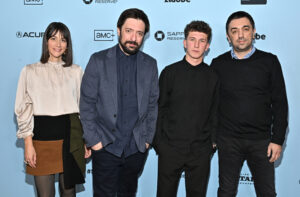




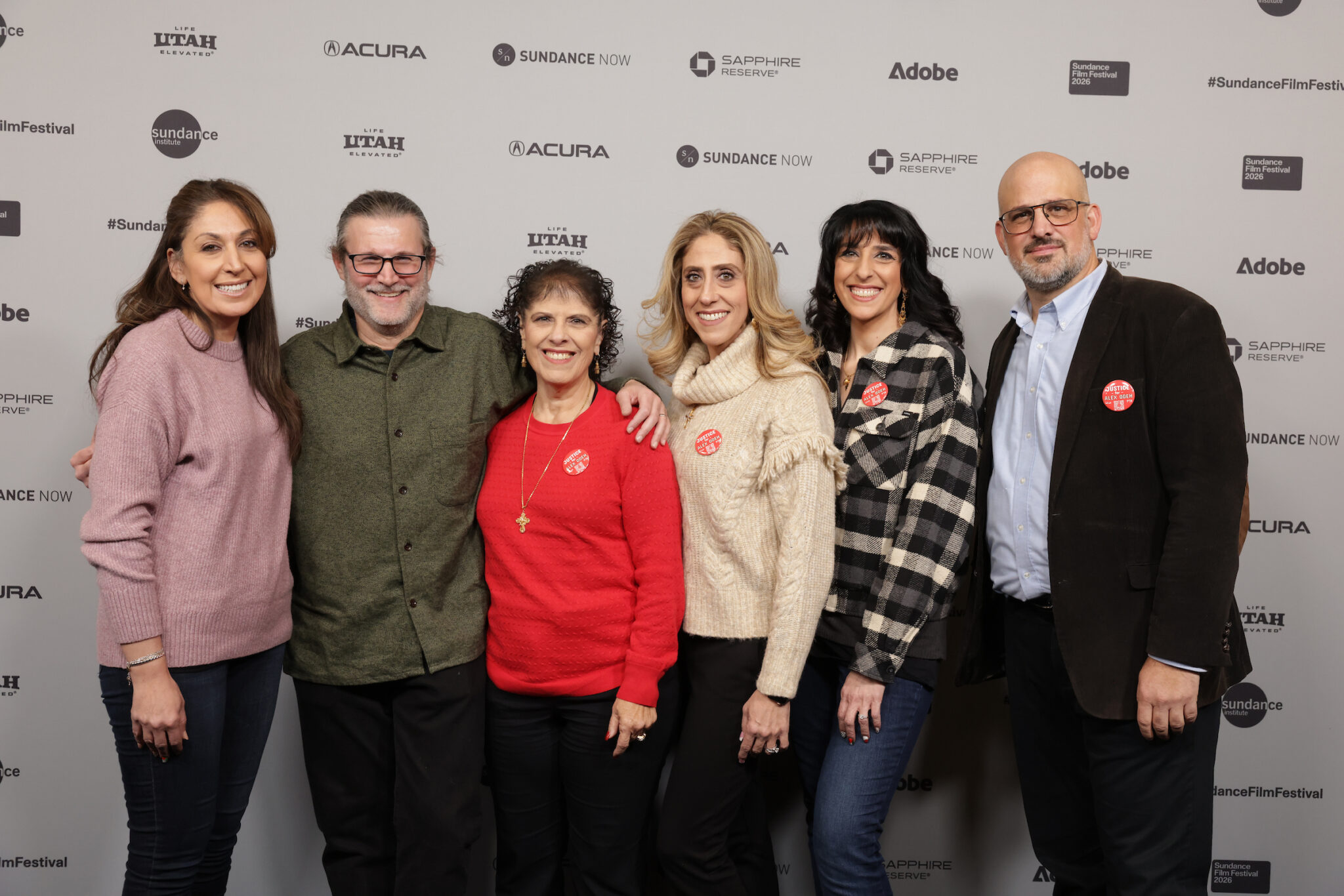
Directors Jason Osder and WIlliam Lafi Youmans, along with family members of Alex Odeh, attend the premiere of “Who Killed Alex Odeh?” at The Ray Theatre on January 26, 2026, in Park City, UT. (Photo by Jason Peters/Sundance Institute)
By Jessica Herndon
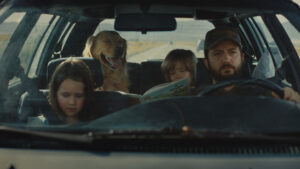
Who Killed Alex Odeh? interrogates how a brutal act of political violence was allowed to fade into the background of American history and why it deserves attention now. Premiering in the U.S. Documentary Competition at the Sundance Film Festival, the film revisits the 1985 assassination of Palestinian American activist Alex Odeh, whose killing at his Southern California office rocked a community and ignited a decades-long search for accountability.
A teacher, poet, and western regional director of the American-Arab Anti-Discrimination Committee, Odeh advocated for peaceful coexistence. He was targeted by a bomb rigged to his office door. More than 40 years later, no one has been brought to justice for the crime. Through archival footage and a present-day investigation, the film looks at the climate surrounding Odeh’s murder. Racism against Arab Americans, religious discrimination, and political intimidation are shown as persistent forces in the 1980s and today.
Directed by Jason Osder and William Lafi Youmans, the investigative documentary is emotionally potent. Osder brings the same sharp lens he applied to 2013’s Let the Fire Burn, which was supported by the Documentary Film Program, while Youmans approaches the story on a personal level, having been raised in an Arab American community where Odeh’s name was both an inspiration and warning.
“I grew up going to events where they talked about Alex as a martyr, but it was also often phrased as a cautionary tale, and that bothered me a great deal because the power of our voice should not be stymied by threats,” says Youmans following the premiere of the film. “And so, as an activist, as an emerging activist, I always thought that the cause for Alex was a cause for our voice.”
Osder, who was approached by Youmans with the idea for the documentary after a screening of Let the Fire Burn, knew he wanted to work with Youmans after he spoke so passionately about Odeh’s story. “I made this previous film about the MOVE bombing in Philadelphia, and I’m from Philadelphia, and one of the things about that story is I felt like if you were from where I was from, you knew exactly what I was talking about,” says Osder. “And then outside of that circle, it was largely unknown. And it struck me that that’s the way Will talked about this; that if you were Arab American and you grew up in a politically active family, everyone knew Alex’s name. But outside that circle, a lot of people didn’t. That really struck me as an interesting thing, a way to engage together, to tell something that would be valid and vibrant.”
The film features powerful footage of Odeh’s family, including his widow, Norma, and daughter Helena, and confronts unsettling revelations about suspects tied to the case and the systems that enabled silence to prevail. Odeh’s case “hasn’t been reported in Israel in three decades,” says Israeli journalist David Sheen, who appears in the film and was on hand for the premiere, also noting that the mentees of Odeh’s suspected killers hold positions of power in Israel. “You would think that the protégées being leading members of the government would make it an important story to cover, but none of them did. Part of the reason is because they’re afraid of being sued,” he adds. “And part of it is because the zeitgeist of the country has gone so far to the far right.”
After being praised by an audience member for his bravery when digging into Odeh’s death, Sheen is asked how he deals with any pressure in Israel over his work. Sheen says he knows that there are some who have smeared his name, but he adds that in Israel, there are “people that think like me — think that everyone should be equal, have equal rights, and Palestinians should be able to come back to their homeland. But that’s held by such a teeny, tiny fraction of the country, and anyone who thinks this way is themselves, according to the government, aiding and abetting terrorism. So, it’s incredibly isolating, obviously, to be such a teeny tiny fraction of society and to live within a bubble.”
Who Killed Alex Odeh? honors Odeh’s legacy, insists that his life mattered as much as his death, and suggests that telling this story might still offer a semblance of justice. “From the bottom of my heart, I just want to thank everybody up here for everything that you’ve done bringing my dad’s story alive and out there,” says his daughter Helena while standing beside the film’s crew. “Everybody’s going to know who he is.”