



By Gina McIntyre
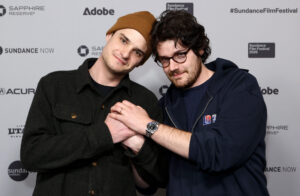
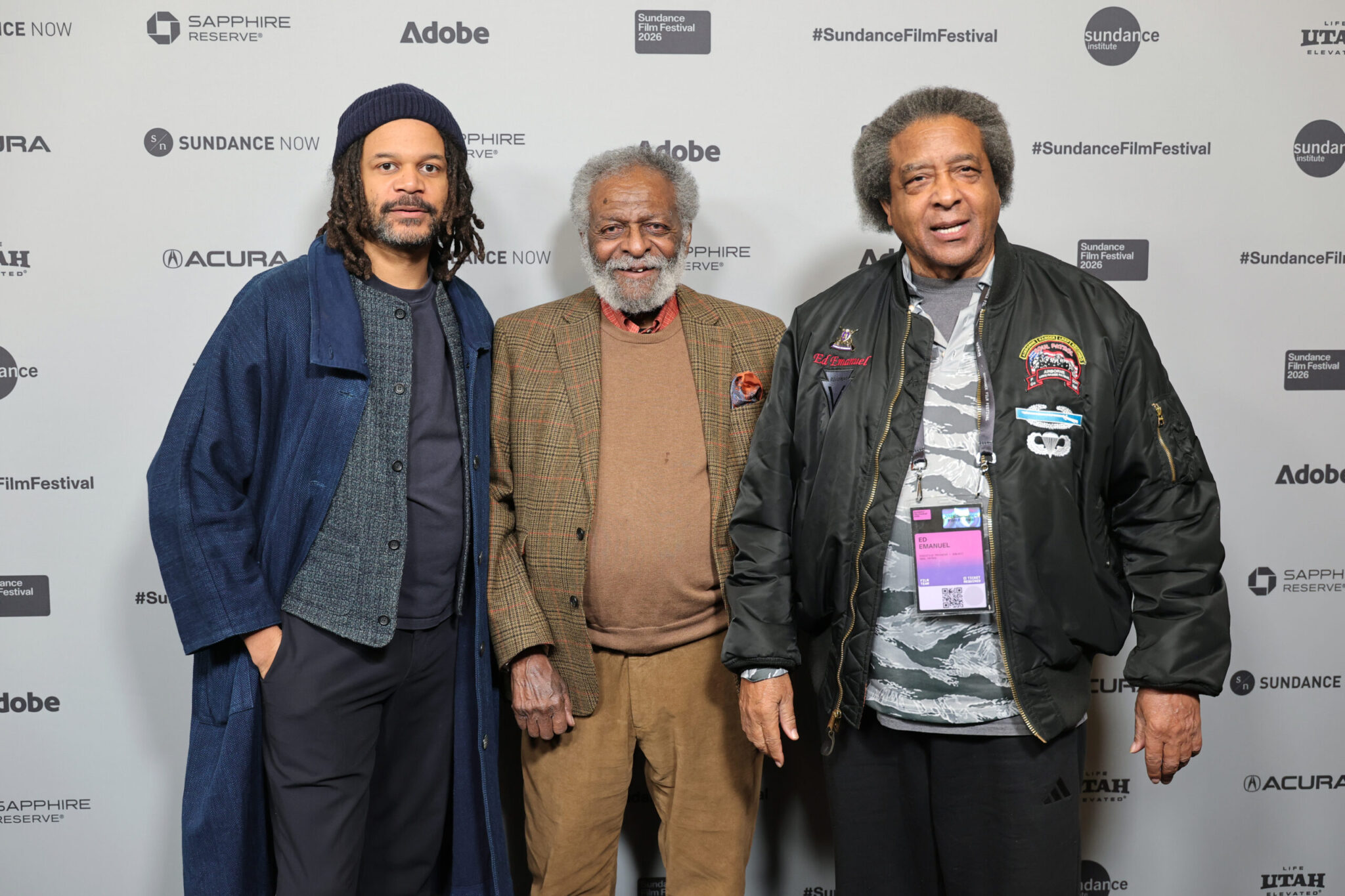
J.M. Harper (L) and Ed Emmanuel (R) flank journalist Jesse Lewis at the “Soul Patrol” Premiere during the 2026 Sundance Film Festival at The Ray Theatre on January 25, 2026 in Park City, Utah. (Photo by Neilson Barnard/Getty Images)
It is an emotional Sunday afternoon for J.M. Harper, whose new film, Soul Patrol, about the members of an elite unit of Black soldiers during the Vietnam War, premiered at the 2026 Sundance Film Festival on January 25 to an enthusiastic standing ovation. Speaking to the audience at The Ray Theatre, Harper is quick to express his gratitude — not just to the crowd assembled there for the warm reception, but to the inspiration and the catalyst for the project, Ed Emanuel, standing beside him.
Emanuel, who executive produced the documentary, is equally grateful. “Just knowing that [Harper] had come down here with tears in his eyes, you gotta know that’s a damn good story that he told if it affects him that way,” he says. “I see people in the audience, how it’s affecting you, and I’m thanking you for us being able to tell this story in front of you.”
Screening in the Festival’s U.S. Documentary Competition, Soul Patrol is the second film from Harper, whose directorial debut, the documentary As We Speak, premiered at the 2024 Sundance Film Festival. Marrying archival Super 8 footage, shot by members of Team 2/6 of Company F, 51st Infantry, during their tours, with actors’ portrayals of the soldiers in reenactments, Harper weaves together an evocative cinematic portrait of both what it was like for Black American teenagers to fight in Southeast Asia as well as the ways in which, spiritually, they never truly left the battlefield behind.
A roundtable discussion among the survivors of the U.S. Army’s first all-Black special operations team to serve in Vietnam allows the audience to hear from them as older men reflecting back on the course of their lives and experiences.
“I read Ed’s book about six years ago and gave him a phone call,” says Harper, referencing the veteran’s 2003 memoir, Soul Patrol: The Riveting True Story of the First African American LRRP Team in Vietnam. “I thought I just wanted to adapt a chapter of the book into a story but quickly learned that Ed had different ideas. The story, he said, was too vast to be captured in anything but a feature and more. So the things that I wanted, just as a naive person coming into this story, meeting Ed six years ago, that quickly fell away when I understood that we had to be a team. And my part of the team was to witness his life and to try to do that faithfully.”
The Super 8 footage helps audiences bear witness to the soldiers’ collective experiences. Yet including the archival material, Harper says, was also a means to bring this story to a modern world where people, especially young people, routinely document moments from their lives. “That Super 8 camera, that format, first existed during the Vietnam War — not in Korea, not in World War II,” Harper says. “They treated it like [we] treat cell phones today. You see the [soldiers] … filming themselves like kids do today. I felt that could make it relevant to an audience today, to see themselves the way that these guys saw themselves.”
The idea for the reenactments grew organically out of conversations Harper was having with Emanuel’s compatriots. “As Ed started introducing me to his guys, one of them in particular, when I spoke with him, it was as if he had just walked out of the jungle,” Harper says. “I realized that these guys, many of them, they’re still, in their head, 19 years old, even though they may be 77, 78 years old. I thought if I could find a way to tell the story in the present and collapse the past and the present together — which is oftentimes the way Ed and these guys experience it … we could figure out a way to tell [their story] subjectively and to be there with them rather than to look at them from the outside as strangers. So that’s what we were endeavoring to do.”
Filming the reenactments presented its own difficulties, however. One sequence set inside a grocery store, which was filmed in South Carolina, was particularly challenging to capture, Harper says. “We couldn’t afford to shut down a grocery store to shoot, so they told us we could have an aisle in the Piggly Wiggly,” Harper says, as the audience chuckles. “So we got there. Our crew pulls up. Our guys come in. Ed and [fellow Company F serviceman] Thad [Givens] are looking at our guys and checking their gear and making sure everything’s in the right place, and the police pull up.”
Unsettled at the sight of people dressed as soldiers carrying weapons outside of the market, the chief of police cautioned Harper that he and the crew could be in danger if anyone from the community were to misunderstand what was taking place. “They said, ‘You’re in South Carolina, and if somebody sees you outside the grocery store … somebody’s going to try to be a hero and start actually shooting.” After a great deal of convincing, the crew was allowed to use the store for three hours. “They felt the importance of the story after seeing Ed and Thad,” Harper says. “I just broke down in the aisle after we got that last shot. We didn’t have much control, but we had what we needed and we got the job done.”
Flanked by journalist Jesse Lewis (an expert in Black military service) and Harper, Emanuel again took time to praise the filmmaker for his tireless dedication in bringing Soul Patrol to the screen. “Jason is the only person who could have told this story,” Emanuel says to a rousing round of applause. “He told me that he was born to tell this story. I believed him, and from that point on, we became not only producer and director but damn good friends. … He did a helluva job. And Jason is going to be a huge director someday.”
“Someday!” interjects Harper with a smile.