



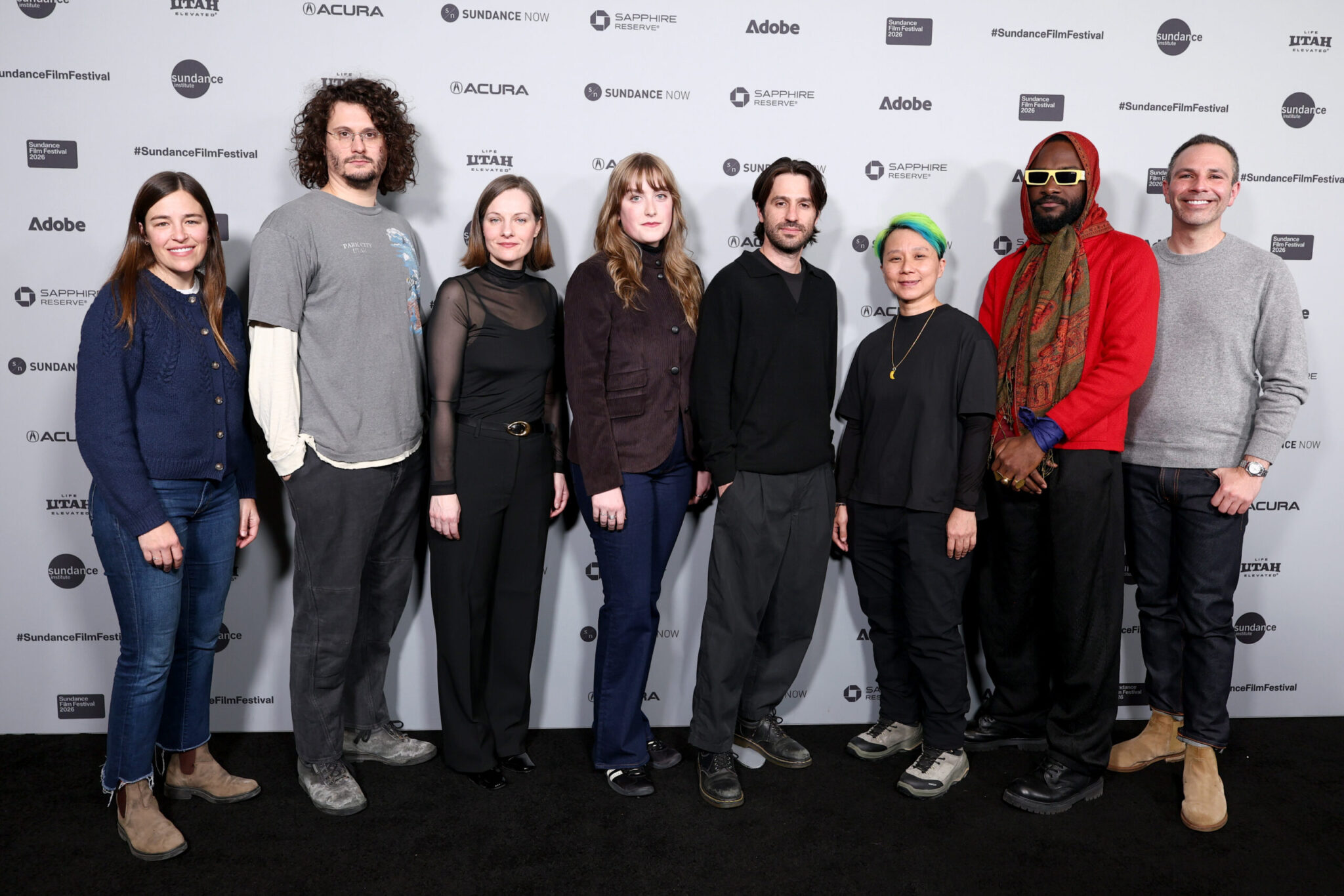
(L–R) Programmer Emily Doe, Gregory Barnes, Leah Vlemmiks, Jamie Kiernan O’Brien, Eduardo Braun Costa, Jen Nee Lim, Samuel Suffren, and Adam Curley attend the premiere of Short Film Program 2 during the 2026 Sundance Film Festival at The Yarrow Theatre on January 24, 2026, in Park City, Utah. (Photo by Cindy Ord/Getty Images for Sundance Film Festival)
By Lucy Spicer
“Well, it was a very horny block, wasn’t it? Sex sells,” notes Adam Curley, the writer-director of Seniors, during the Q&A following the premiere of the 2026 Sundance Film Festival’s Short Film Program 2. He’s got a point — out of the seven short films that comprise this program, which premiered January 24 at the Yarrow Theatre in Park City, five of them include themes of sex or sexuality. But even with that in common, each short displays a unique story, style, and voice courtesy of the writer-director behind it.
Through humorous missteps, growing pains, sincere self-reflection, and acts of love, the stories in Short Film Program 2 examine the ever-evolving relationships we have with others and ourselves.
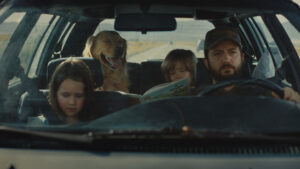
Seniors — It’s a big day for the family we meet in Curley’s directorial debut. A high school senior (Noah Pacht) is set to go on a college visit with his parents, but before the three hop in the car, the mother (Brooke Bloom) finds out that the father (Matt Walton) is having an affair when she accidentally hears a very intimate phone call.
“Sorry to say that the origin of the story came all too organically,” admits Curley during the Q&A. “Not exactly as you saw, but close enough. It’s just been on my mind for several years, and I meant to get it out.”
Fruit (Buah) — A woman (Tysha Khan) discovers she’s pregnant. Her husband is thrilled, but she’s not excited at the prospect. Since abortion is illegal, she tries different methods to end the pregnancy, from jumping off of things to initiating rough sex. A chance meeting with a mysterious bus driver could be her answer.
“For me, I just find that sex is sometimes a power struggle,” says director Jen Nee Lim during the Q&A. “I’m trying to subvert that.” Between the sex scene involving the protagonist and her husband and the short film’s supernatural ending, Fruit (Buah) insists on women having agency.
Agnes — At age 74, Agnes (Eileen Davies) is living alone — though her daughter assures her she can always come stay and babysit her grandchild. When a potential new friendship with her neighbor falls flat, Agnes sets out to find a space where she can feel comfortable and free in her own skin.
“The origin came from just thinking about women in their 70s,” explains writer-director Leah Vlemmiks during the Q&A. “They’re from the baby boomer generation, and that was sort of the last generation that really held these specific gender roles all through life.” Through her choices, Agnes experiences what Vlemmiks calls “a second coming-of-age.”
Gender Studies — “I wrote a very different [short film] at first called Sucking Dick and Cock because it was about sucking dick and cock,” says writer-director Jamie Kiernan O’Brien as she explains the origin of Gender Studies. “Then, at the recommendation of my producer, Kirsten, I added a different female character and I also changed the name. And it became much more about envy and being sort of on the outskirts of womanhood.”
The finished product follows a trans college student (Jake Junkins) as she sets out to emulate a girl (Fannie Massarsky) she admires from class — right down to seducing the TA (Austin Cassel) she knows her classmate is sleeping with. But when she gets down to the act itself, the sex doesn’t proceed as expected.
“I was interested in the difference between the expectation of sex versus what it’s actually like,” says O’Brien. “Because I feel like this girl has such a perception of what it is and what it means to be having sex, especially at that age.”
Blue Heart — Writer-director Samuel Suffren (Dreams like paper boats, 2024 Sundance Film Festival) drew from his own life to create his second short film. “The film is about the situation of my mother, the sickness of my mother, for real,” he explains during the Q&A. Short on dialogue but rich in feeling and imagery, Blue Heart introduces us to Marianne (Marie Diana) and Piéton (Arnold Joseph), a couple living in Haiti. They’re waiting for a phone call from their son, who left home to pursue a life of opportunity in the U.S.
The couple’s daily rhythm is disrupted when Marianne collapses. Now, Piéton’s life is dedicated to taking care of her — bathing her, helping her walk, everything. And still they wait for a phone call.
Together Forever — A Mormon couple gets married. Once they retire to their hotel room for the night, Sydney (Lindsey Normington) is eager to consummate the relationship. Her new husband, Caleb (Samuel Sylvester), is nervous. Going all the way with your wife is a big step — especially when you can’t stop picturing the guy behind that DJ booth at your wedding reception.
The couple resorts to an unorthodox approach to intimacy. “I grew up queer and Mormon, and I have a lot to get off my chest,” says writer-director Gregory Barnes to a laughing audience at the Q&A. “I grew up in a really intense world of purity culture, and there’s this little thing these Mormons like to do, which is to kind of flirt with where’s the line with intimacy. Like where does actual sex begin?” he explains. That line is both discussed and tested in Together Forever.
The Liars — In writer-director Eduardo Braun Costa’s narrative directorial debut, Matías and Jaime (Noah Roja and Filippo Carrozza) get kicked out of the house when their mother declares she needs a day to herself. Two young boys roaming through a world of adults, they plan to see a movie (the entirely inappropriate Me, Myself & Irene) and sneak in some candy pilfered from the mall. But when Jaime gets caught in the act, Matías has to select a stranger (Esteban Bigliardi) from the food court to act as their father to get his brother back.
“I guess I just wanted to go back to my childhood,” says the director during the Q&A as he explains the inspiration for the short. “Just spy a little bit [on] my own childhood and how kids deal with emotions, with grief.”