



By Jessica Herndon
One of the most exciting things about the Sundance Film Festival is having a front-row seat for the bright future of independent filmmaking. While we can learn a lot about the filmmakers from the 2026 Sundance Film Festival through the art that these storytellers share with us, there’s always more we can learn about them as people. We decided to get to the bottom of those artistic wells with our ongoing series: Give Me the Backstory!
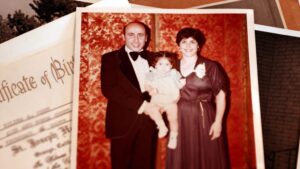
Filmmaker William Lafi Youmans grew up hearing about the 1985 murder of advocate Alex Odeh as “a cautionary tale for Arab American activists speaking out for Palestinian rights,” he says. “But I never knew much about his case other than it was a gross injustice.” An activist himself, Youmans believed there was more to uncover about Odeh’s story and the silencing of his voice.
After attending a screening of director Jason Osder’s powerful documentary Let the Fire Burn, about the 1985 MOVE bombing in Philadelphia, Youmans was inspired to approach the documentarian about investigating Odeh’s murder and sharing his story. “That’s how the film got started,” says Youmans.
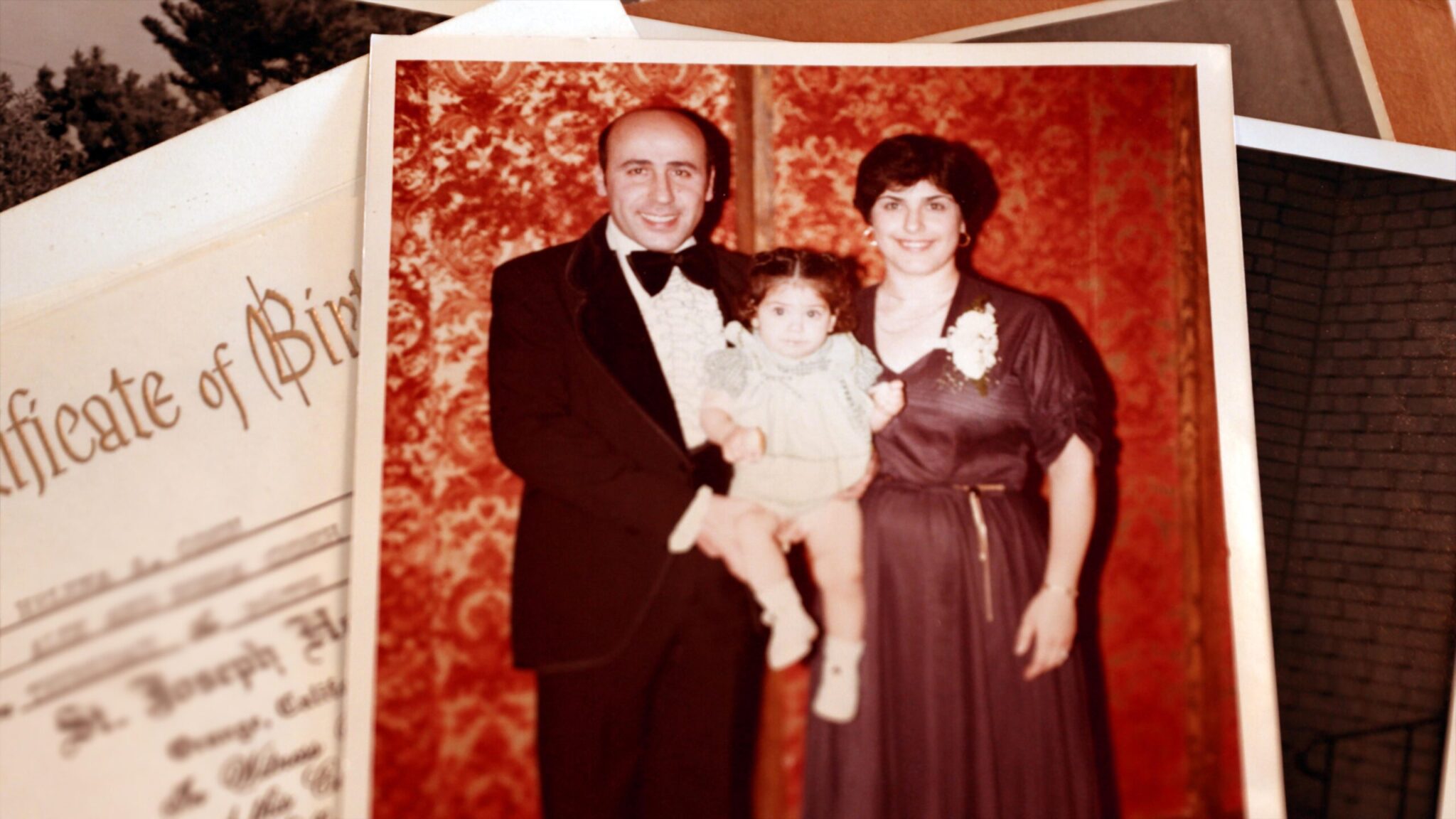
Premiering in the U.S. Documentary Competition and winning the U.S. Documentary Special Jury Award for Journalistic Excellence at the 2026 Sundance Film Festival, Who Killed Alex Odeh? examines the assassination of Odeh, who was killed when a bomb rigged to the door of his Southern California office exploded.
Youmans hopes his directorial debut, co-directed by Osder, will shed light on Odeh’s life and murder for those who may know his name but little about his life. He also believes “everyone who would be outraged at the injustice should hear his story.” Osder similarly wants to see Who Killed Alex Odeh? reach a broad group of viewers. “A wide U.S. audience,” he hopes. “People who can have their deeply seated biases about Israel/Palestine shifted.”
Below, Youmans and Osder discuss the most satisfying part of making Who Killed Alex Odeh?, what makes them great storytellers, and why Odeh’s story remains as relevant today as it was in the 1980s.
Films are lasting artistic legacies. What do you want yours to say?
Youmans: In terms of social advocacy, it is that justice and other rights should never be compromised by national interests or foreign policy. Artistically, it is that true crime stories should thoughtfully engage with social and political dimensions. Also, who the victims and their loved ones were/are as people matters. They should be more than props. Thus, true crime need not be limited to simply whodunit formulas.
What was your favorite part of making the film? Memories from the process?
Youmans: Archival discoveries. Nothing matches the thrill of finding footage, especially of Alex, given how little anyone had of him. We searched thousands of hours for less than seven minutes of footage.
Osder: The relationships with key collaborators and subjects, especially my co-director and the Odeh family.
What was a big challenge you faced while making the documentary?
Youmans: There is a lot of secrecy built into any criminal investigation, and this one even more so given the sensitivities around U.S.-Israel relations. Finding government information was very, very difficult even though the case has been dormant for decades. I understand secrecy is needed for active criminal investigations, but when a case is cold, one must ask who and what do secrecy serve?
Why does this story need to be told now?
Youmans: Though the film centers on an unsolved 40-year-old murder, it is as topical as ever given the political moment. The active suppression of Palestinian rights advocacy in the U.S. and the rise of the right wing in the Israeli government make this film especially resonant. It feels like a historical antecedent to the current state of things.
Osder: The story became more and more relevant as we were making the film. It offers an explanation for the present state of Israeli politics.

Tell us why and how you got into filmmaking.
Youmans: My co-director, Jason Osder, is a documentarian, and he essentially brought me into the project. I had worked on small projects, music, and TV before. But most of what I know now about filmmaking came from him.
Why is filmmaking important to you? Why is it important to the world?
Youmans: Films offer a way for people to be in relation to others, in my view. At their best, they are empathy machines that can virtually connect people across differences, helping us see and feel as others with a richness that I think few other media can accomplish. Films belong to humanity in this way.
Osder: I’m someone who feels the need to engage socially with the world and filmmaking is my way of doing it. It is an item of faith for me that films can change the world, but also something I think we need to be circumspect about. It’s my religion.
What is something that all filmmakers should keep in mind in order to become better cinematic storytellers?
Youmans: This is my first film, and I struggle with narrative, so I am not qualified to give advice. I only have cliché ideas on this, I think. But I’d really advocate for underexplanation if it benefits story progress, which is at least as much about feeling as it is thinking. We wrestled with the question of how much background/context constantly, but since the audience is so varied we settled on keeping the story going forward.
Who are your creative heroes?
Youmans: Poet Mahmoud Darwish, Laura Poitras, Coen brothers, Annemarie Jacir, Detroit-born hip-hop producer Jay Dee, Lebanese playwright and composer Ziad Rahbani, Banksy.
Osder: Jim Henson. Terry Gilliam. Richard Powers. Bob Marley.
What was the last thing you saw that you wish you made?
Youmans: Palestine 36.
Osder: Personal Truth, a short film by Charlie Shackleton.
Which of your personal characteristics contributes most to your success as a storyteller?
Youmans: Naïveté. It takes some to be unconventional, I think.
Osder: Don’t know how to give up.
Who was the first person you told when you learned you got into the Sundance Film Festival?
Youmans: My wife, who was elated. My mother was very nonchalant and asked me if I had seen another film in response.
What’s your favorite film that has come from the Sundance Institute or Festival?
Youmans: No Other Land and Searching for Sugar Man.