



By Lucy Spicer
One of the most exciting things about the Sundance Film Festival is having a front-row seat for the bright future of independent filmmaking. While we can learn a lot about the filmmakers from the 2026 Sundance Film Festival through the art that these storytellers share with us, there’s always more we can learn about them as people. We decided to get to the bottom of those artistic wells with our ongoing series: Give Me the Backstory!
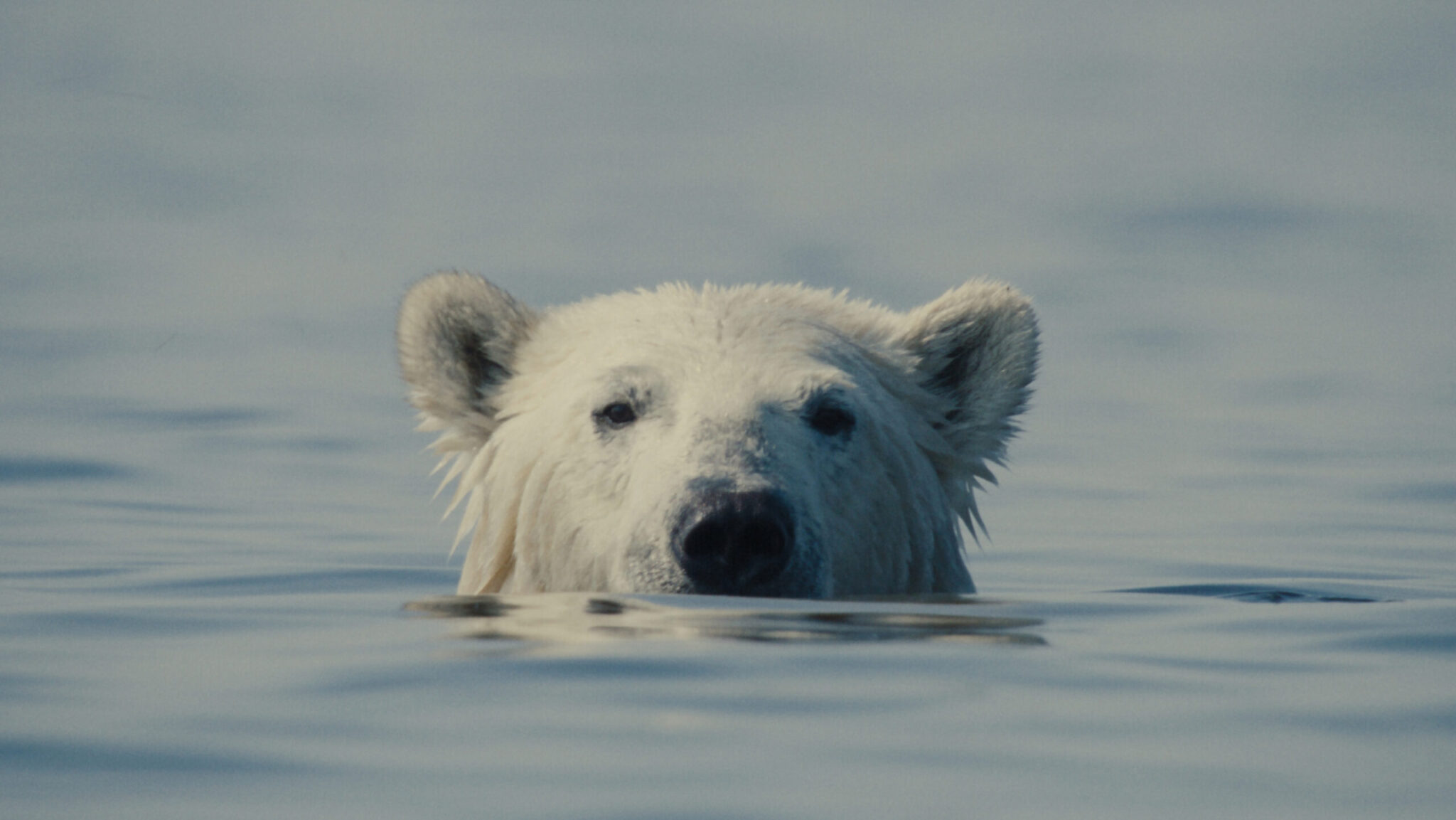
Filmmakers Gabriela Osio Vanden and Jack Weisman aren’t strangers to Park City — they attended the Sundance Film Festival together in 2023 and Weisman had worked on When Two Worlds Collide (2016) and The Territory (2022) previously — but 2026 will be the first year they bring a project to the Festival as directors. And it’s not just any project: Nuisance Bear, premiering in the 2026 Sundance Film Festival’s U.S. Documentary Competition, is their feature debut. An expansion of the pair’s award-winning eponymous short film from 2021, Nuisance Bear takes Osio Vanden and Weisman back to Churchill, Manitoba, where a polar bear migration has crossed paths with modern human life.
“Our biggest inspiration came from the animals. We are inspired by their quiet intelligence, their problem-solving, and the way they move through a world that is changing around them,” say the directors. “We were also inspired by the courage of the people who allowed their stories and perspectives to be shown with honesty and vulnerability. Their willingness to be seen in this unvarnished way shaped the film as much as anything.”
The creative duo’s extensive experience in cinematography would lead them to embrace perspectives not often seen in nature documentaries. “We also wanted to push the form, especially in how nature is engaged with and represented. We approached the bear as a character with its own agency, logic, and point of view,” the filmmakers explain. “If the film leaves anything behind, we hope it’s a reminder that in moments of conflict or disagreement, we shouldn’t shut off our empathy. We have to witness, to listen, and to step outside ourselves in order to keep a dialogue alive. We hope that this film will allow audiences to see polar bears in a different way.”
Read on to learn more about Osio Vanden and Weisman and the making of their documentary, including the directors’ favorite moments from the production and why they believe Nuisance Bear holds an urgent message.

Describe whom you want Nuisance Bear to reach.
We want the film to reach anyone willing to look at polar bears and the Arctic in a more honest and complicated way. That includes people who care about wildlife, people thinking about climate and colonial histories, and audiences who are drawn to cinema that challenges how stories about nature are usually told.
We also hope it reaches the communities who live alongside these bears and anyone who has ever felt caught between worlds or systems they did not design. Ultimately, the film is for viewers open to seeing another perspective and willing to sit with the questions the bears and people in this landscape are confronting every day.
Your favorite part of making the film? Memories from the process?
Gabriela Osio Vanden: My favorite memory was filming the relocation of our bear character away from Churchill, known locally as the “bearlift.” It was unlike anything else we shot because, for once, we had some sense of order. We knew the sequence of events, and we could actually plan. Usually, as a documentary director, you’re just trying to keep up with your subject, sometimes holding on for dear life.
That day, we were able to lean fully into the craft. Every camera system we had was in play: vehicle-mounted, helicopter, handheld. I chose to shoot with a 29 mm lens, standing as close to the bear as was permitted, and stayed there as long as I could. It was powerful, and I think that feeling carries into the film.
Jack Weisman: There were so many mysterious and unforgettable moments while making this film, but the one that comes to mind is when our narrator, Mike Tunalaaq Gibbons, told us that sharing his story as part of the film had been healing for him. Knowing that participating helped him find peace was incredibly moving.
What was a big challenge you faced while making Nuisance Bear?
The biggest challenge was filming unpredictable, dangerous wild animals in a harsh Arctic environment all the while working side by side with your spouse. The cold, the logistics, and the inherent risk of filming polar bears demanded total focus and absolute trust in each other. Balancing safety, creative ambition, and a marriage in conditions that could change by the minute was a kind of tightrope. That pressure sharpened our instincts and ultimately made the film stronger.
Why does this story need to be told now?
This story needs to be told now because the relationship between humans and polar bears is changing in real time. Climate change, colonial conservation practices, and economic inequality are reshaping the Arctic faster than most people realize. Bears are adapting to a world we have altered, and communities are being forced to confront the consequences of decisions they did not make.
At the same time, the way wildlife is represented on screen often has not evolved. We are still seeing sanitized, mythic versions of nature instead of the complicated, human-shaped landscapes animals actually navigate.

Showing the bears’ lived reality, their intelligence, frustration, and resilience matters now because it challenges the narratives we have inherited. This film is not a warning about a distant future. It is a document of what is happening today. And if there is a moment to rethink how we coexist with the natural world and with each other, it is now.
If you weren’t a filmmaker, what would you be doing?
Osio Vanden: Breeding dogs
Weisman: Playing Fortnite

Who are your creative heroes?
Osio Vanden: Gus Van Sant, George Eliot, Joe Wright, Salvador Dalí, Janusz Kamiński, Daniel Clowes, Luca Guadagnino, Alice Rohrwacher, Iris Murdoch
Weisman: My parents (both working artists), Hayao Miyazaki, Werner Herzog, Terrence Malick, John Cassavetes, Yorgos Lanthimos, Justine Triet, Ruben Östlund, Robert Altman, J. M. W. Turner, Peter Paul Rubens
Which of your personal characteristics contributes most to your success as a storyteller?
Osio Vanden: Intuition
Weisman: Patience. Given enough time, the truth will always reveal itself.
Who was the first person you told when you learned you got into the Sundance Film Festival?
Our editor, Andres [Landau]. He cried.
What’s your favorite film that has come from the Sundance Institute or Festival?
Donnie Darko