



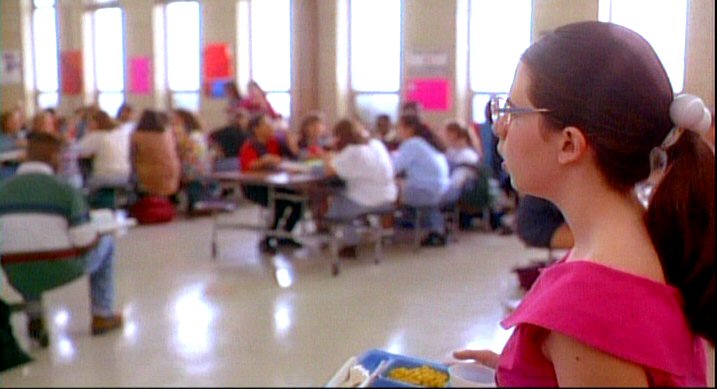
Heather Matarazzo as Dawn Wiener in Todd Solondz’s “Welcome to the Dollhouse” (Courtesy of Sony Pictures Classics)
By Lucy Spicer
At Sundance Institute, we’re always in awe of the power independent film has to bring people together. That’s why we love asking filmmakers to name their favorite Sundance Institute–supported projects, both in our “Give Me the Backstory” feature series and through surveys like the top 10 feature films from the first four decades of the Sundance Film Festival. When a single film resonates with many filmmakers — from different backgrounds and with varying life experiences and artistic styles — a bond is created, rooted in a common love for independent film and universal stories. To commemorate some of our most-mentioned titles over the years, we’ve compiled responses from filmmakers who want to share their love for their favorite Sundance Institute–supported films.
Most coming-of-age movies and TV shows treat authenticity with a light hand. Everything’s a bit too shiny, beautiful, and heartwarming. And if a preteen character presents as awkward, it’s really awkward with an asterisk. Because on the horizon there’s a makeover, or a mentor, or a hero moment to make it all better.
In writer-director Todd Solondz’s darkly funny Welcome to the Dollhouse, there is no asterisk to Dawn Wiener’s brand of awkward. Because of her last name, classmates at her suburban New Jersey junior high call her “wiener dog.” She sports chunky glasses, often mumbles when she speaks, and the only interactions she has with her peers are when they bully her. At home, life is similarly frustrating. A middle child, Dawn is caught between a nerdy older brother, Mark, whose sole concern is getting into a good college, and a favored younger sister, Missy, who prances around in a tutu and knows she can get away with anything.
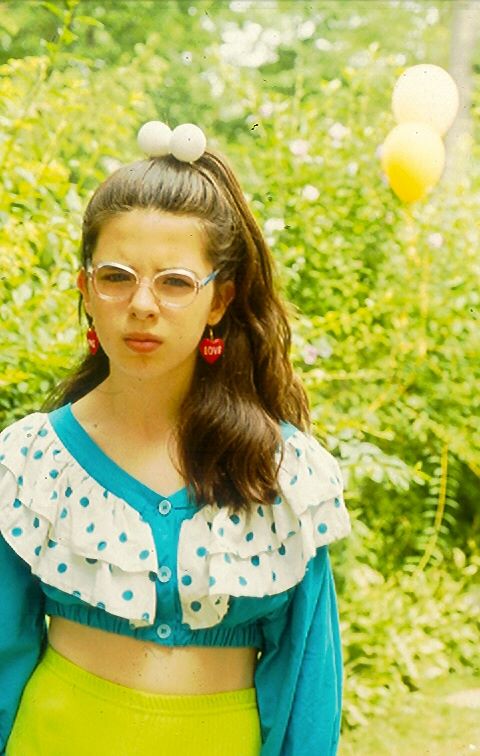
Played to perfection by an 11-year-old Heather Matarazzo in her first film role, Dawn is a resilient creature, but watching Welcome to the Dollhouse definitely doesn’t feel like any sort of achievement for her character. Nothing seems to help in class or at home, whether she lies low or stands up for herself, and her clumsy attempts to court a hunky high schooler in her brother’s band are predictably cringeworthy rather than a fulfilling learning experience.
But Welcome to the Dollhouse is undeniably an achievement for Solondz and for independent film in the 1990s. The movie premiered at the Toronto International Film Festival in 1995 before screening at the 1996 Sundance Film Festival, where it won the Grand Jury Prize: Dramatic, and several alumni in the years since have cited Welcome to the Dollhouse as one of the works that pointed them toward the Sundance Film Festival to begin with.
“Since my early years as a cinephile in the 1990s, I understood that the Sundance Film Festival was a guide to look at when searching for good films to see. I particularly remember Clerks, Crumb, and Welcome to the Dollhouse as examples of films that only arrived in Brazil (and to me) because of the success they achieved at Sundance,” recalls Pedro Freire, writer-director of Malu (2024 Sundance Film Festival). “They were courageous films, made with little money and a lot of dedication. For a young Latin American like me, for whom it seemed impossible to one day direct big films, the Sundance films were like a possible dream.”
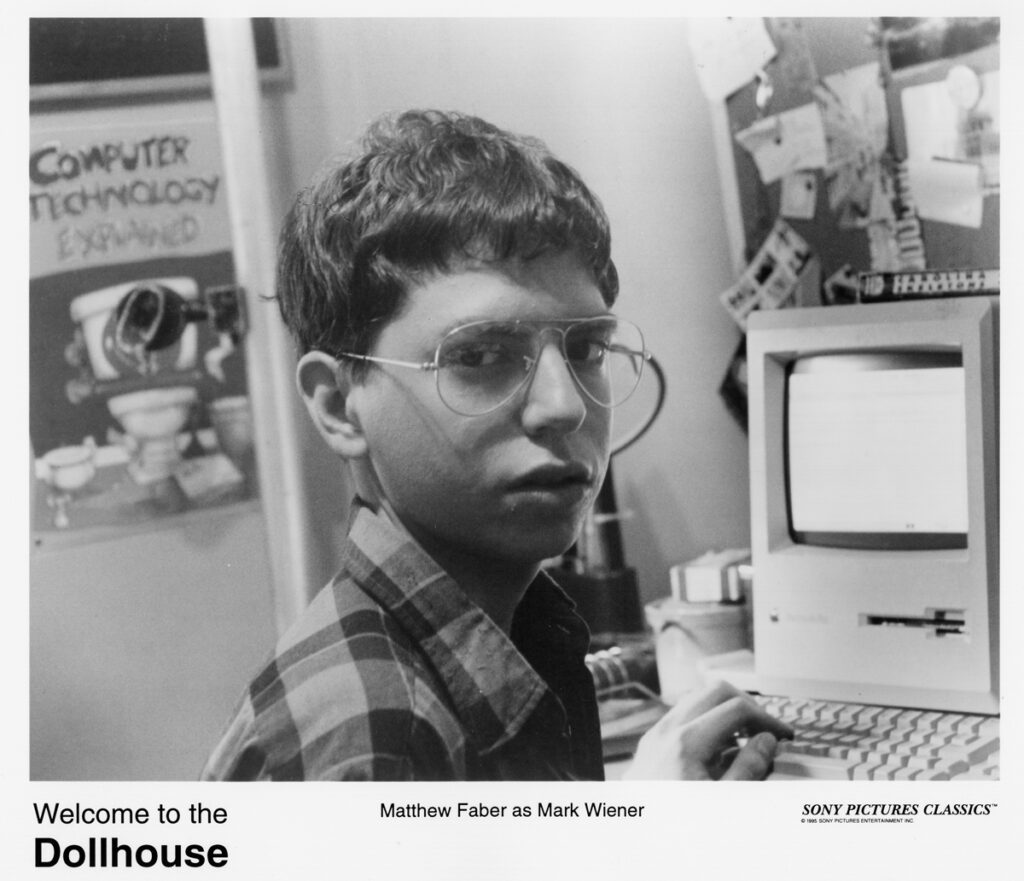
Many filmmakers have gone as far as naming it one of their favorite Sundance Film Festival titles of all time, and it has remained a favorite for 30 years following its theatrical release on May 24, 1996. So what is it about this movie with its downtrodden protagonist that has amassed so many ardent admirers? There’s a lot to love, really, from the hideously suburban set design of Dawn’s house to the biting screenplay done justice by a fleet of young actors (Matthew Faber’s deadpan delivery of Mark’s lines — “High school’s better; it’s closer to college. They’ll call you names, but not as much to your face.” — is particularly memorable).
But it mostly comes down to Solondz’s dedication to portraying just how painfully awkward growing up can be. Dawn, beset by naïveté and injustices but also capable of viciousness herself — she’ll spit back the slurs she suffers from bullies to those smaller than her — is deeply relatable to anyone who realized that middle school would only be better once it was over. And in making the film for an audience who had lived through it and come out the other side, Solondz must have known that they could laugh at it, too. Welcome to the Dollhouse was a risk, but it was resonant. And it resonates still.
Below, some of the Sundance Film Festival alumni who love Welcome to the Dollhouse as much as we do describe in their own words why the film remains a favorite 30 years after its release.
“If I were to make a prequel to Ingrid Goes West, I’m pretty sure seventh-grade Ingrid would look and act a lot like Dawn Wiener. One of the things I love about Welcome to the Dollhouse is Todd’s refusal to make Dawn into a martyr. He allows you to sympathize with her suffocating loneliness, but he’s also not afraid to let her be petty, cruel, and dismissive. She’s just as capable of inflicting on others the same cruelty they inflict on her, and his refusal to give his audience the comfort of a traditional ‘arc’ is what makes the film feel so real and why I think it continues to find an audience all these years later. Dawn never triumphs, she merely endures. She’s just as fucked up as the rest of us, and what Welcome to the Dollhouse taught me is that it doesn’t matter if your main character is ‘unlikable’ as long as they’re relatable.” — Matt Spicer, Ingrid Goes West (2017 Sundance Film Festival)
“As someone who was a dorky, fairly friendless kid who always felt out of place, I deeply loved and appreciated Welcome to the Dollhouse when it came out. It allowed all of us dorky girls to feel seen. And it’s rare for a movie to scratch all the itches of humor, heart, artistry, and originality. Solondz changed the landscape of U.S. independent film with Dollhouse.” — Amber Sealey, Out of My Mind (2024 Sundance Film Festival)
“Todd Solondz’s Welcome to the Dollhouse is a consummately relatable visitation to a cold and lonely alien planet, where the only warmth comes from Heather Matarazzo. She is a beam of light in this movie’s spectacular darkness. Her performance means the world to me.” — Grace Glowicki, Dead Lover (2025 Sundance Film Festival)
Editor’s Note: This feature was published May 20, 2026. We will continue to add to this feature as more Sundance Institute–supported filmmakers contribute their thoughts about the film.