



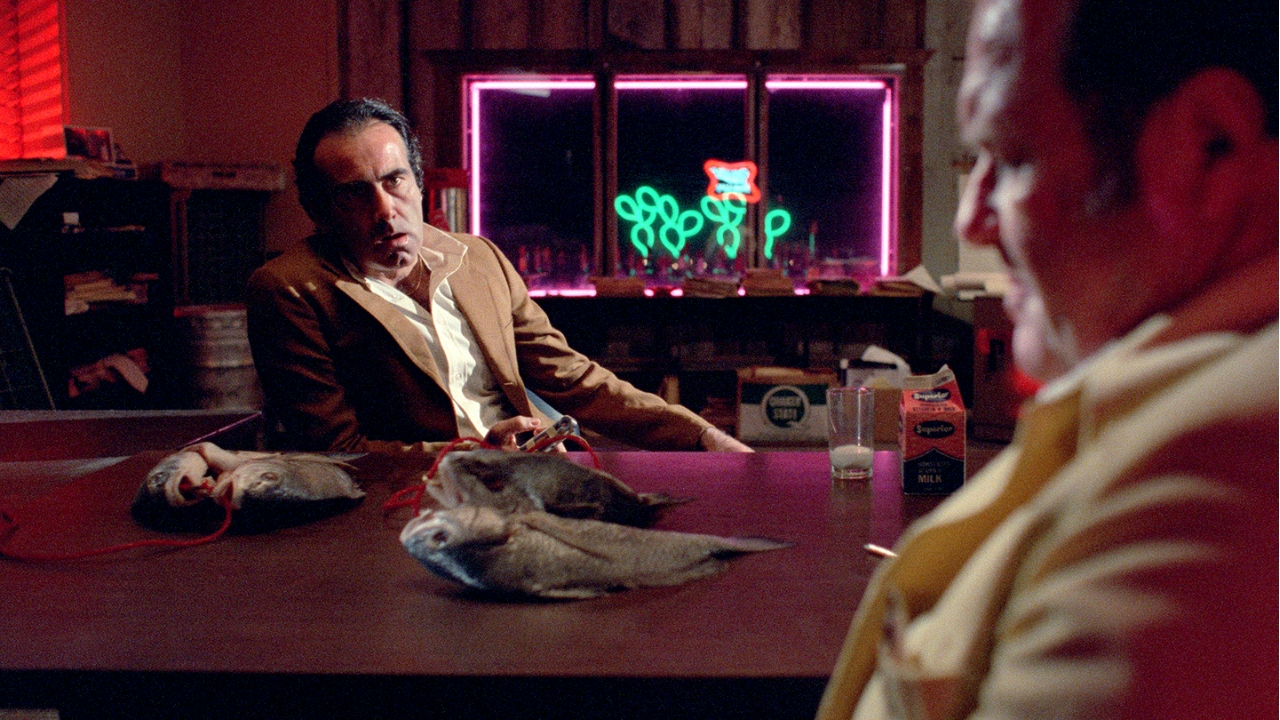
Dan Hedaya and M. Emmet Walsh in “Blood Simple.” (Courtesy of USA Films)
By Lucy Spicer
At Sundance Institute, we’re always in awe of the power independent film has to bring people together. That’s why we love asking filmmakers to name their favorite Sundance Institute–supported projects, both in our “Give Me the Backstory” feature series and through surveys like the top 10 feature films from the first four decades of the Sundance Film Festival. When a single film resonates with many filmmakers — from different backgrounds and with varying life experiences and artistic styles — a bond is created, rooted in a common love for independent film and universal stories. To commemorate some of our most-mentioned titles over the years, we’ve compiled responses from filmmakers who want to share their love for their favorite Sundance Institute–supported films.
In 1985, Sundance Institute assumed administrative control of the U.S. Film Festival, which would later be renamed the Sundance Film Festival. Less than a decade old, the Festival was still a scrappy affair, but with 30 years of hindsight, one thing is clear — the 10-day showcase of independent film was identifying classics from the beginning. The 1985 Festival’s program included such titles as The Times of Harvey Milk, Stranger Than Paradise, and Paris, Texas. That year, the Grand Jury Prize: Dramatic was awarded to Blood Simple, the feature debut for the Coen brothers.
Directed by Joel Coen — who co-wrote the film with his brother, Ethan — Blood Simple is a labyrinthine neo-noir in which miscommunications and misunderstandings among its characters always seem to end in blood. Abby (Frances McDormand in her screen debut) is unhappily married to bar owner Julian Marty (Dan Hedaya) but having an affair with bartender Ray (John Getz). After learning of his wife’s infidelity, Marty hires a private detective (M. Emmet Walsh) to get rid of the pair. From this point on, every plan seemingly goes awry, to disastrously permanent effect.
In addition to a gripping plot punctuated by darkly funny dialogue, Blood Simple features a suspenseful score by Carter Burwell and stunning cinematography by Barry Sonnenfeld. Seedy neon signs and blinding car headlights accompany deception and danger while any chance of getting out alive hides in the dark.
Below, some of the Sundance Film Festival alumni who love Blood Simple as much as we do describe in their own words why the film remains a favorite 30 years after its release. Beware, spoilers below!
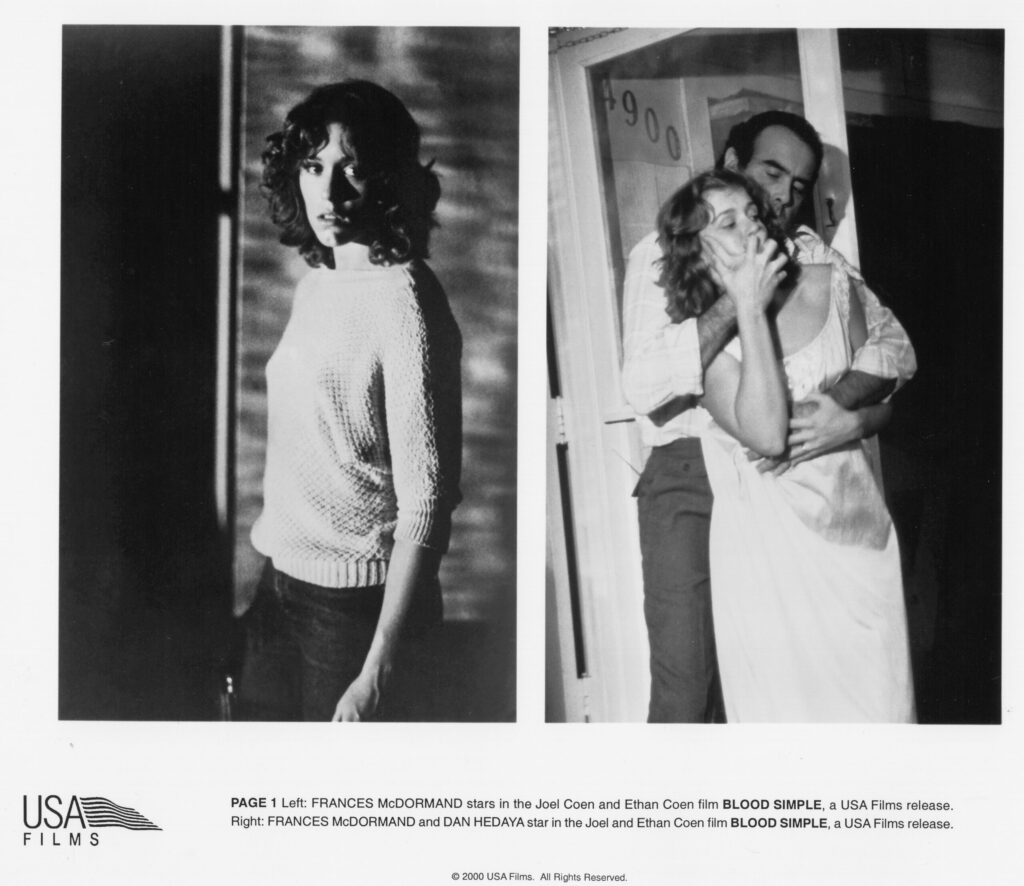
“I was running late and had no idea what I was about to see. The theater was already dark and I had to climb over a row of annoyed Festivalgoers to find the seat my wife had saved for me. Within minutes I knew I was in the hands of mischievous masters. The tracking shot along the bar that lifted up and over the drunk face-planted into the oak — instant classic.
It may have been the fluid camerawork that first hooked me, but it was ultimately the witty storytelling that won me over. As a fan of hard-boiled crime fiction, I loved the twice-bitten hapless characters and the crisp dialogue.
But this was not your everyday ‘howdunit’ — where we know more than the characters and delight in their cluelessness. Here, the twists and turns of plot were unexpected and revealed hilarious truths — especially the end, where Frances McDormand’s character shoots through the door, thinking she’s killed a nemesis she doesn’t realize is already dead.
In a mainstream thriller, her line, ‘I’m not afraid of you, Marty,’ would be a triumphant crowd-pleaser. But this independent film subverts that trope. Instead, it’s greeted from the other side of the door by the late great M. Emmet Walsh — bleeding out and contemplating his fate in a lengthening waterdrop from the underside of a leaky sink — ‘Well, ma’am, if I see him, I’ll sure give him the message.’ Priceless. Whoever these Coen Brothers were, I was sure we’d see more of them.” — W. T. Morgan, The Unheard Music (1986 Sundance Film Festival), A Matter of Degrees (1990 Sundance Film Festival; supported by Sundance Institute’s 1988 Directors Lab)
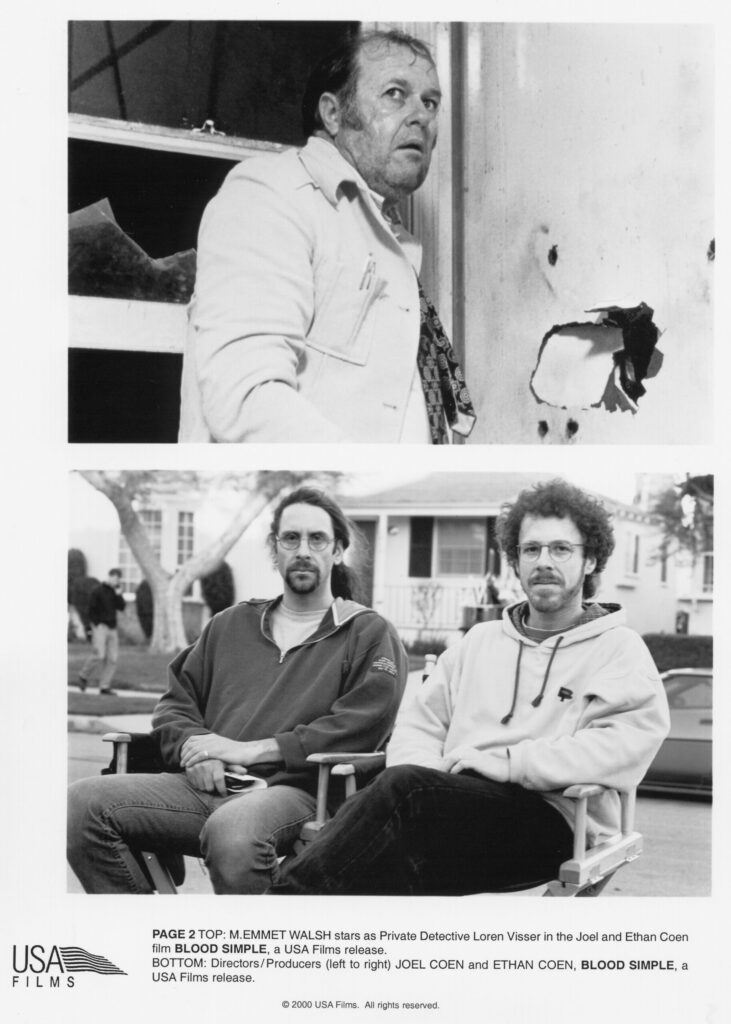
“When I saw Blood Simple the first time, I was in college, majoring in pre-med, and really had no inklings of ever doing anything creative or artistic with my life. So, as a complete cinematic civilian, I saw the movie and was really shaken up by it, in a great way.
I’d seen many Hollywood-type movies with my family, but when I saw this, for the first time I had this feeling that some person making this movie (or in this case, persons) was behind the scenes making very idiosyncratic and interesting choices. The camera angles and movement, the cutting patterns (words I did not know back then) were just… cooler… and distinctive, not like things I’d seen in ‘normal’ movies. And since then, the Coen brothers have continued to impress and surprise and have remained a major inspiration to me as I became a filmmaker myself.” — Mark Waters, House of Yes (1997 Sundance Film Festival)
“Blood Simple is a film about violence, things left unsaid, and misunderstandings. It is raw and messy, as great first films usually are. Those are the most interesting qualities that you can look for in any film. The performances are visceral, particularly that of M. Emmet Walsh, creating the most wonderful private detective from hell.
The first and final scenes are a declaration of principles of sorts, like a primitive tour de force of what will be perfected and explored in the rest of an extraordinary filmography by one of the most important duos of cinema.” — Astrid Rondero and Fernanda Valadez, Sujo (2024 Sundance Film Festival)
“Blood Simple was a ride you’d never been on before. The Coen brothers’ audacious debut introduced us to these fractured fairy tale stylists having their way with a wickedly funny horror comic led by the late great M. Emmet Walsh. The film’s pleasures are many, especially the contributions of Carter Burwell and Frances McDormand, two artists now synonymous with the storied Coen stock company.” — Todd Field, In the Bedroom (2001 Sundance Film Festival)
“As a weird kid in Spain who devoured Jim Thompson, Dashiell Hammett, Thomas Pynchon, and Carson McCullers, Blood Simple felt like the Coens (along with Barry Sonnenfeld as their sidekick) were speaking directly to me. Their love of detail and the specific and the way they modernized film tropes with wild camerawork, subversive narrative editing, and a wicked sense of humor. That was what felt new: THE TONE. A mix of brutality and absurdity that was both shocking and hilarious. That bold, self-aware style proved that noir didn’t have to be nostalgic. It could reflect the world as we see it today, while introducing one of my all-time favorite actresses, Frances McDormand. It’s still one of my favorite films.” — Carlota Pereda, Piggy (2022 Sundance Film Festival)
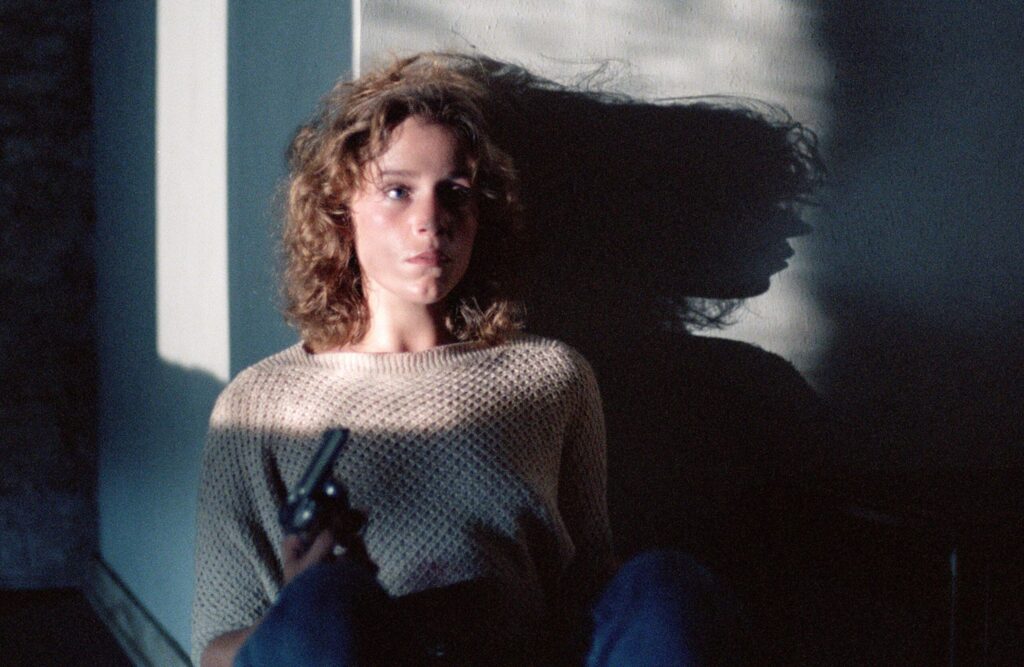
“My Blood Simple story begins with the Raising Arizona poster. It was hanging on the wall in my childhood video store. A man, woman, and child reclining in lawn chairs, all wearing shades, on a beautiful blue background. I remember staring up at it and thinking how cool the baby looked in sunglasses. As I got a bit older and became interested in film, I started hearing mention of the Coen brothers. I realized they made the movie with the cool baby on the cover. I brought the VHS home and of course I loved it. It was like a live action cartoon. Soon after, I went to Sam Goody and bought the soundtrack on CD. It was one of those double soundtrack albums they used to make, with two scores by the same composer. Raising Arizona was the first 10 songs, and then a movie called Blood Simple on the back half. I had never heard of Blood Simple, but the music was incredible. Sometimes I would even skip the first half of the album and just listen to the moodier and darker score, which was perfect for a 15-year-old just getting into movies. Eventually I rented it and was blown away. Perfect from front to back. Not a wasted frame. Blood Simple led me to Barton Fink and Miller’s Crossing and all the other masterpieces they’ve made. Thank goodness for these brothers and all the gifts they’ve given us, and especially for the one that started it all.” — Albert Birney, OBEX (2025 Sundance Film Festival)
Editor’s Note: This feature was published October 3, 2025. We will continue to add to this feature as more Sundance Institute–supported filmmakers contribute their thoughts about the film.