


By Jessica Herndon
For editor Affonso Gonçalves, the work of shaping a film doesn’t begin in the cutting room. It starts much earlier, with the decisions a director makes about how to tell the story, like where to place the camera, which performance to capture, and why a particular shot needs to exist in the first place.
“Editing is, in a way, another process of writing,” Gonçalves says from Los Angeles while reflecting on the perspective he brought to filmmakers as a creative advisor at the 2026 Sundance Institute Directors Lab. “They’re writing the film again, using those tools of the shots. So that’s what I bring from my knowledge of that. That’s what I talk to them about.”
For Gonçalves, that means encouraging directors to think beyond simply getting coverage and instead consider how the choices they make on set will ultimately serve the story. “I’ll ask, are you sure that you’re getting the best performance?” he explains. “When you’re telling your story, whatever shot that you’re shooting, how are you going to use this? There’s not just, ‘Let’s shoot, let’s cover,’ but what is this coverage about? Because once you know that on the set, you will know that in the cutting room.”
It’s a perspective Gonçalves has spent decades refining. An acclaimed editor, he has helped shape films by an extraordinary range of filmmakers, including Todd Haynes, Jim Jarmusch, Debra Granik, Chloé Zhao, Ira Sachs, and Walter Salles. But some of his most enduring creative relationships can be traced back to the Sundance Institute labs themselves. Over the years, Gonçalves has connected there with filmmakers he would later join in the cutting room, including Granik on Winter’s Bone, Tanya Hamilton on Night Catches Us, and Zhao on Hamnet.
Those connections make Gonçalves’ relationship with the Directors Lab particularly meaningful. He has experienced the program from multiple vantage points. Previously, he came on board as an editor — fellows rehearse, shoot, and edit scenes from their original work during the lab — and then served as a creative advisor in 2022. Each time, he has brought with him an editor’s instinct for looking beyond what’s captured in a frame to consider how each creative choice contributes to the larger story.
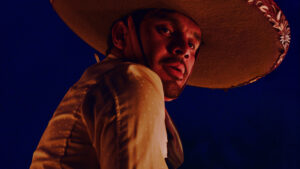
As we explore the impact of creative advisors at the Sundance Institute labs, we chat with Gonçalves before he heads to Mexico to cut Todd Haynes’ De Noche starring Pedro Pascal and Danny Ramirez. He discusses what an editor can teach a director before they reach the cutting room, what filmmakers should remember about collaborating, and why he loves returning to the labs.
You’ve built an extraordinary career and could spend your summers doing a lot of things. Why do you continue to say yes to participating in the Directors Lab as an advisor?
Because I love it there. I love what it stands for. It’s very inspiring and very intense. And every time I go, I come out learning something new and taking something from the filmmakers and the environment. It’s special. And the first time I went there, many years ago, I went there as one of the editors. So now it just feels right. And I took so much of it when I became an editor and I want to give that back. I like to share what I learned because that’s what people did for me. Through my career, so many people help me out that I think the least I can do is share some of my experience with them.
When you think about this year’s lab, what moment comes to mind that captures the emotion of the experience?
It’s great to go to the set for the first time and rehearse with the actors. Then when you’re in the cutting room obviously, as an editor, that’s the place that I love the most. Just to be with them and see how they work as an editor and how they think about how to tell those stories. But overall, I think every step is very emotional to them. And it’s so fast, too. You have that heightened reality in a way. A week is so quick. You just have to make decisions, and then you take it all in later.
Is there a piece of advice you found yourself giving over and over?
I’ll ask, “How about you cover this?” If I feel like something might be missing, I suggest ways to cover things. And sometimes you may shoot something because you feel you are running out of time and you want to have that shot. But sometimes you do it and then don’t get the performance. You’ve got to build your story with the performance. So one thing I ask is, “Are you sure you’re getting what you want from this? Are you getting the reaction, action, or the delivery you want?” As an editor, that’s where I focus.
What did you see directors thinking they needed upon arriving at the labs compared to what they actually needed?
They’re very anxious to get things right. They all have some experiences. They have the knowledge to do it. But I want to make sure that they’re getting to tell the story in their very particular way. We tell them, “Just put your personality in it. You’re not doing it for us. You’re doing it for yourself.” We try to understand what it is that they want. There is a lot of conversation about script.
In your professional career, how early on are you involved in the process of making a film? Are you on set often?
It depends. Most of the directors that I’ve been working with for a long time, once they have a script, they send it to me, I read it, and we talk about it. Then when they’re shooting, I can start working on the film. But there are directors that want to hold off, like Chloé [Zhao]. She finishes shooting, and then she does a pass of the film herself and then we work together. Jonas Carpignano, I’ve done three films with him and that’s the way we do it, too. So it’s really up to the directors how they like to work. And I kind of adjust and adapt, according to the way they like to function.
What kind of stories are you drawn to?
Probably more character-driven stories, but I like everything. I love comedies, horror, westerns — any good story. So, I don’t have a preference. I happen to make more dramas, but it’s not because I’m saying, I just want to work on those. Most of my films are independent. I usually choose based on the script and the filmmaker that I’m working with. If it’s somebody that I’ve worked with before, probably 100% of the time, I’m going to say yes. But it’s really based on the script and the filmmaker and their work up to that point.
Many of the films you’ve worked on, from Beasts of the Southern Wild to Cassandro and Peter Hujar’s Day, have been defining Sundance Film Festival successes. After meeting the filmmakers at the lab this year and in previous years, what do you hope they understand about the journey that comes after the labs?
I hope they stay with the feeling that they had at the lab. It’s such a collaborative process, and you become really tight with your team, with your crew, and I hope they stay with that feeling. And just say what they want to say. Their [point of view] is important, whatever they have to say is important. Remember that.