



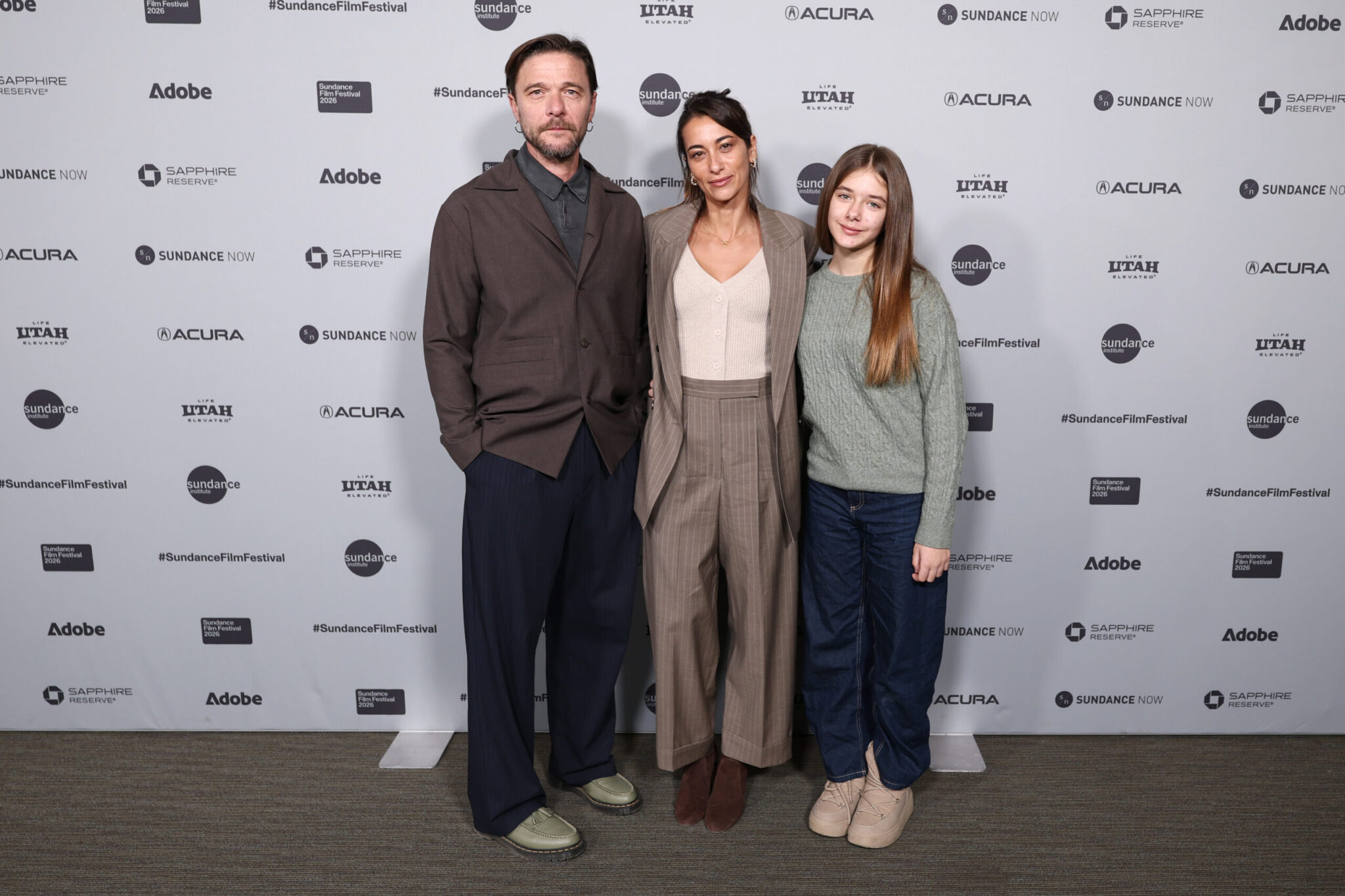
(L–R) Christos Passalis, Myrsini Aristidou, and Maria Petrova attend the “HOLD ONTO ME (Κράτα Με)” premiere during the 2026 Sundance Film Festival at Library Center Theatre on January 26, 2026, in Park City, Utah. (Photo by Cindy Ord/Getty Images for Sundance Film Festival)
By Lucy Spicer
“It’s one of those seemingly simple stories that you might think you’ve seen before,” says Sundance Film Festival programmer Ania Trzebiatowska as she introduces the first Cypriot feature to premiere at the Festival. “Father-daughter relationship — we’ve seen many films about that, but there’s something about this film that sticks with you.”
There are many things about writer-director Myrsini Aristidou’s HOLD ONTO ME (Κράτα Με) that linger long after the credits roll. Alex Weston’s contemplative piano and guitar score is one of them. The gorgeous natural light reflecting off the shores of Cyprus is another. But perhaps most memorable is the nuanced performance by newcomer Maria Petrova, who plays the film’s 11-year-old protagonist, Iris.
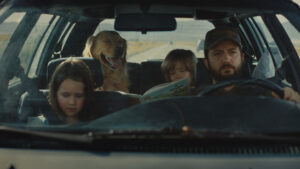
Aristidou’s feature directorial debut premiered to riotous applause on January 26 at the Library Center Theatre in Park City as part of the 2026 Sundance Film Festival’s World Cinema Dramatic Competition. The film follows Iris, a ragamuffin who feels somewhat adrift when her mother goes on a trip with her boyfriend. When Iris learns that her grandfather has died, she watches the funeral from a distance to find that her estranged father, Aris (Christos Passalis), is in attendance. Soon after, circumstance pulls them together when Iris needs to be bailed out at the police station after she and her best friend are caught stealing a dinghy.
From that point on, Iris finds herself drawn to Aris, though he’s no one’s idea of a role model. When he’s not selling off his late father’s possessions, he’s hanging around the shipyard. When he’s not betting on horse races, he’s sneaking a strand of Iris’ hair into their food in an attempt to get her meal comped at a restaurant. Despite the initial frostiness between them, the pair begins to forge what feels like an inevitable — if fragile — bond. But relationships aren’t repaired overnight, and Aris’ shady business dealings threaten to topple anything they’ve built.
“The exploration of this theme began 10–11 years ago, when I was at NYU and I made my first short film, Semele, which was [about] a father-daughter relationship,” explains Aristidou at the film’s post-premiere Q&A. “It actually started because I started going to therapy, and I realized how our childhood bonds really affect our adult relationships. We are these children that grow up to be adults, and then we try not to repeat the same patterns. And I noticed this coming again and again into my life, and I decided that I wanted to explore it in depth, and that’s why I made this feature. So in many ways, the emotional arc of the story is very personal, like many other things in the film.”
Aristidou’s penchant for the personal extends to the film’s cinematography. “Myrsini definitely likes to go very close,” says cinematographer Lasse Ulvedal Tolbøll. “She always wanted me to go closer and more intimate.” (“He’s Danish, so he wanted to be further away. I’m Mediterranean,” interjects Aristidou to a laughing audience.) But the film’s close-ups serve a purpose: When the camera is trained on Petrova’s face, the young actor’s subtle facial expressions — or lack thereof — reveal a guarded girl beyond her years who has had to learn to mask her emotions to avoid disappointment.
“At the beginning, it was pretty hard for me, because it was my first time filming a big movie like this,” admits Petrova during the Q&A. But, according to Passalis, her inexperience served the project well and helped to elevate his own performance.
“The interesting thing in this process is that when one works with adult colleagues, they are already convinced. You share the gains of doing the scene,” he explains. “In Maria’s case, she’s a very harsh critic, I have to say.” The audience in the Library Center Theatre breaks into chuckles, but Passalis is serious. “No, really. It’s not a joke. I had to convince her in real time, in the shot. I understood quite soon that I had to get rid of the tricks of the trade, you know? The things I know, and the safety nets we actors use in order to get rid of the insecurity during the shot, so on and so forth. So, Maria: I’m grateful to this artist here next to me because she really showed me something that I wouldn’t know otherwise.”