



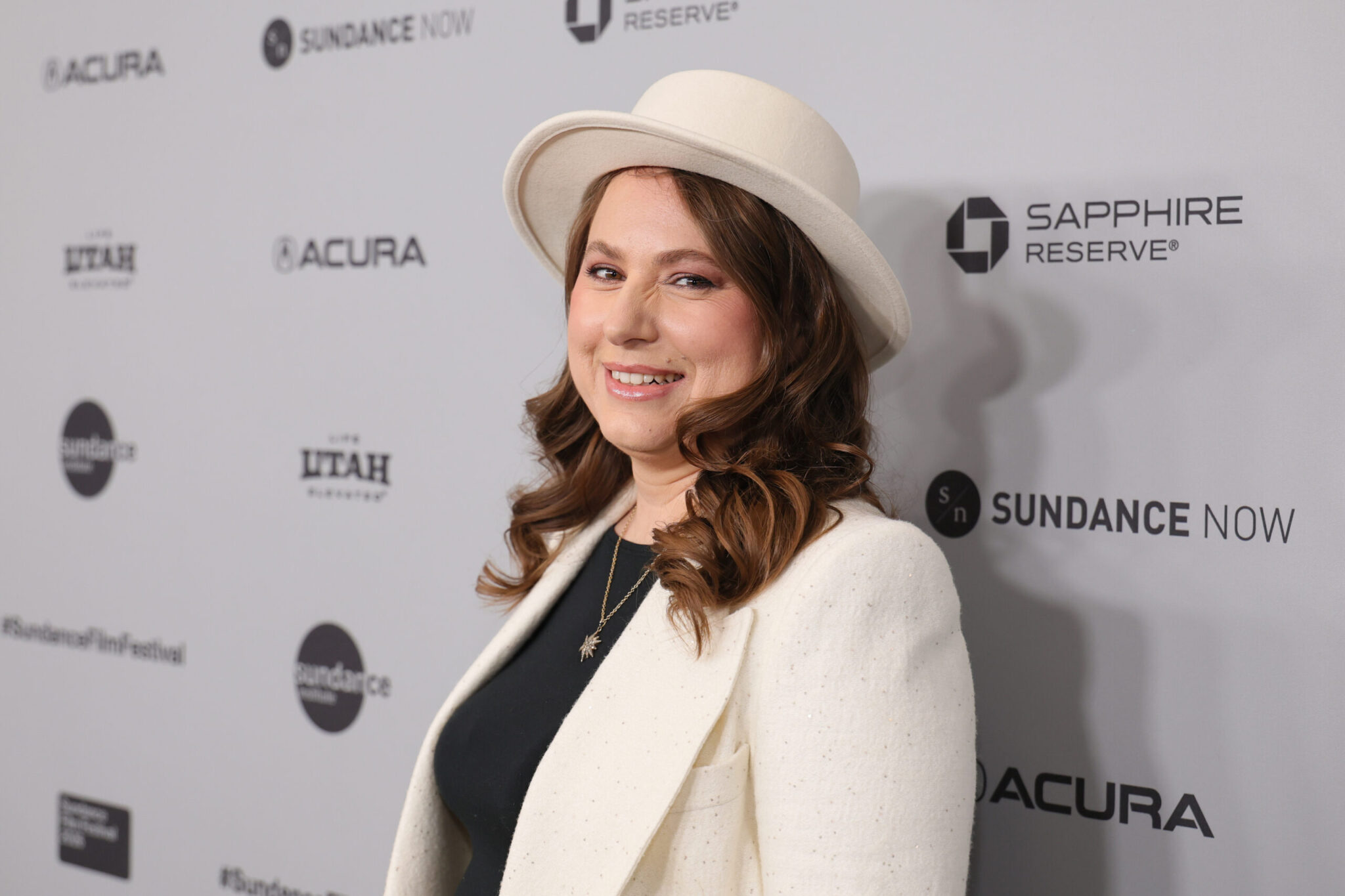
Judit Polgár attends the Queen Of Chess premiere during the 2026 Sundance Film Festival at Eccles Center Theater on January 27, 2026 in Park City, Utah. (Photo by Dia Dipasupil/Getty Images for Sundance Film Festival)
By Erik Adams
Rory Kennedy just had one question when she was asked to make a documentary about Judit Polgár: “Who’s Judit Polgár?”
Who’s Judit Polgár? Well, after the premiere of Kennedy’s Queen of Chess at the 2026 Sundance Film Festival, there’s a theater full of people who can tell you that Judit Polgár was a chess grandmaster at age 15, reigned as the top-rated women’s player in the world for 23 years, and is without a doubt one of the strongest players in the history of the game. When Kennedy calls Polgár to the Eccles Theater stage for a post-premiere Q&A, the crowd erupts as if a rock star just entered the room.
To be fair, Polgár is something of a rock star. Even when she’s discussing some of her most punishing defeats in Queen of Chess, she projects an unshakeable coolness and confidence. The movie complements that attitude with its soundtrack: In match after match, Polgár demolishes opponents to the sounds of spiky bops by Blondie, Elastica, Le Tigre, and other women-fronted acts.
Polgár has lived the kind of life that lends itself easily to the cinematic treatment. Her father, László, strongly believed that geniuses are made, not born. To prove this, he raised Polgár and her two sisters, Susan and Sofia, to be chess prodigies, and created a strict training regimen that had them eating, breathing, and sleeping chess. The girls went from dominating local tournaments in Budapest, Hungary, to upsetting the heavily favored Soviet Union team in the final round of the 28th Chess Olympiad in Thessaloniki, Greece. At the time, Judit was 12 years old — despite her obvious youth, she looks entirely at home in Queen of Chess’ footage of the Olympiad.
In addition to toppling a competitive-chess superpower, the documentary shows Polgár pushing back against a culture of ingrained sexism within the game. After winning in Thessaloniki, she begins competing in men’s tournaments, surging to victory with an aggressive attack style. Queen of Chess contrasts these triumphs with footage of top chess players like Bobby Fischer saying wildly out-of-pocket things about the limits of women’s intelligence. Kennedy returns to those remarks just as Polgár turns on the afterburners in the match that made her the youngest grandmaster in chess history, besting a record previously held by Fischer.
The suspense in these win-or-lose moments is the stuff sports-movie legends are made of. And like any sports movie worth its salt, Queen of Chess gives Polgár a formidable rival in the form of chess’ GOAT, Garry Kasparov. Their many matches through the years form one of the main storylines of the documentary, and you can hear a collective gasp in the Eccles when Kasparov pulls an illegal move that would’ve handed their very first matchup to Polgár. He’s the first face we see onscreen in Queen of Chess, and he was also the last interview Kennedy conducted for the documentary — she says it took an assist from Polgár to secure time with the Russian grandmaster.
This is Kennedy’s ninth documentary to premiere at the Sundance Film Festival, and in her introduction, she lists a who’s who of documentarians whose work she’s seen in Park City: Liz Garbus (who’s in the audience for Queen of Chess), Barbara Kopple, Andrew Jarecki, Amir Bar-Lev, Ross Kauffman, and Joe Berlinger. She also says a word of thanks to the Sundance Institute and its late founder, remembering what Robert Redford told her after the debut of her first Festival film, American Hollow: “You know, you’re a good storyteller. You should stick with it.”
“And when Robert Redford tells you to do something, especially when it relates to film, you definitely do it,” she says.