



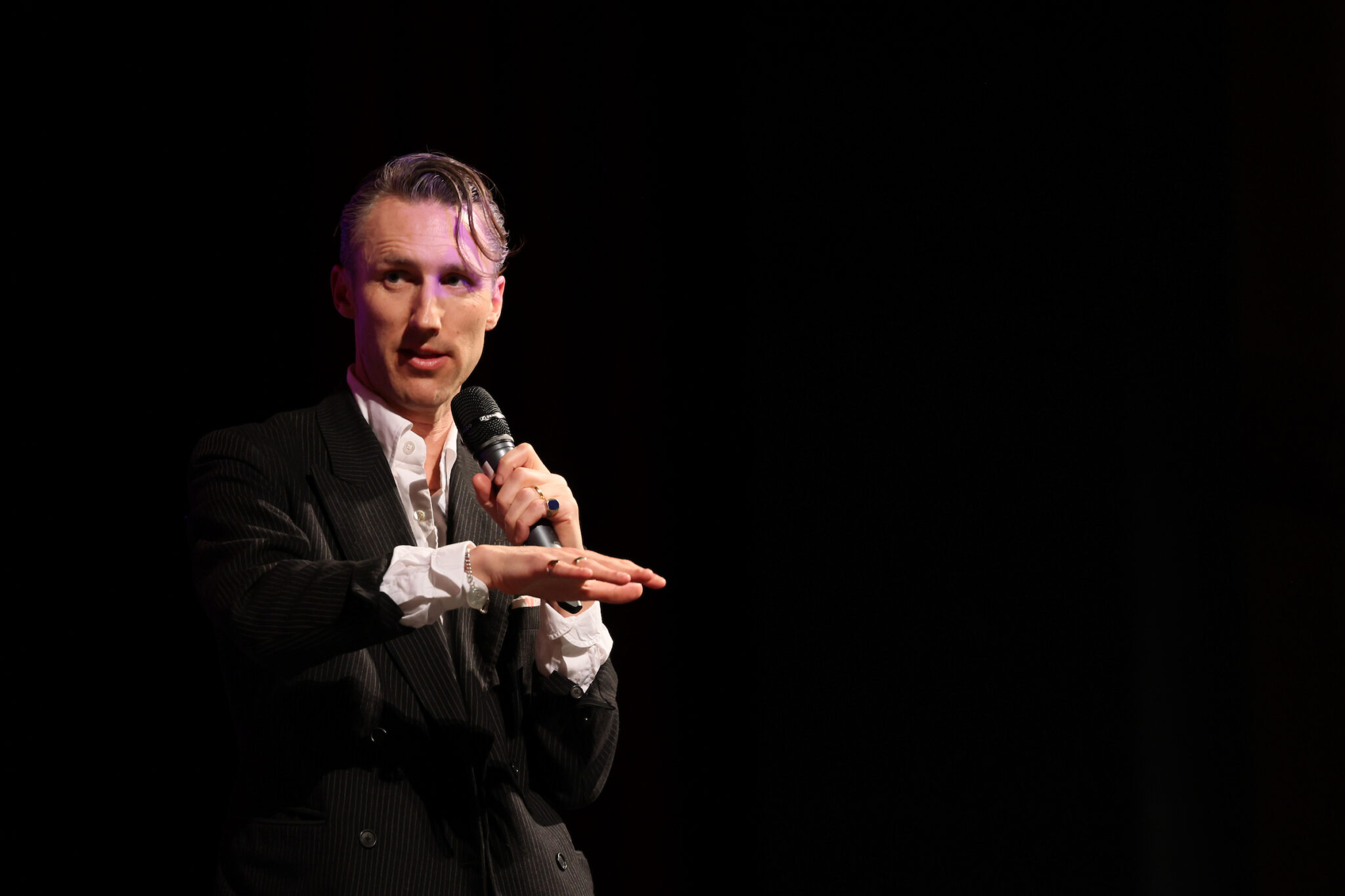
Edward Lovelace attends the Q&A for “Antiheroine” by Edward Lovelace and James Hall, an official selection of the 2026 Sundance Film Festival. © 2026 Sundance Institute | photo by Jemal Countess
By Erik Adams
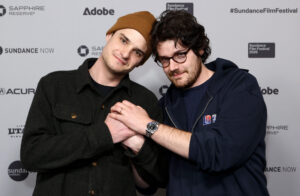
The dream of the ’90s is alive at the 2026 Sundance Film Festival. Just a few days ago, the premiere of Tamra Davis’ POV documentary The Best Summer took The Ray Theatre on tour with some of the biggest names in alternative music circa 1995. And now, at the Eccles Theatre, there’s the debut of Antiheroine, Edward Lovelace and James Hall’s plunge into the past, present, and future of ’90s icon Courtney Love. The Hole frontwoman unfortunately can’t make it tonight, so Festival director Eugene Hernandez records a quick video of the audience showing some love for Lovelace, Hall, and producer Julia Nottingham to take back to Love.
“I kind of imagine if she were standing here, first thing she’d be like, ‘Guys, what do you think? What do you think?’” Nottingham says during the post-premiere Q&A.
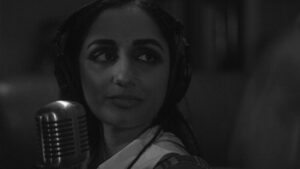
Antiheroine is the result of several years Lovelace and Hall spent with Love as she wrote and recorded her first new music in nearly a decade. The intimacy and their instant connection (“She called me and she was like, ‘Julia, Oh my god, you found the British Maysles brothers,’” Nottingham recalls) is apparent in this, the Festival’s last ever premiere at the Eccles. Love invited the directors into her creative process, and Anitheroine finds her roughing out autobiographical lyrics, heading into the recording studio, and collaborating with her longtime friend Michael Stipe and former Hole bandmate Melissa Auf der Maur. These conversations, like so much of Antiheroine, unfold in extreme close-up — a symbol of the access a palpably vulnerable Love granted to the filmmakers.
“She did say [the writing process is] such a vulnerable private space that she just didn’t ever think she would let cameras in,” Nottingham says. “So it was really the guys building this relationship [that made her say], ‘Actually, it’s okay to come in.’”
“The fact that Courtney was writing this album — we knew that this film had a present-day story,” Hall adds. “Events were going to unfold in front of us, and it gave the film a nice, proper arc. We knew that we were going to see something, whether it was going to be a release or just getting herself together.”
While Love’s never been anything less than outspoken, Antiheroine shows why she may have been reluctant to open up like this in the past. Flashbacks to the tabloid circus that surrounded her and late Nirvana frontman Kurt Cobain during their marriage make up much of the documentary’s middle section. Hall and Lovelace revisit a controversial Vanity Fair cover story that alleged Love was still using drugs while pregnant with her daughter, Frances Bean Cobain. The documentary is frank about the now-sober Love’s old habits, and their roots in a tumultuous childhood: A father who dosed her with LSD at age 3, a stepfather who got a 10-year-old Love drunk on Christmas, and a mother who all but abandoned her during adolescence. But Love makes it clear in Antiheroine that there are depths of addiction that she never sunk to — particularly those reported by Vanity Fair. The psychic scars left by that profile, and the desire to never let anyone else tell her story again, resound throughout the documentary.

Nottingham, who also produced the 2023 Pamela Anderson documentary Pamela, a Love Story, recalls growing up in the ’80s and ’90s and “being fed a very specific narrative about women, and Pamela was one of those, and Courtney was another.” Of her desire to make Antiheroine — a process that began by cold-emailing Love’s manager — she says, “I wanted some truth, and I wanted to hear it from the horse’s mouth.”
It’s easiest to hear that truth in Love’s music. It’s thrilling to see Antiheroine’s footage of Hole in its prime, and agonizing to see the warts-and-all majesty of records like Live Through This and Celebrity Skin drowned out by collective grief over Cobain’s death — visualized at one point by a rowdy concert crowd tearing the clothes off a stage-diving Love. But the documentary’s true moments of inspiration are in the here and now, as Love rekindles her creative spark.
“You’re witnessing someone gaining their confidence and building back that strength,” Nottingham says.
“I got to remain alive,” Love says near the end of the movie. She’s saying it one way (she’s been fortunate enough to survive), but you can read it another: that she has to remain alive. In Antiheroine, we see why — and get uncommon insight into how she’s survived, too.