


“I’m Achieving Something Worthwhile for the Revolution.” : Highlighting Merata Mita and the Merata Mita Fellowship

By Katie Arthurs

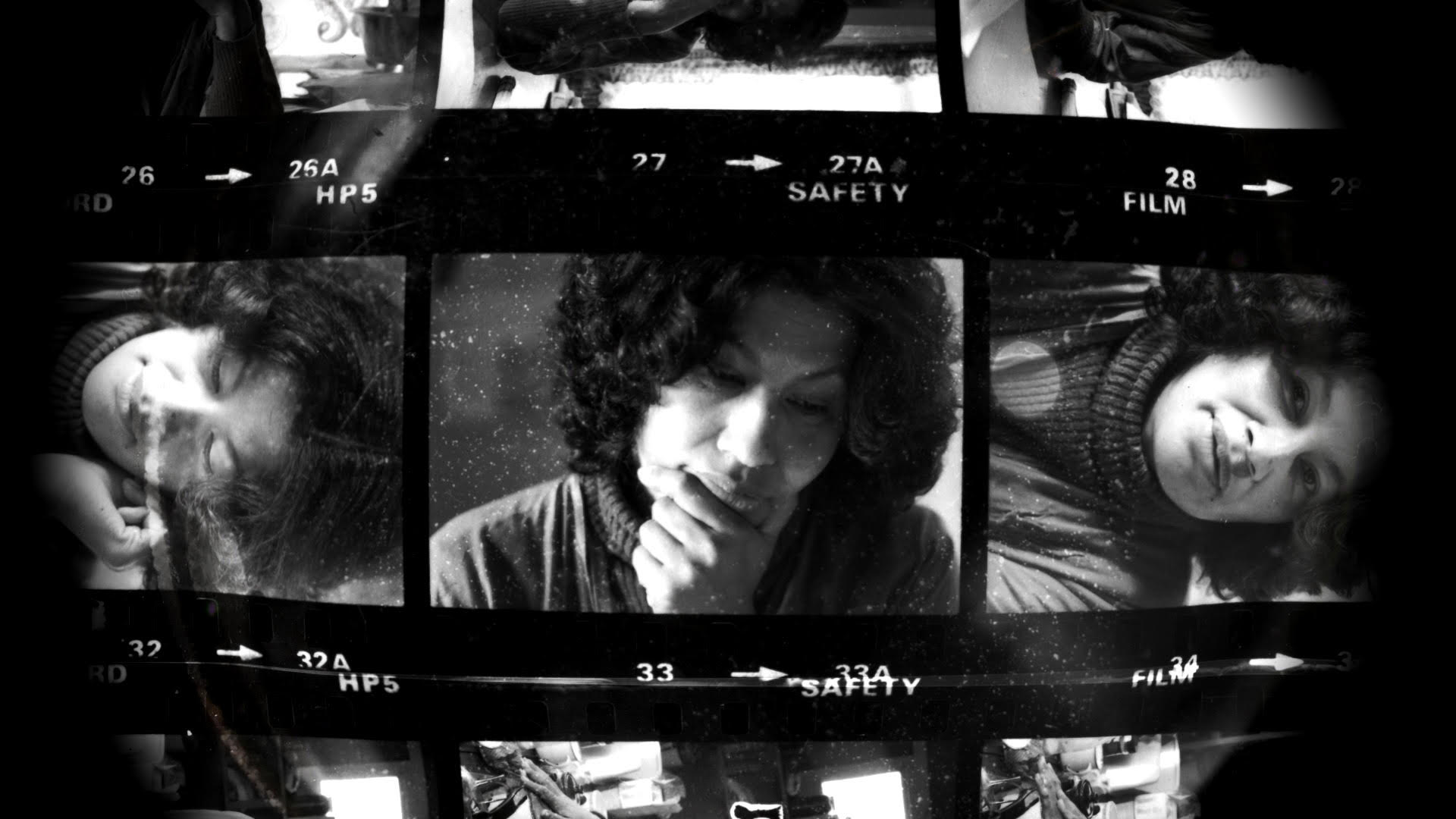
Merata Mita (1942–2010), the legendary Māori filmmaker, godmother of Indigenous cinema, and namesake of Sundance Institute’s Merata Mita Fellowship, devoutly believed in the ever-present journey of decolonizing the screen. This Indigenous People’s Day, we want to highlight her and some of the amazing Indigenous women who continue her legacy through support from the Merata Mita Fellowship. 
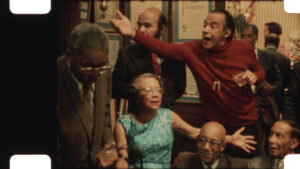
Merata Mita never set out to be a filmmaker. The single Māori mother and activist said she didn’t choose filmmaking — it chose her. Mita, who would later go on to be the first Māori woman to solely write and direct a feature film, picked up a camera to showcase the realities Māori faced, despite the backlash that it would bring. Mita said of her work: “I’ve been stereotyped as a radical political filmmaker, but I don’t see myself as radical at all. I see myself as representing what already exists — representing the truth. I’m expressing a Māori viewpoint all the time.”

Mita believed deeply in the need for Indigenous people to tell their stories, which led her to devote many of her years to mentoring the next generation of Indigenous filmmakers. Sundance Institute Indigenous Program director Adam Piron had the opportunity to work with Mita as a fellow during her tenure as a Native Lab artistic director and creative advisor from 2000 to 2009. He says that Mita “exhibited a ‘tough love’ approach to new filmmakers, a level of scrutiny that inevitably made their work better.” 

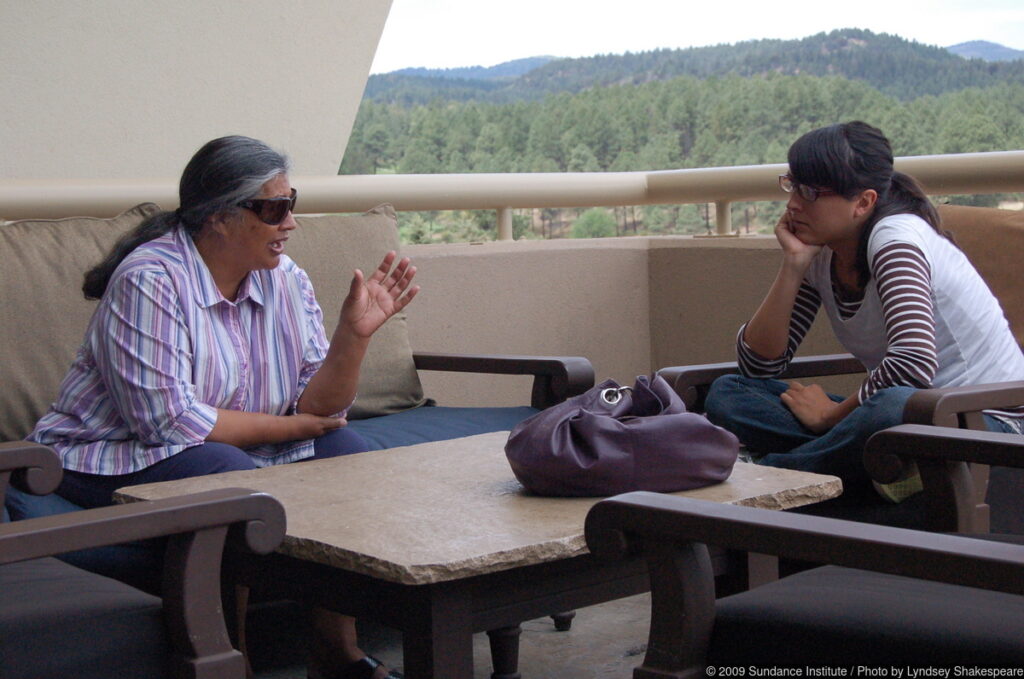
Merata Mita and director Sydney Freeland discuss a topic during a Sundance Institute Lab. Courtesy of Sundance Institute | Photo by Lyndsey Shakespeare

Through the Merata Mita Fellowship, the Indigenous Program continues to uphold her efforts and ideals of decolonizing the screen. Since its inception, 12 Indigenous women have been supported in their endeavor to bring their feature films to life. Among highlights from supported artists is Out of State, from 2016 inaugural fellow Ciara Lacy (Kanaka Maoli), which follows the unlikely story of Native Hawaiian men discovering their Native culture as prisoners in the Arizona desert. Her film had a successful festival run, during which it screened at Berlinale, Big Sky Documentary Film Festival, and the Hawaiʻi International Film Festival, where it won the Audience Choice Award and the Made in Hawaiʻi Best Feature Award.

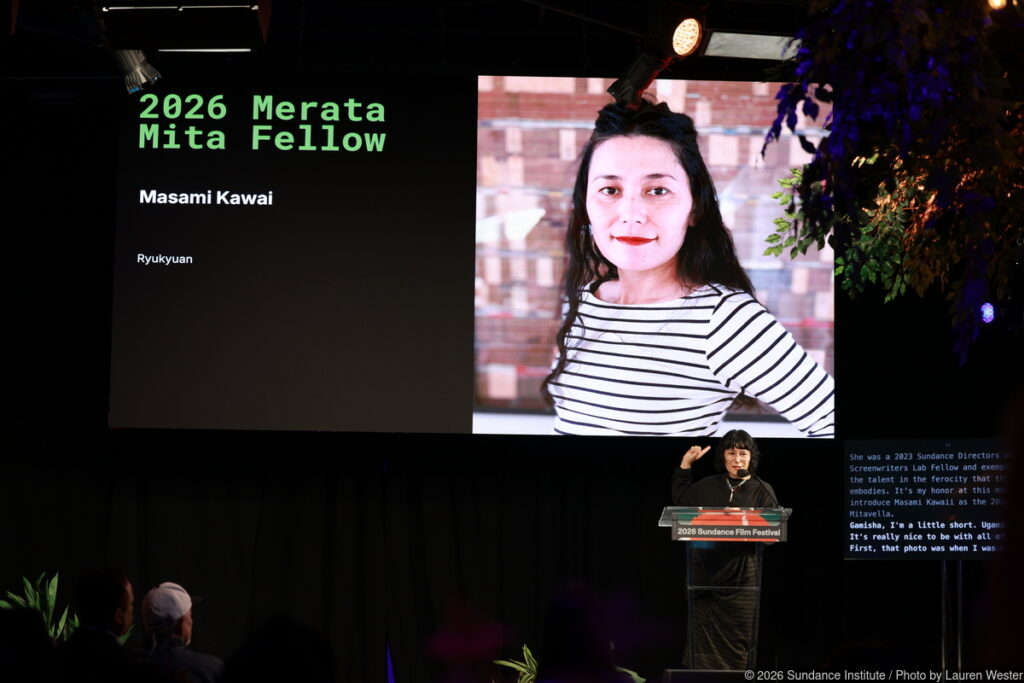
Finally, we want to highlight current Merata Mita fellow Masami Kawai (Ryukyuan) and her project Valley of the Tall Grass, in which an old TV/VCR combo set is thrown out, but it unexpectedly survives and circulates through the lives of three Indigenous families in Oregon’s Willamette Valley. During her speech at the 2026 Sundance Film Festival Native Forum Celebration, Kawai shared that “Mita’s career gives me the courage to be the kind of filmmaker I am. She has paved a path that shows I can simultaneously be a filmmaker, educator, and mother, with each role enriching the others.” Kawai recently went into production on her debut feature. 

2026 Merata Mita Fellow announcement at the 2026 Sundance Film Festival. Courtesy of Sundance Institute | Photo by Lauren Wester

“The revolution isn’t just running out with a gun. If a film I make causes Indigenous people to feel stronger about themselves, then I’m achieving something worthwhile for the revolution.” This quote from Merata Mita is why we have the Merata Mita Fellowship. There is purpose in story and art. It holds up a mirror to what is going on around us and demands to be seen. As Indigenous people, we carry it in our DNA, as ever-present as our hands or hearts. The stories we write are ones pulled from our people, experiences, and everything else that makes us who we are. To put it simply, it is a calling that wasn’t asked for but was answered because, despite the constant deleting of words and second-guessing of practically everything written on the page, we know we need to tell these stories because they demand to be told. 

As we move into our 12th year of the Merata Mita Fellowship, we send out the call for Indigenous women-identifying applicants from across the globe to follow in Mita’s footsteps and tell the stories that need to be told. Together we can continue her legacy and work to have Indigenous artists tell their stories.

Click here to apply. The application is open October 13–26, 2026.

News title Lorem Ipsum

Donate copy lorem ipsum dolor sit amet

Lorem ipsum dolor sit amet, consectetur adipiscing elit. Ut elit tellus, luctus nec ullamcorper mattis, pulvinar dapibus leo. Lorem ipsum dolor sit amet, consectetur adipiscing elit. Ut elit tellus, luctus nec ullamcorper mattis, pulvinar dapibus leo. Lorem ipsum dolor sit amet, consectetur adipiscing elit. Ut elit tellus, luctus nec ullamcorper mattis, pulvinar dapibus leo. Lorem ipsum dolor sit amet, consectetur adipiscing elit. Ut elit tellus, luctus nec ullamcorper mattis, pulvinar dapib.