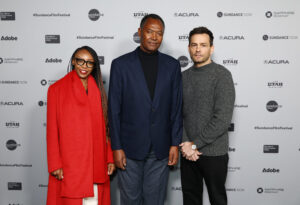

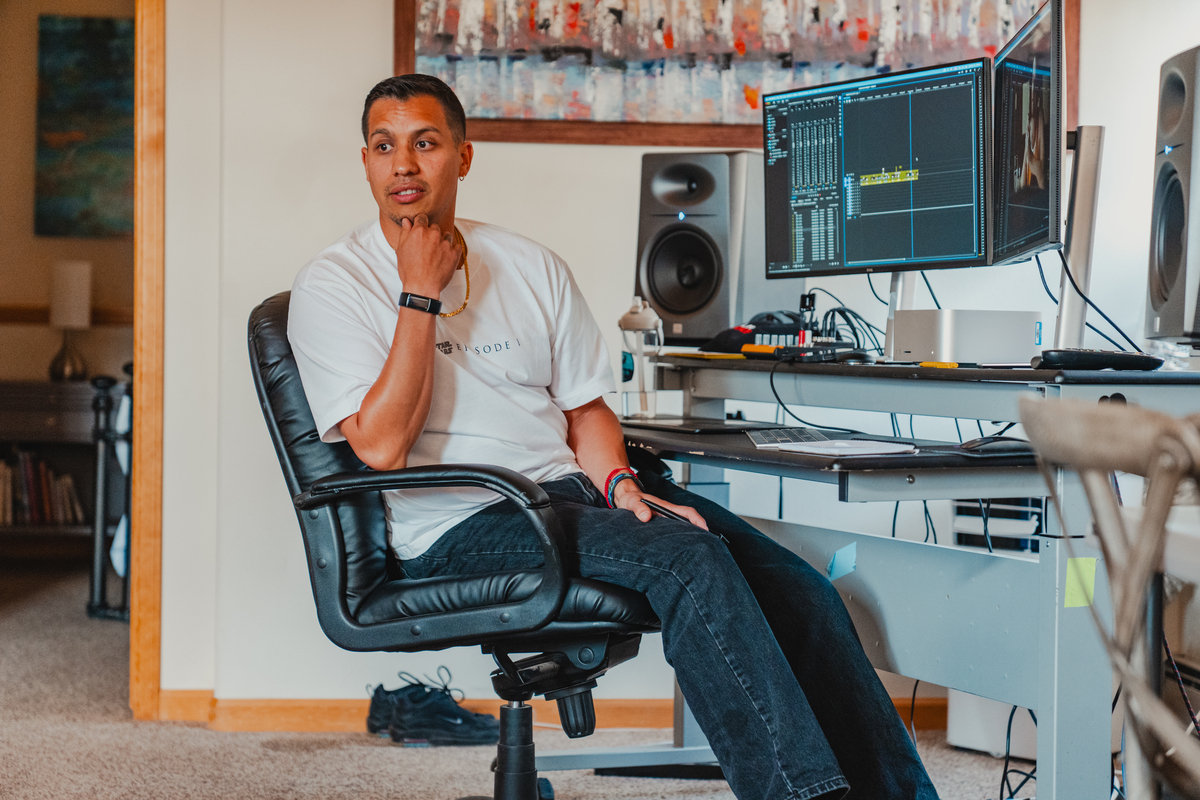
Marco Rosas at the 2026 Sundance Institute Directors Lab (Courtesy of Sundance Institute, Photo by Gabe Rovick)
By Ramona Flume
Few relationships in filmmaking run as close, or as consequential, as the one between an editor and their director. The partnership can produce a creative shorthand that sparks new discoveries with each cut, builds trust in the problem-solving privacy of the editing bay, and sometimes shapes a unique chemistry into a career-long collaboration. One such enduring partnership was the one between Quentin Tarantino and Sally Menke, the Oscar-nominated editor who worked on every one of his films until her death in 2010.
For the last 16 years, Sundance Institute has helped support emerging editors through the Sally Menke Memorial Editing Fellowship, which honors the collaborative career of the editor, known for her work with directors like Tarantino as well as her long-standing role as creative advisor at the Sundance Institute Directors Lab. Every spring, one Menke editing fellow is selected to receive a yearlong mentorship and participate in the summer Directors Lab, where they are paired with two filmmakers to workshop, shoot, and edit scenes in a collaborative learning environment. Past fellows have included Daysha Broadway (Whitney Houston: I Wanna Dance with Somebody), Troy Lewis (Daughters), and Debbie Berman (Black Panther).
“I kept thinking if I was selected I would be one of four editors for some reason. But when I got the email and saw the list of previous fellows, the math just wasn’t adding up. My wife had to finally say to me, ‘I think you’re the one,’” Marco Rosas says in a recent Zoom interview about his reaction to being named the 2026 Sally Menke fellow. “I was so excited to meet my team of fellow editors so I was shocked. But I think I was even more excited when I realized I was going to get to work with new directors at the labs. That was my team. And that’s who I really enjoy working with — new directors.”
Rosas is only just beginning his yearlong fellowship as the most recent addition to the Sally Menke cohort, but he says things have moved very quickly already. “It’s kind of been a whirlwind for the past month and a half.”
The Los Angeles–based film editor, known for his work on An Almost Successful Dating App Love Story (2025 Sundance Film Festival), Winning Time: The Rise of the Lakers Dynasty (HBO), and Sender (2026 SXSW), starring Britt Lower and Jamie Lee Curtis, just completed his time as an editor at this summer’s Directors Lab (June 9–24) in Estes Park, Colorado, and he is already juggling mentorship options, new scripts, and feature film development.
We spoke with Rosas to discuss what receiving the Sally Menke Memorial Editing Fellowship means to him, what helped him find his creative language at the Directors Lab, and how he helps new directors find their story in the footage.
Can you tell us a bit about the application process for the Sally Menke Memorial Editing Fellowship?
The process was pretty extensive. It’s not just, “Here’s my movie.” There were letters of recommendation and some essay questions about editing that I put a lot of thought into. Questions about what I strive to be as an editor and is there an editor I strive to be like or a genre I want to work in, and in all honesty, I just try to be the best version of myself as an editor. So, it’s not necessarily about a certain editor I look up to or a genre I want to work in. It’s more about the directors I really want to work with. I always want to know — who are the new directors? Because that’s the path my career has taken … it has led me to work with new and first-time directors and that’s what I really like. I really enjoy feeling like we’re on an even playing field and we’re learning the process together. That’s what I really strive for as an editor — collaborating and helping directors tell their story.
The fun part is the discovery of the rewriting and the edit with the directors. That’s what I told [Sundance Institute] in my essays and interview, and I really think that’s what they looked for. And in hindsight, after being at the labs, that is Sundance. Sundance is always looking for independent filmmaking, new voices, breaking barriers for storytelling, and giving opportunities to those who don’t traditionally have those opportunities in filmmaking. And I truly believe that’s what helped me get into the Sally Menke Fellowship. When I received it, I was very honored.
You were paired up with two directors for this year’s labs. How was that experience?
I think I was most excited that I was going to get to go to the Directors Lab and work with new directors. Roberto Fatal and George Watsky were the two directors I was paired with, and I was super excited going into it. They both reached out, and we chatted for about an hour. I read their scripts and really resonated with both of them. They were both so excited, and I felt I calmed their nerves going into the lab, and when we first met we hit it off right away.
What the lab did, which I was really thankful and appreciative of, is they set up one-on-one meetings with the editors and directors before they start rehearsing and shooting. So before we get into the edit, we had a moment to go through the scenes we were working on and I got to give them my input. I gave them my approach on editing and how I look for the emotion and the feeling of the scene. That’s what I look for. I really wanted to articulate that, and we went beat by emotional beat of each scene and made sure we were on the same page.
I wanted them to know they should focus on getting the performances they wanted, but also to let the actors play, and to let them lean on that. I told them to not worry about how we’re going to edit the scene, but focus on the performances and the emotion and we’ll get it. There was something about when I got to the lab and started speaking with [them], my intuition just kind of set in, and I was able to convey that, “Hey, follow your intuition. I’m comfortable I can follow it in the edit, and I’m here to back you up.”
So your collaborative role extended beyond the editing room.
Yeah, there were also a couple of days where we got to go to rehearsal and be on set and see the blocking and things like that, which for editors, isn’t very common. It was really cool to sit there and observe and be supportive for the directors. I kept reminding them to trust their instincts and to not worry about the edit while they were shooting. I’m truly there to help the directors clear their minds, see the task at hand, and see the light at the end of the tunnel. And I got to be their sounding board in the editing room, too. Filmmaking is a team sport. A lot of filmmakers are not sports lovers, but I am, and it takes a team to make a film. We all have to communicate. We don’t know what each other is thinking or feeling if we don’t talk about it.
Was there a standout moment of discovery for you at the lab?
When we first got there, one of the creative advisors, Gyula Gazdag, came up to me and the other editors and asked us to come to this workshop he was having for the directors. But he wanted the editors there. It was a six-hour workshop, and he talked about how directors approach scenes and emotional beats, how to lean on actors and the DPs to support you on set, the cinematic tools you use to tell a story. … Then each director selected a scene and we broke it down — but he included the editors in the conversation. And honestly, that was one of the best parts of the fellowship because being included in there and hearing Gyula talk about the scenes and what the director should be doing on set really helped me find my creative language.
When I’m trying to speak with directors in the edit room, I’ve always kind of struggled a little bit … with finding a way to speak about emotion when I edit. Because I do edit with emotion, feeling, and instincts. It’s all in my stomach, and sometimes I can’t explain why I do something, but hearing Gyula talk to the directors really helped me find that language I’ve been searching for for a very long time, and now I feel comfortable. It helped me gather more tools to be able to support the directors, and I was really inspired.
Any other quintessential Sundance Institute community moments at the lab?
A euphoric moment was when Michelle [Satter] introduced me to Dean Parisot, Sally’s husband. He congratulated me and told me that he and Sally championed independent filmmakers and that she also returned [to the labs] as an advisor for years after. It really resonated with me, and I took it very personally. That’s when I knew that the path was laid in front of me to continue what Sally was doing. It just really warmed my heart to hear that Sally kept returning to the labs. I think that’s when the Sundance spirit really washed over me. I knew I was at the right place at the right time. I learned that the spirit of Sundance is to lead with kindness, to create and protect the creative process, and to continue to create community. And I think I will continue to lead with that with all the work I do as I move forward in my career.
What’s next for you?
I’ll be leaning more on the Sally Menke fellows to help select my mentor and begin my first experience with mentorship, which is exciting and new to me. … I’m currently editing my second feature film, Strange But Perfect. It’s a comedy-drama, and we’re pretty close to being done. So I’m really excited about that, too. I’ve been sent some more scripts, and I’ll just say that things are coming up and hopefully I’ll make it back to Sundance soon. You know, that’s the goal.