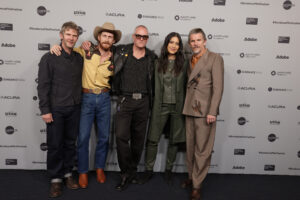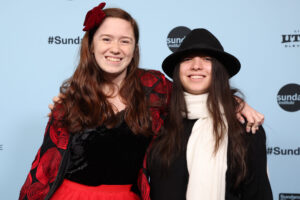




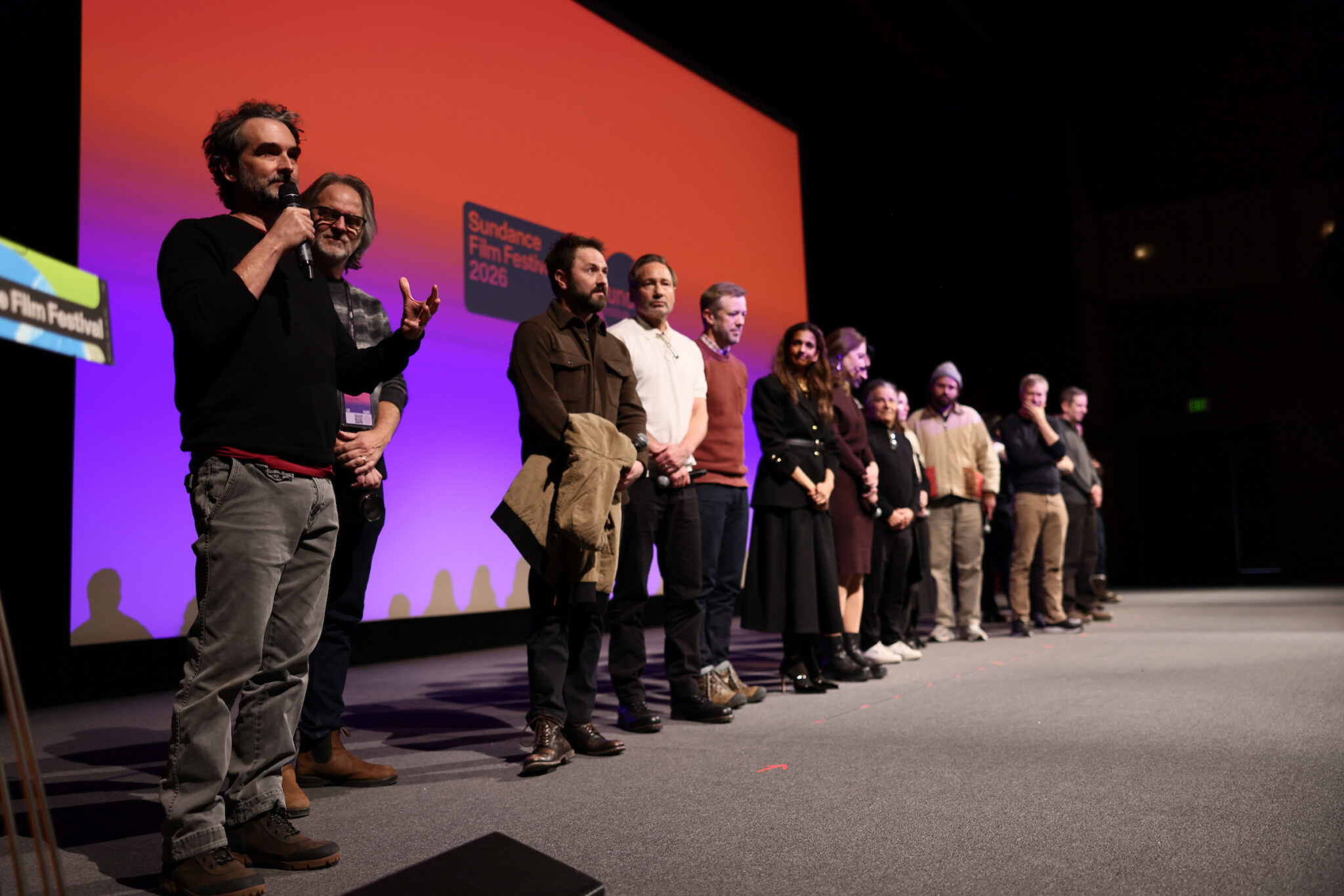
Cast and crew attend the Q&A for See You When I See You by Jay Duplass, an official selection of the 2026 Sundance Film Festival. © 2026 Sundance Institute | photo by Jemal Countess.
By Ramona Flume
“This screening is sponsored by Kleenex,” director Jay Duplass says when he takes the Eccles Theatre stage to introduce his latest feature film on January 27.
See You When I See You, written by Adam Cayton-Holland and based on his deeply moving memoir Tragedy Plus Time: A Tragi-Comic Memoir, is a powerful entry in the Premieres section of the 2026 Sundance Film Festival. And Duplass (The Baltimorons), who first came to the Festival in 2005 with his feature The Puffy Chair, is visibly emotional as he makes his introductory remarks. He pauses for a moment to gather himself after thanking Cayton-Holland. “This is a true story and we all get to be here together celebrating life today because of what this awesome family accomplished,” he says.
Aaron (Festival alum Cooper Raiff) is a young man struggling with immense grief and a severe case of undiagnosed PTSD after his best friend and sister (Kaitlyn Dever) dies by suicide. Unable to control his unpredictable floods of emotions, things come to a head with a DUI charge that forces him into a mental health diversion program. He stays close, but guarded (armed with his main defensive weapon: humor) around family members who are suffering in their own ways as they try to pick up the pieces of their lives — and bicker about funeral plans in the meantime.
The ensuing exploration of the messiness of grief balances right on the knife’s edge of drama and comedy — a delicate dichotomy that anyone who has experienced major trauma will be well acquainted with.
“What I think we’re trying to do here is make ‘funny Ordinary People’,” Duplass remembers saying to Cayton-Holland about adapting the film, referring to Sundance Institute founder Robert Redford’s Oscar-winning 1980 film that dealt with similar issues of familial grief, suicide, and post traumatic stress disorder. “Which is an insane statement… But we really wanted to represent the internal journey of Adam Cayton-Holland, to make it cinematic, and to make it come alive and to hopefully make you guys laugh and give some hope.”
“Nothing’s working and I don’t know what’s up,” Aaron says to his frustrated older sister (Lucy Boynton) in one scene. “Yeah, hi, ‘cause you need a shrink,” she responds with irritated worry. “It’s like you’re wrapped in cellophane or something.” Despite his misguided self-medications and defense mechanisms, Aaron ultimately makes real progress throughout the film, navigating his way amongst a broken foundation of familial wreckage in order to hold out hope for a chance at life. His journey is a complex process, full of setbacks and shame and staunch unwillingness, before experiencing a genuine breakthrough in Eye Movement Desensitization and Reprocessing (EMDR) therapy.
“We really wanted to capture the reality of a character whose brain is broken,” Cayton-Holland says about bringing his story to the big screen. “Everyone here has someone who has suffered from mental illness in their lives and we all whisper about it, so everyone here can relate.”
Audiences see Aaron experience this impossible life event that eclipses everything in his own control through striking, hand-drawn visual effects (something you might not expect from a Duplass film) that represent his PTSD flashbacks or “intrusions”. “It took us a very long time to find the sweet spots of how these things would unfold and how it would represent Adam’s experience appropriately,” Duplass says.
Another sweet spot lies in the film’s ensemble of accomplished supporting actors, including David Duchovny, Hope Davis, and Ariela Barer. The unique chemistry of the cast elevates the film into a relatable family drama bolstered by each player’s strengths. “Assembling the ensemble was a long process of finding the right magical people, who are all world-class actors, who look and feel like family,” says Duplass.
Each cast member echoed sentiments about the beauty and honesty of Cayton-Holland’s script when asked about their decision to join the project. Producer Emily V. Gordon, who has a professional background as a therapist, says she was floored by the script’s exceptional way of conveying mental health as a lifelong process. “It’s really hard work and it’s not linear and it’s not ever finished. But [Adam’s] life is a testament to giving yourself grace… even when you’re not as good at it.”