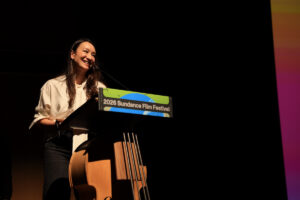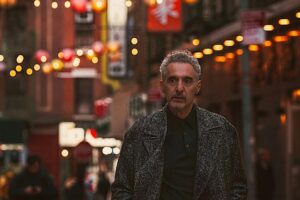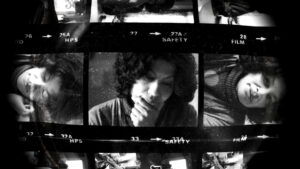




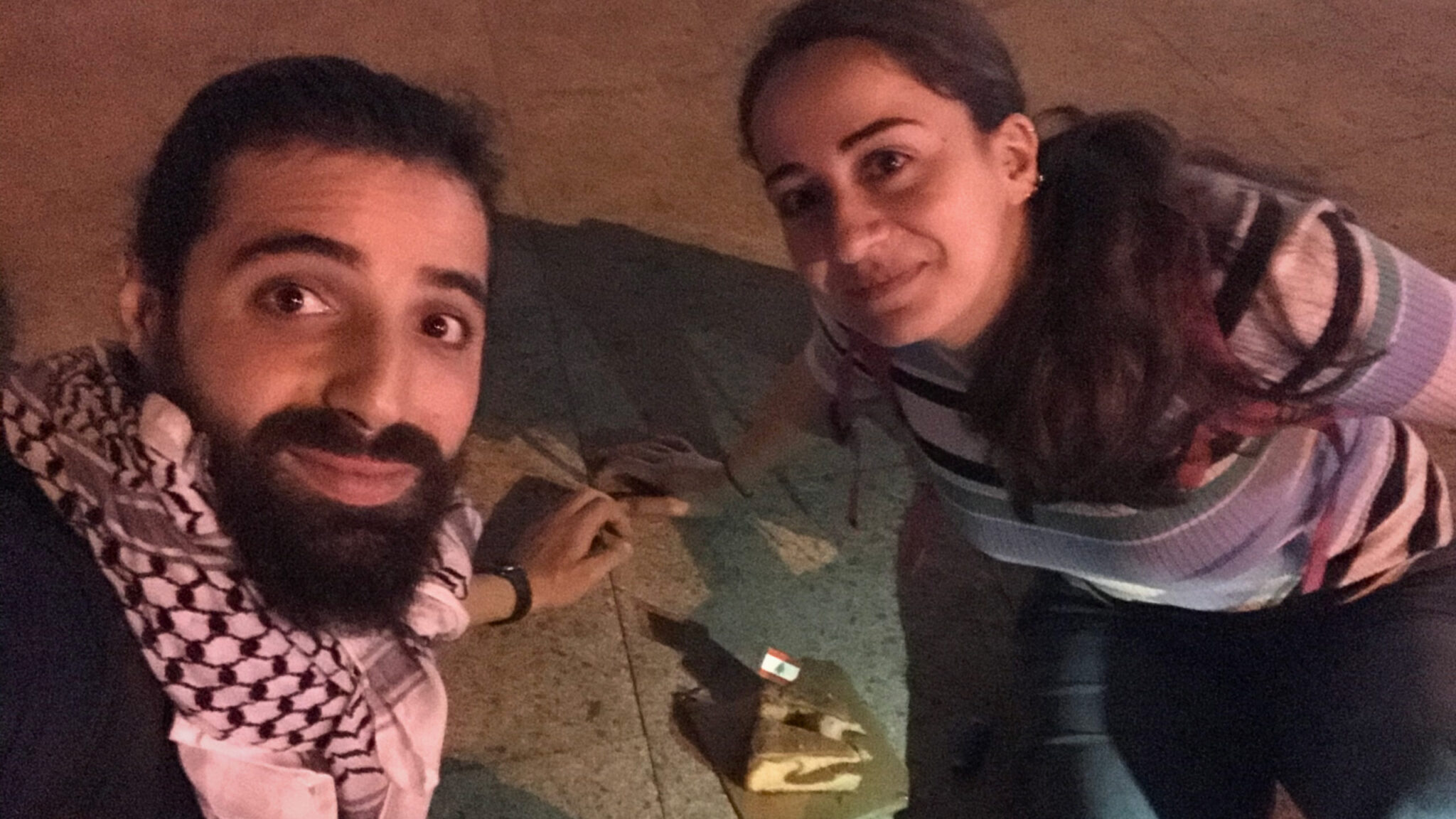

Courtesy of Sundance Institute | photo by Habak Films.
What was the biggest inspiration behind Birds of War?
Abd Alkader Habak and Janay Boulos: The inspiration for the film was our lives. It was time to use our voice to share what was happening not just to us but to the world we knew.
What was your favorite part of making Birds of War? Memories from the process?
Boulos: My favorite part is the smallness of the team, and we trust and love each other. We’ve learned so much from each other. We all have each other’s back. Sifting through the vast archive and finding treasures that tell us their stories was probably my favorite part, although it was a big challenge to look at myself as a character in this story when it’s my life we are talking about.
What was a big challenge you faced while making Birds of War?
Habak: Going through the archives! Visiting a traumatic past, reliving the moments that were so painful every time I viewed the footage was tinged with moments of true happiness that made me smile. I might find myself laughing with good friends who are now dead — leaving me to smile and be sad at the same time. It was very hard.

Why does this story need to be told now?
Habak and Boulos: To know each other individually, to approach people with compassion, to have empathy for others as human beings, we believe, is the only way to reverse the world’s increasing polarization.
Tell us why and how you got into filmmaking.
Habak: I wanted to deliver the voices of those who traditionally never had a voice — and I could do that using my camera.
Boulos: It is my form of understanding the world. It’s how I process the world, how I explain and express it to myself and to others.
Why is filmmaking important to you? Why is it important to the world?
Habak and Boulos: It is important because it preserves experience, and how the world changes around us. And it’s also a record of injustice and crimes that have happened — a record that one day can be used as evidence against those who are committing these war crimes.
If you weren’t a filmmaker, what would you be doing?
Boulos: I’d be scuba diving somewhere nice and warm, and working as a marine biologist.
Habak: ‘d go back to my childhood dream of being a lawyer.