




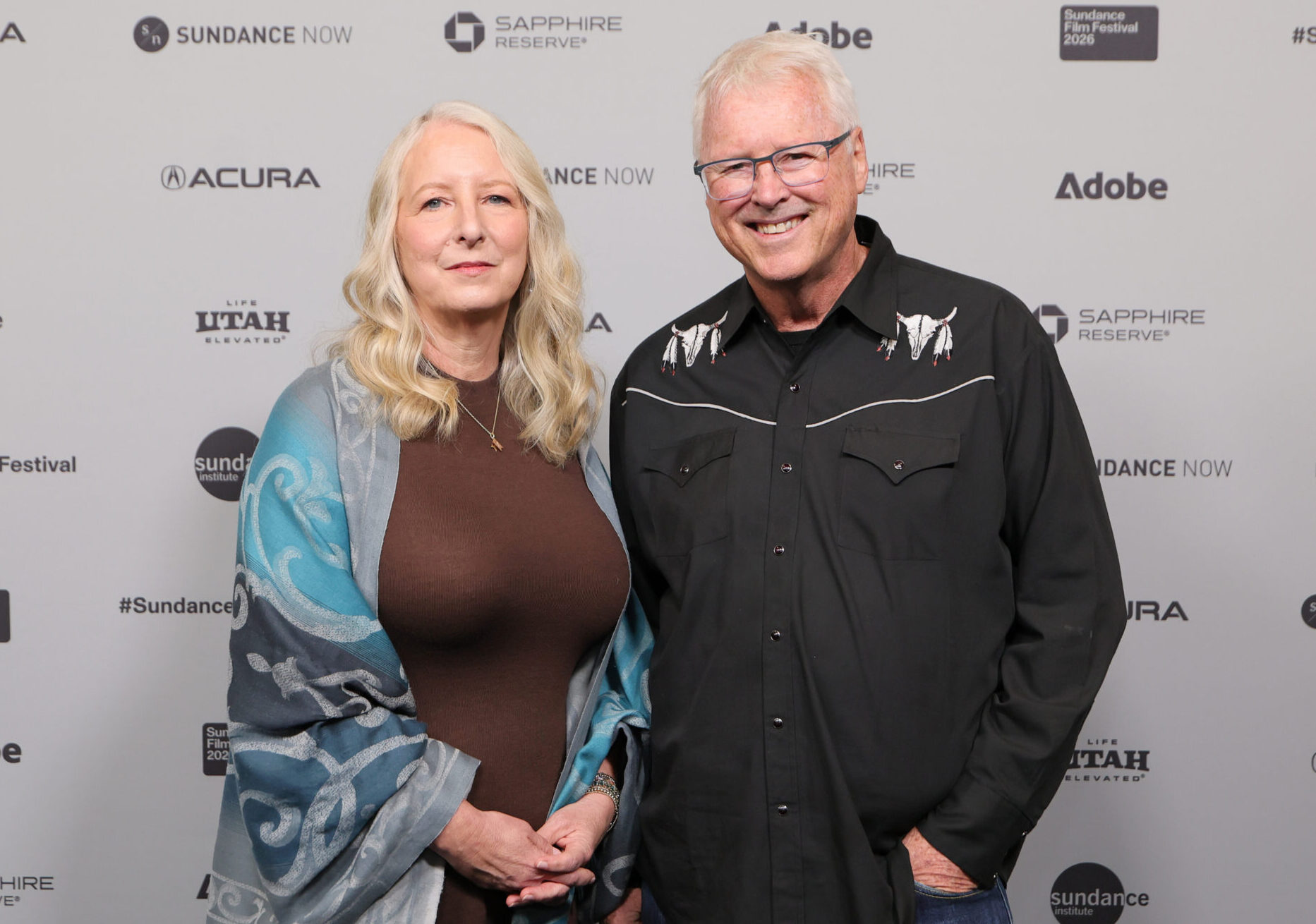
(L-R) Lisa Jones Engel and Tony Jones attend the “Sentient” Premiere during the 2026 Sundance Film Festival at The Ray Theatre on January 26, 2026 in Park City, Utah. (Photo by Dia Dipasupil/Getty Images)
By Adam Silverstein
At the Ray Theatre, director Tony Jones steps up to the mic before Sentient begins and clears his throat with a kind of urgency. “I won’t say much before the film, but I do have one thought,” he says. “Empathy is in very short supply. That’s one of the guiding principles of our film. Empathy for these animals in testing labs around the world. Empathy for the people who work with these animals and suffer the consequences of what they’re doing. We see empathy on both sides.” There’s a hush when the lights go down — and over the next two hours, you feel every bit of Jones’ statement settle in your bones.
Sentient, premiering in the 2026 Sundance Film Festival’s World Cinema Documentary Competition, is the sort of movie that doesn’t just document a problem. It throws you into the center of it. The film follows Dr. Lisa Jones Engel, a primatologist turned animal welfare advocate, as she investigates the hidden world of laboratory research on animals — especially primates like macaques and chimpanzees. What emerges isn’t only heartbreaking; it’s enraging.
The documentary confronts you early with scenes that are hard to watch: dosing cages, sedation that borders on torment, the mechanical coldness of wet markets and lab corridors. These are living beings whose behavior — play, fear, affection — looks shockingly familiar. The film’s subtle insistence that humans are animals too — not outside, not above, just another strand in the same web — hovers over every frame.
There’s an argument threaded through the film that’s hard to dismiss: experiments on animals have led to treatments for children with terminal diseases. You can hear in the room a collective uncertainty — we want to care about kids, and yet what we’re seeing is wrenching.
Jones structures the film carefully so it’s not just a parade of horrors. There’s political commentary on how vaccine funding cuts have pushed industries to cling to old models and how emerging tools like AI and “organs on a chip” could transform research so that labs wouldn’t need to use animals for research.
During the post-premiere Q&A, Jones Engel is asked why she took part in the documentary. “Somebody had to blow the door off the labs,” she says, tearing up. “Primate experimentation has been hidden. What it costs the animals, the science, the public — people have a right to know.”
Jones speaks about how he was once told that in years to come, people would look back on animal experimentation the way they look back on slavery in the 19th century. It’s a provocative comparison, and there’s silence in the room as he shares it.
When Jones suggests that it will be a long time before labs are able to experiment without animals, Jones Engel pushes back gently but firmly. “I disagree,” she says. “The scientific community is moving at warp speed. All the pieces are coming together. We are already developing non-animal methods. It’s happening now.”
By the end, what Sentient ultimately argues is not just for the betterment of animals, but for people — for researchers, whistleblowers, and scientists caught inside systems they didn’t design. The night ends not in anger but in hope, suggesting that empathy isn’t a liability in science, but its missing ingredient.