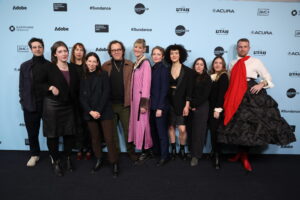




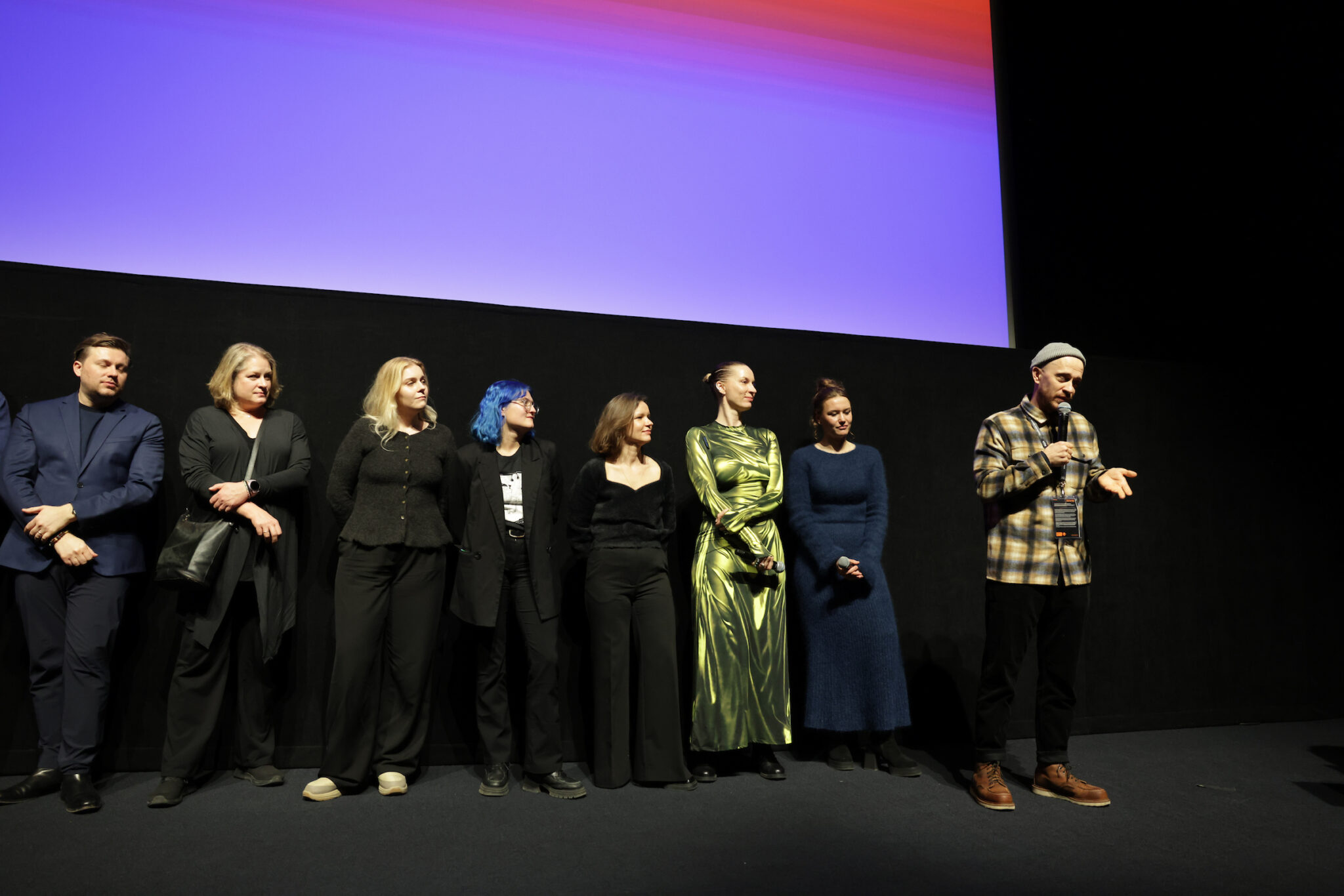
Writer-Director Andrius Blaževičius and crew attend the premiere of “How to Divorce During the War” at The Ray Theatre on January 26, 2026, in Park City, UT. (Photo by Jason Peters/Sundance Institute)
By Jessica Herndon
Set in Lithuania, How to Divorce During the War is a film about identity, comfort, and conflict. The day after Marija (Žygimantė Elena Jakštaitė) decides to divorce her husband, Vytas (Marius Repšys), Russia invades Ukraine. As the separated couple attempts to navigate their personal struggles, including caring for their daughter, Dovile (Amelija Adomaitytė), the war in a neighboring country deeply affects their lives.
The movie tells the story of what it feels like to live in a country so close to the warzone. Writer-director Andrius Blaževičius’ film, premiering at the 2026 Sundance Film Festival in the World Cinema Dramatic Competition section, invites us into Marija and Vytas’ lives as they process the war outside and navigate the war within their home.
Jakštaitė says she was able to bring a lot of personal insight to the role. Looking at her fellow cast and crew joining her in front of the sold out crowd at The Ray Theatre following the premiere of How to Divorce During the War, she recalls waking up one morning and learning Russia had invaded Ukraine.. “Everything changed,” she says. “It’s very personal for all of us.”
For Blaževičius, striking a balance between the political and personal wars in the story was key. “When I’m trying to write the script, I’m always thinking about having as much layers as possible,” he says. “It’s very important to have some kind of a social, political, or cultural background in a film.”
Tension manifests not just in the couple’s emotional distance, but in the values that motivate how they work, what they create, and what they’re willing to trade for comfort. “What I found interesting is in the film we also have this war between creativity, as in the husband wants to make arthouse films, and he’s broke,” says Gintare Parulyte, who plays Marija’s boss, Ona. “But his wife, her relationship with creativity is more emotionless. It’s more about a corporate job versus art, and I think that’s interesting and so relatable. I mean, how difficult it is for couples to deal with that? And then I think for my character, it’s interesting to see how many people, despite wanting to do the right thing, are slaves to capitalism.”
As Marija and Vytas attempt to live separately, the stability and safety they built together now feel fragile. Dovile is also forced to adjust to a new lifestyle, splitting time between parents and watching them navigate their separation. “Kids know and understand much more than grown-ups think they do about the world and what’s happening around them,” says Blaževičius, responding to an audience question about how he portrays children in Lithuania in the film. “I remember myself when I was very small and I remember the crises, economical collapses, which was happening in the ’90s in Lithuania. I saw how my parents were struggling with money and it scars you for the rest of your life. Even now, I noticed some issues in my character regarding those things which happened. I think what’s affecting them now will have an impact in their future, when they will grow up, and it’s the worst part of what’s happening.”
A portrait of a family and society in flux, How to Divorce During the War shows how proximity to war reshapes relationships, priorities, and moral compasses. “One of the main themes in this film is comfort,” says Blaževičius. “When I was writing this film, I was thinking not just about Lithuanians, but also about Europeans in general, because we are used to this really comfortable life. But because of that comfort, we don’t want to sacrifice some things. But, the thing is, sometimes you need to sacrifice something for the better.”