



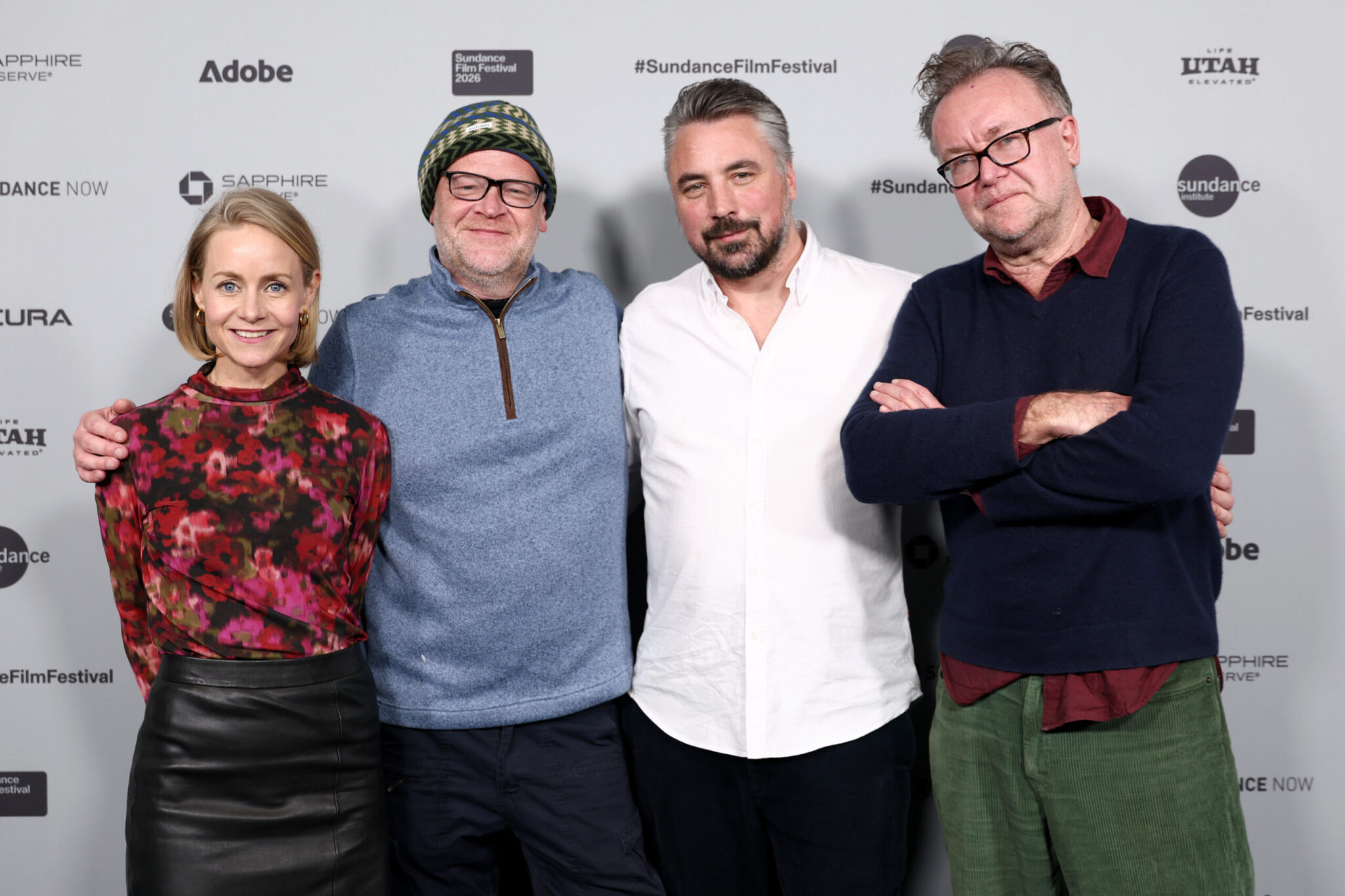
(L-R) Stacey Lee, Adam Montgomery, Andreas Dalsgaard, and Christoph Jörg attend the Episodic Nonfiction Pilot Showcase during the 2026 Sundance Film Festival at The Yarrow Theatre on January 27, 2026 in Park City, Utah. (Photo by Cindy Ord/Getty Images for Sundance Film Festival)
By Ramona Flume
The 2026 Sundance Film Festival’s Episodic Nonfiction Pilot Showcase premiered January 27 at The Yarrow Theatre with the pilot episodes of two documentary series: Murder 101 and The Oligarch and the Art Dealer. The singular projects differ in their scope and subject matter, but they both shed light on the personal repercussions and human costs of much larger institutional issues.
“Sundance puts us in bed with complete strangers and they told us we can only tease,” Oligarch producer Christoph Jörg says with a laugh when both filmmaker teams join each other onstage to introduce their Episodic premieres. “So, it’s art and money… meets murder.”
The Festival has a strong tradition of pulling the curtain back on deeply entrenched systemic problems, and these compelling nonfiction selections serve as significant additions to that legacy. From a series of unsolved homicides in rural Appalachia (Murder 101) to a $1 billion global art fraud (The Oligarch and the Art Dealer), these documentary series detail what can happen when there are major breakdowns in the criminal justice system.
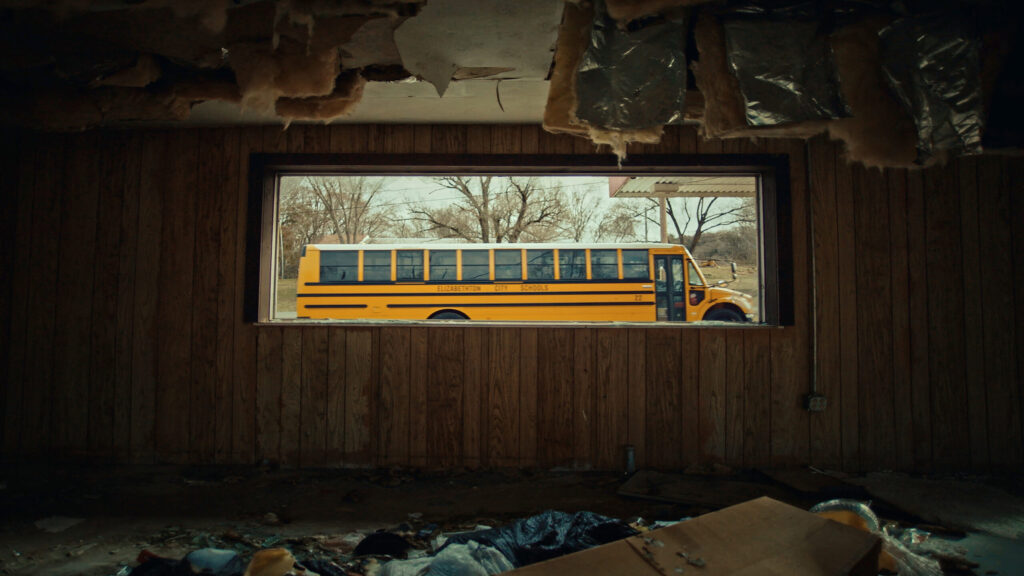
Murder 101 does center around the case of an unsolved serial murderer, but director Stacey Lee stresses in her introductory remarks that the story is really about a teacher: Mr. Campbell, who is seated in the front row of The Yarrow Theatre. “He’s got a flair for the independent. He takes bold risks and he believes in his students more than they sometimes believe in themselves.”
“I think this, too, is what Robert Redford had in mind when he started this Festival,” Lee says. “Although Mr. Campbell will tell you he’s more of a Vin Diesel type.”
Lee’s new documentary episodic follows the work of Mr. Campbell’s high school sociology class as they spend a semester investigating a local string of unsolved crimes dubbed “The Redhead Murders” in their Tennessee community. They gather evidence, speak to witnesses, build case files, and even identify a potential suspect in a cold case that has stymied local law enforcement for years.
But true crime is only the vehicle she wanted to use to explore the power and presence of an incredible teacher, Lee says. “We’ve always seen this as a story of education, about the students and the power of what can happen if people believe in them, to think about dreaming bigger and what they can dream for themselves. True crime is just the vessel to witness the transformation and change amongst these students.”
Viewers see in real time as these high schoolers discover the distressing institutional realities of the criminal justice system, and what happens when the people in charge of protecting them deem someone as “less than”. Moreover, as details of the case begin to mimic aspects of the students’ real lives, we see empathy, confidence, compassion, and a greater understanding of the world at large begin to take hold in these young gumshoes.
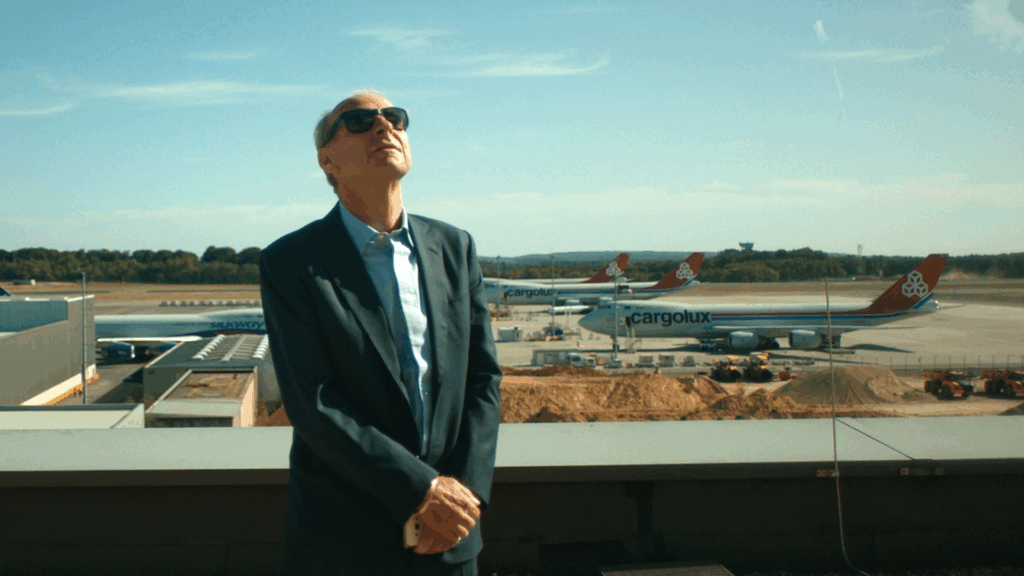
The Oligarch and the Art Dealer
From 2003 to 2014, Swiss art dealer Yves Bouvier helped an elusive Russian oligarch, Dmitry Rybolovlev, amass one of the largest private art collections in the world, from Rothko and Chagall to Klimt — even a lost da Vinci. The pair went from making lucrative deals in places like Sotheby’s auction houses, however, to exclusively dealing in heated courtrooms.
In a high-profile, international legal battle that came to be known as the Bouvier Affair, the oligarch alleged the middleman art dealer secretly inflated the prices of 38 artworks over a decade, pocketing a staggering $1 billion from his total purchases.
Told through interviews with several of the investigative journalists, lawyers, art dealers, and historians close to the case, as well as the infamous art dealer Yves Bouvier himself, this documentary series from creators Christoph Jörg and Andreas Dalsgaard delves far beyond the court case of Bouvier’s alleged deceptions and art fraud. It’s a unique springboard into the deep backwaters of the art world — and global wealth.
The series uses the public records of the globally known Rybolovlev vs. Bouvier case as an intriguing keyhole into the gray networks of offshore tax shelters and shady financial mechanisms that move billions of dollars through the world’s art market every year. And the resulting chronicle is a Russian nesting doll investigation of following the money, a rare opportunity to see the inner workings of a globalized system that supports, and hides, the wealth of the super rich.
“Because of this story, we get that insight into something that until now is always secretive,” Dalsgaard says. “And for that, the art world will never be the same. Because we now see what goes on when the deals are made.”
What can viewers expect in future episodes? “It gets wilder,” Dalsgaard says.