



Give Me the Backstory: Get to Know Wregas Bhanuteja, the Director of “Levitating (Para Perasuk)”

By Jessica Herndon

One of the most exciting things about the Sundance Film Festival is having a front-row seat for the bright future of independent filmmaking. While we can learn a lot about the filmmakers from the 2026 Sundance Film Festival through the art that these storytellers share with us, there’s always more we can learn about them as people. We decided to get to the bottom of those artistic wells with our ongoing series: Give Me the Backstory!

For filmmaker Wregas Bhanuteja, Levitating (Para Perasuk) is “a story about finding balance in a world that constantly pulls us to extremes,” he says. “Through this film, I want to remind myself — and hopefully the audience — about the importance of staying grounded, being present with the people who matter, and not letting ambition swallow us whole.” 

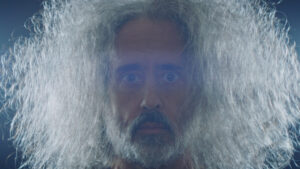
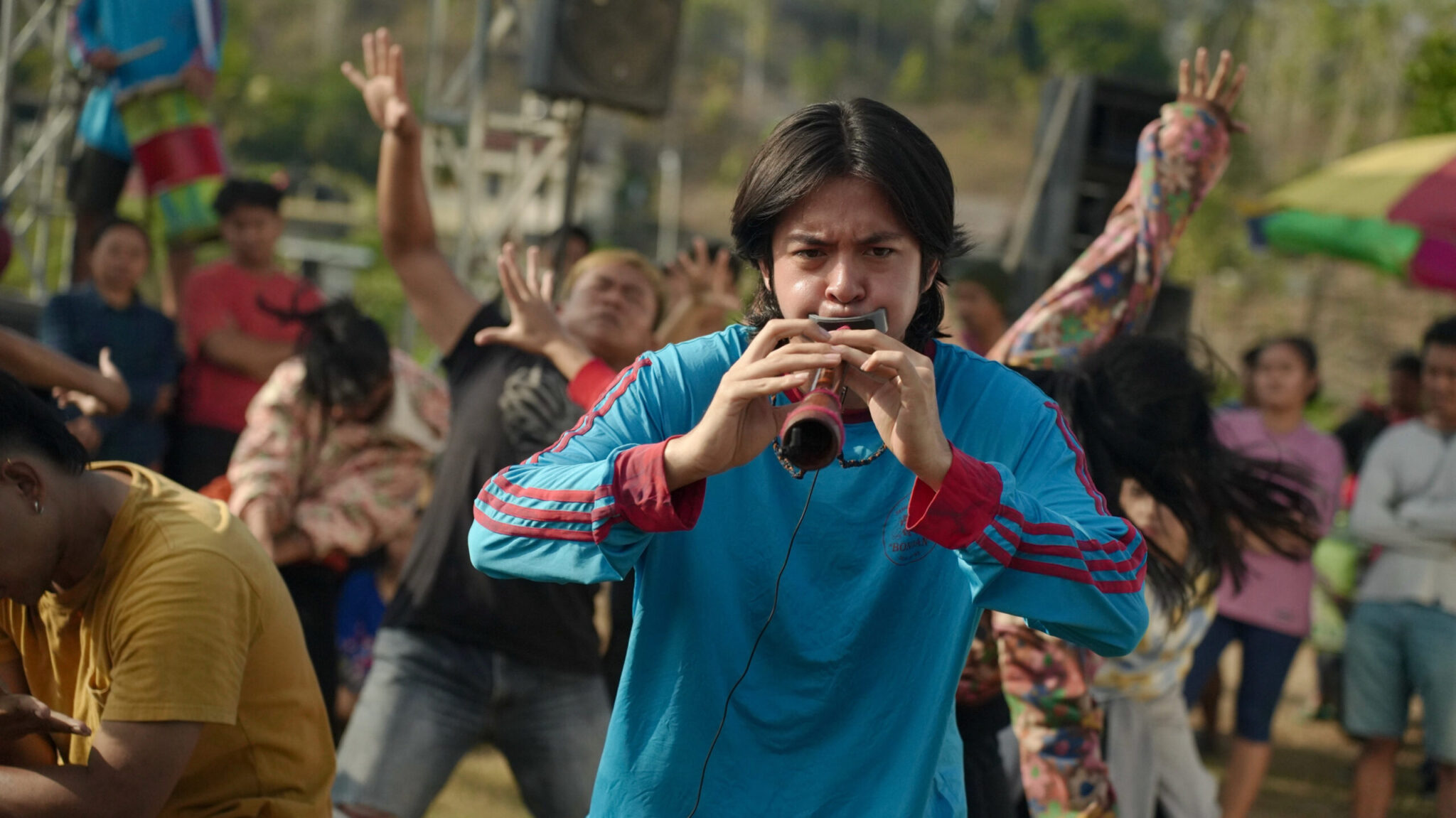
Set in a town where trance dance hypnosis is a common pastime, Levitating (Para Perasuk), premiering in the World Cinema Dramatic Competition at the 2026 Sundance Film Festival, invites audiences into a world where pleasure, belief, and survival intertwine. The film follows Bayu, a gifted young spirit channeler who dreams of leading his own trance party — not just to help others escape into mythical worlds, but also to raise the money needed to stop his family from being pushed out of their home. 

In this hypnotic coming-of-age story, Bayu’s flute acts as a conduit, guiding dancers into altered states where creature spirits emerge, and a shared fever dream takes shape. Yet as inner demons, outside influences, and modern distractions creep in, Bayu must learn how to manifest his gift with care while balancing tradition and change. At once euphoric and grounded, Bhanuteja’s Levitating (Para Perasuk) — his second film to premiere at the Festival following the debut of his 2020 short film No One is Crazy in This Town — is a mesmerizing portrait of a young man seeking to uphold his community’s cultural pulse.

Below, Bhanuteja reveals which production days were the most challenging, the improvisational moments that made it into the final cut, and why he feels filmmaking is his calling. 

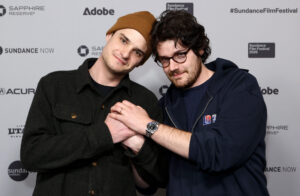
Wregas Bhanuteja, director of Levitating (Para Perasuk), an official selection of the 2026 Sundance Film Festival. Courtesy of Sundance Institute.

What was the biggest inspiration behind Levitating (Para Perasuk)?

The biggest inspiration behind Levitating came from my childhood and my younger brother, who used to tell me vivid stories of the spirits he saw around our home. I could never see what he saw, but his stories pushed me to explore the trance traditions across Indonesia and beyond. In many regions, I found that spirits are embraced like friends, and where trance rituals are woven into everyday life. During the ritual, participants drift out of consciousness and enter vivid realms of sensation: fields blooming with flowers, the feeling of soaring through the sky, or indulging in endless, delicious meals. And they do all of these without alcohol, drugs, or any substances; just by allowing their minds to surrender and be carried by the ritual. Their trance parties feel like acts of resilience, moments where people release their burdens and reconnect with something greater than themselves.

Films are lasting artistic legacies. What do you want yours to say?

The first thing I really wanted to do with Levitating was to show how messy my mind gets whenever I try to focus. Bayu goes through the same thing in the film. Every time he tries to call in the animal spirit, he’s confronted by all the noise he carries inside him: childhood trauma, jealousy, pressure, fear, everything. 

To show that visually, I created this black limbo space where all the thoughts that bother him pop in and out: his absent father, the company trying to take his land, the girl he likes, and so on. These images appear and disappear quickly in a fast montage, almost like flashes, to mimic what it feels like when your mind won’t stay still. This part is very personal to me because every time I try to meditate, I experience the exact same black limbo filled with random, intrusive thoughts.

Describe who you want this film to reach.

I think this film is for anyone who has ever felt overwhelmed by their own mind — whether it’s the pressure to prove yourself, the weight of expectations, or the memories you still carry from the past. We all have moments where we feel pulled in different directions, and Levitating speaks to those parts of us. 

To those who struggle with obsession, especially the kind that quietly takes over your life. It could be an obsession with your passion, your career, your achievements, or even your image. Sometimes it grows so strong that it blinds us to the people who actually care about us. That is what happens to Bayu. He becomes so fixated on becoming a spirit channeler that he forgets the people who love him and truly need him. 

I also want this film to speak to people who are still trying to make peace with their past. Many of us carry old wounds or difficult memories that shape how we see ourselves. Bayu has that too: his trauma with his father and his childhood follow him everywhere. Throughout the film, he learns to face those experiences, forgive what hurt him, and turn that healing into strength and compassion for others. 

If this film can reach people who are navigating obsession, carrying old scars, or learning how to forgive, then I feel like the story has found its audience.
 

Tell us an anecdote about casting or working with your actor(s).

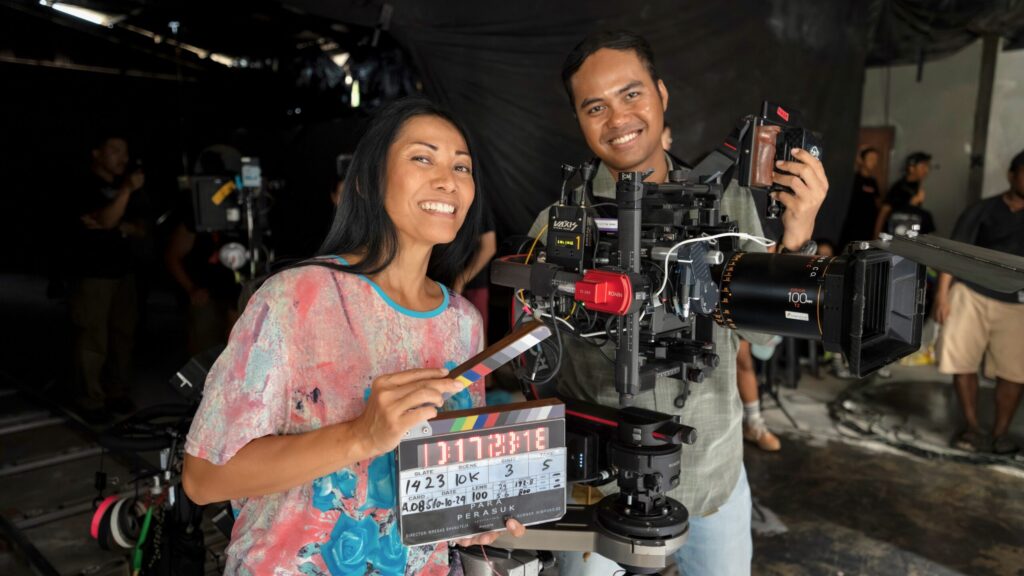
Working with Anggun for Guru Asri: Anggun is a singer, and this was her first time acting in an Indonesian feature film. I cast her because I needed someone with a strong voice and natural charisma to play a Guru or trance party teacher. In the film, she had to perform many mantras, and our music director, Yennu Ariendra, suggested a unique approach: he would play the trance music for her, and she would create the mantras purely based on how the music made her feel. There were no scripted lyrics, no guidance on intonation, no brief. We simply trusted her intuition. We also set one rule: each mantra had to be recorded in a single take, because we believed a second take would lose the raw, organic feeling we wanted. So Anggun came into the studio, listened to Yennu’s track, and began to sing, make sounds, and even scream when she felt it. We recorded 15 mantras this way, all in one take, and the versions you hear in the film are exactly those original recordings, with no revisions from me.

What was your favorite part of making Levitating (Para Perasuk)? Memories from the process?

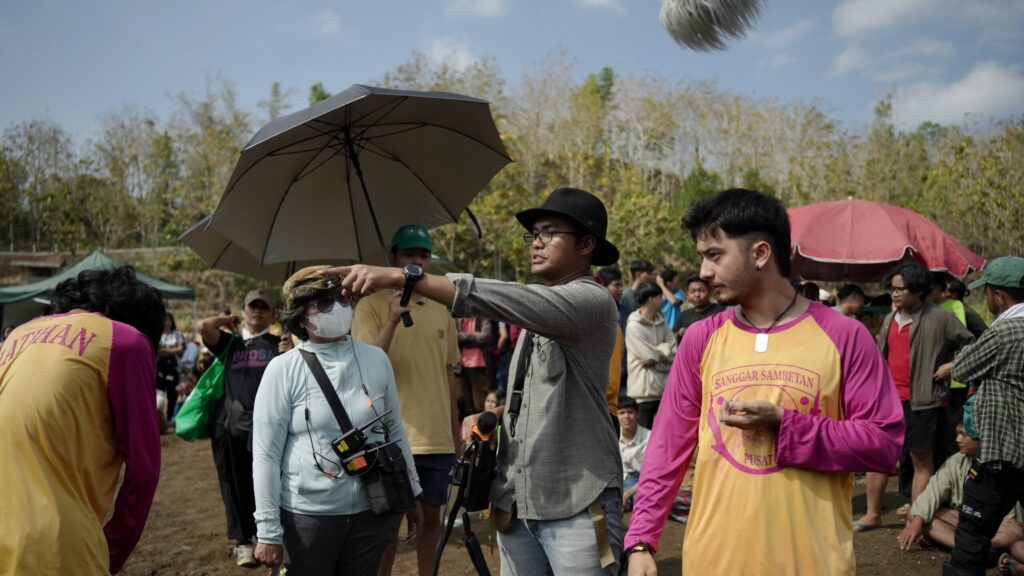
My favorite part of making the film was shooting the third trance party, where the addicts danced on a muddy field. During the scene, Maudy Ayunda, who plays Laksmi, along with 20 other dancers, rolled across the field and covered themselves in mud. It became such a beautiful memory for me. The sunlight hit at the perfect angle, creating a glowing backlight as water and mud splashed around, giving the scene a powerful, dramatic effect. The moving camera, combined with slow motion, made it even more striking. I still remember wrapping the shoot at 6 p.m., just as the sun was setting. I had managed to capture some of my favorite shots of the entire film while dancing in the mud with everyone else.

What was a big challenge you faced while making Levitating (Para Perasuk)?

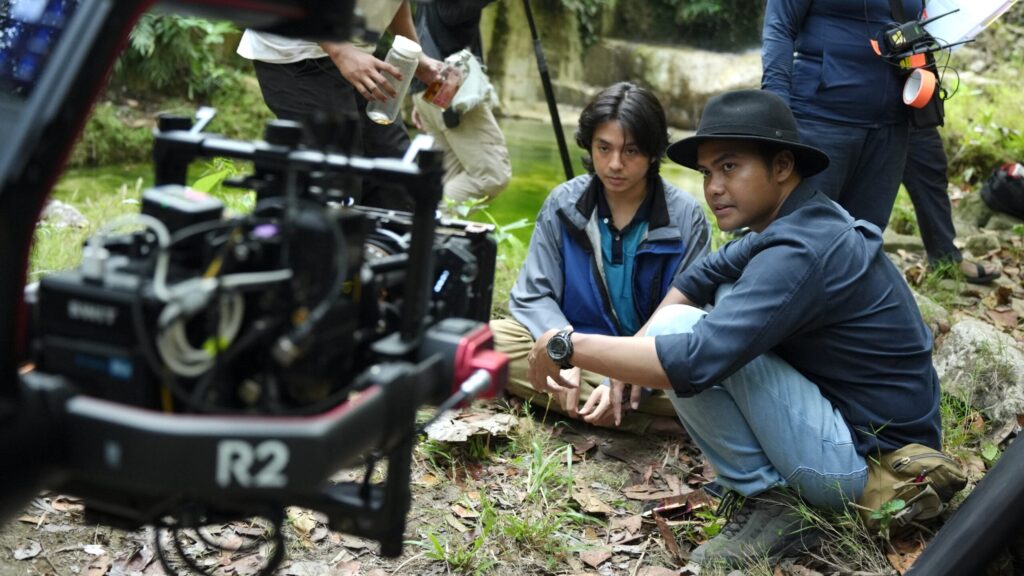
The biggest challenge I faced was shooting the final war scene at the end of the film. It required an enormous number of shots, tightly coordinated movements, and complex dance choreography. That single sequence took three full days to shoot. We used two cameras to capture more than 70 different shots. The location made it even more difficult. The scene was filmed at a natural spring surrounded by large rocks and boulders, leaving very limited space for the cast and crew. Everyone had to take turns entering the area, which complicated things even further, especially because the choreography involved forming shapes that resembled different animals. It was definitely the toughest part of making this film, but thankfully, we managed to complete everything within those three days and bring the war scene to life.


Why does this story need to be told now?

I think this story feels especially important today because we’re living in a time where everything moves fast and everyone’s pushed to compete. The pressure to be the best keeps getting stronger, and when that desire turns into obsession without self-awareness, we can easily lose sight of the people around us. 

Sometimes we hurt others without even realizing it, especially those who have less power or are simply standing in the path of what we want. For me, that’s a form of harm that slowly erodes our humanity. 

Tell us why and how you got into filmmaking.

When I was in middle school, I felt like I didn’t have any real talent. I couldn’t play in a band, couldn’t join physics competitions, couldn’t play basketball. Then one day, my school held a film competition for Indonesia’s Independence Day between different grades. I became the short film’s actor for my class. But during the process, I kept giving comments and revising the director’s choices — like the shots, the scenes, the dialogue — until the director got annoyed and told me to just take over. That was the first time I felt the joy of making and directing a short film. 

After that, when I entered high school, I decided to take a film class as my extracurricular. And in college, I chose to major in film studies at the Jakarta Institute of the Arts. But what really made me fall in love with filmmaking was the editing process. Through editing, I could arrange the visuals and create something magical.

I still remember the first time I made my friends cry and feel touched back in middle school when I made an emotional farewell film for our graduation. That moment made me realize how powerful a film can be in touching people’s hearts.

Who are your creative heroes?

My creative heroes are actually my dad, my mom, and my little brother, because they’re the ones who first taught me how to tell stories. My mom was the first person who taught me how to make PowerPoint slides. She’s a lecturer, and she showed me how to communicate clearly through visuals so people stay engaged with whatever we’re presenting. That was probably my earliest lesson in storytelling through images. 

My dad loves history and science, so whenever he told stories about world events or social issues, I would listen with full attention. The way he explained things always made me curious and excited to learn more. I learned a lot about narrative from the way he shared knowledge. 

And then there’s my little brother. He’s the logical one in the family, the person who always edits my stories whenever something feels unclear, unrealistic, or inconsistent. In a way, he’s the one who ends up editing my films, too. 

So yes, those three are my heroes. They’re the foundation of how I learned to tell stories.


Which of your personal characteristics contributes most to your success as a storyteller?

Maybe it’s the way I make PowerPoint presentations. I really enjoy creating PowerPoint slides whenever I need to explain something to someone. When I have a problem with someone, I make a PowerPoint. When I need to express my disappointment to someone, I also make a PowerPoint.

PowerPoint helps me organize what I want to say, gives me visuals, and helps me structure my thoughts. And it turns out that the way I build those slides actually helps me when I’m plotting a story, beats, or structuring the editing in my films. On top of that, I’m the son of a lecturer, the grandson of a lecturer, and most of my family members are educators, so I naturally love teaching too. Maybe that also shapes the way I tell stories.

Tell us about your history with Sundance Institute. When was the first time you engaged with us? Why did you want your film to premiere with us?

The first time I heard about the Sundance Film Festival was from a film called Another Earth, which was selected at Sundance in 2011. That was when I saw a new kind of cinema, a new kind of storytelling, something I’d never seen before.

To my surprise, nine years later, my short film called No One is Crazy in This Town ended up competing in Sundance’s International Fiction Short Film program. That’s when I flew to Sundance with my producer, Adi. Despite it being in the middle of winter and snow, I felt this incredible warmth from the Festival, where filmmakers blended naturally with the actors and actresses who were there.

There were so many discussion forums, so many warm and open spaces for communication. That made me want to keep building a relationship with Sundance and keep showing my films there, because it truly is a place for film lovers, a place that opens room for conversations, discussions, new ideas, and new styles in cinema.

What’s your favorite film that has come from the Sundance Institute or Festival?

Whiplash by Damien Chazelle, because it’s a film I can watch over and over again without ever getting bored. I know every beat, every line, every piece of dialogue, and every gesture. The film talks about obsession, about the ambition of someone who wants to become a professional drummer, and I feel a strong connection between the character’s obsession and the obsession I have within myself.

News title Lorem Ipsum

Donate copy lorem ipsum dolor sit amet

Lorem ipsum dolor sit amet, consectetur adipiscing elit. Ut elit tellus, luctus nec ullamcorper mattis, pulvinar dapibus leo. Lorem ipsum dolor sit amet, consectetur adipiscing elit. Ut elit tellus, luctus nec ullamcorper mattis, pulvinar dapibus leo. Lorem ipsum dolor sit amet, consectetur adipiscing elit. Ut elit tellus, luctus nec ullamcorper mattis, pulvinar dapibus leo. Lorem ipsum dolor sit amet, consectetur adipiscing elit. Ut elit tellus, luctus nec ullamcorper mattis, pulvinar dapib.