


By Lucy Spicer
One of the most exciting things about the Sundance Film Festival is having a front-row seat for the bright future of independent filmmaking. While we can learn a lot about the filmmakers from the 2026 Sundance Film Festival through the art that these storytellers share with us, there’s always more we can learn about them as people. We decided to get to the bottom of those artistic wells with our ongoing series: Give Me the Backstory!
“I’ve always needed to tell my stories,” says filmmaker William David Caballero. “Growing up, American media sent a clear message that the lives of low-income people of color didn’t matter. It took me time to realize that this indoctrination was fundamentally wrong. From that point on, my mission has been to fight against this narrative.”
Caballero has been telling stories about his Puerto Rican family for 20 years. But his latest film about them — TheyDream, premiering in the NEXT category at the 2026 Sundance Film Festival — took on additional meaning mid-production, a reminder of how little is within our control. “Two years into production, my grandma suddenly passed away, completely changing the film’s direction,” explains Caballero. “This tragedy became a turning point. It pushed me to examine not only my family’s story but also why I’m drawn to tell these stories in the first place. The film transformed into an intensely personal exploration of grief and my purpose as an artist.”
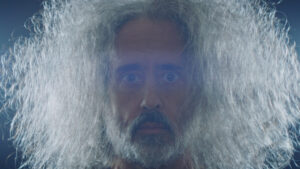
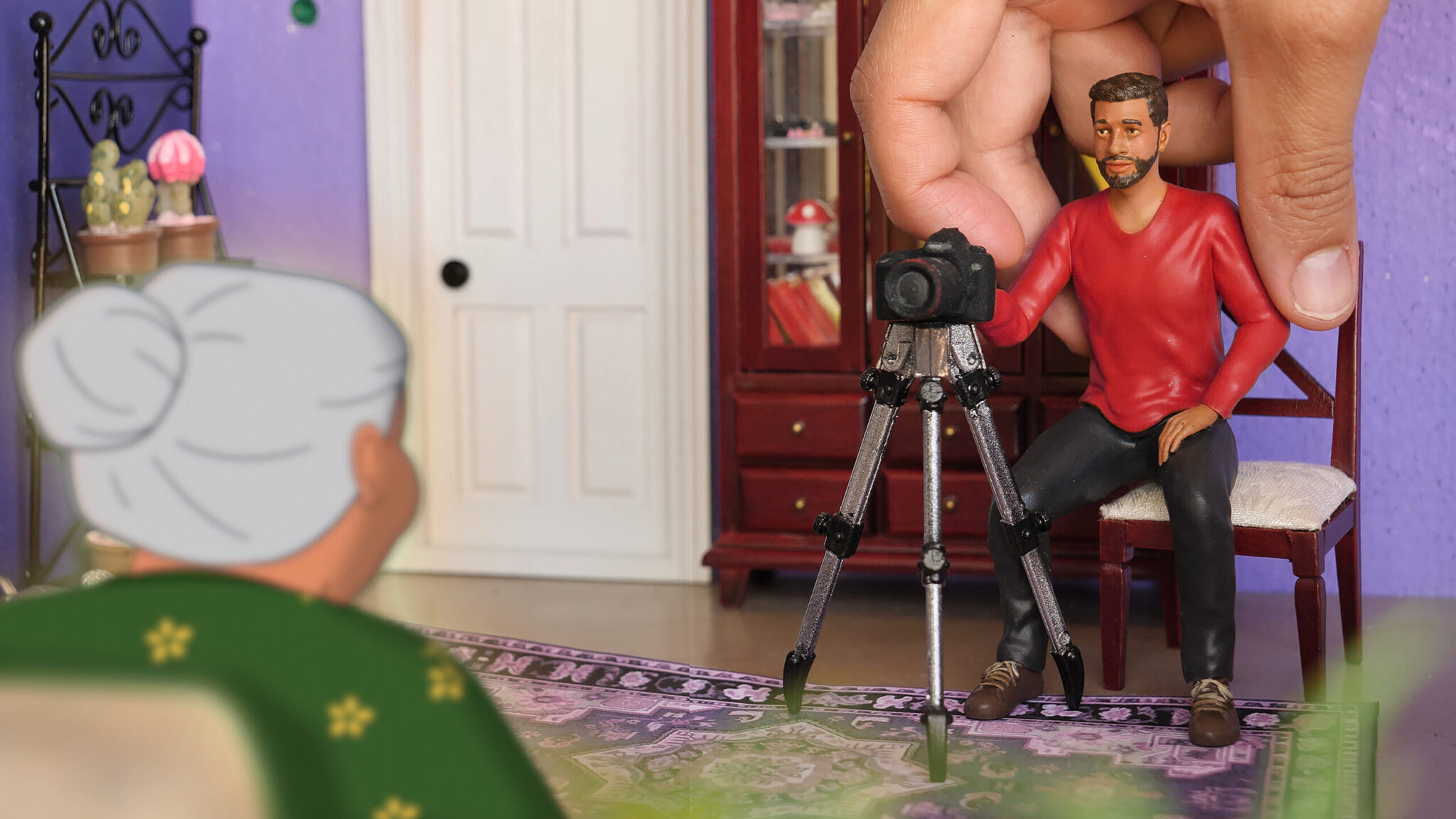
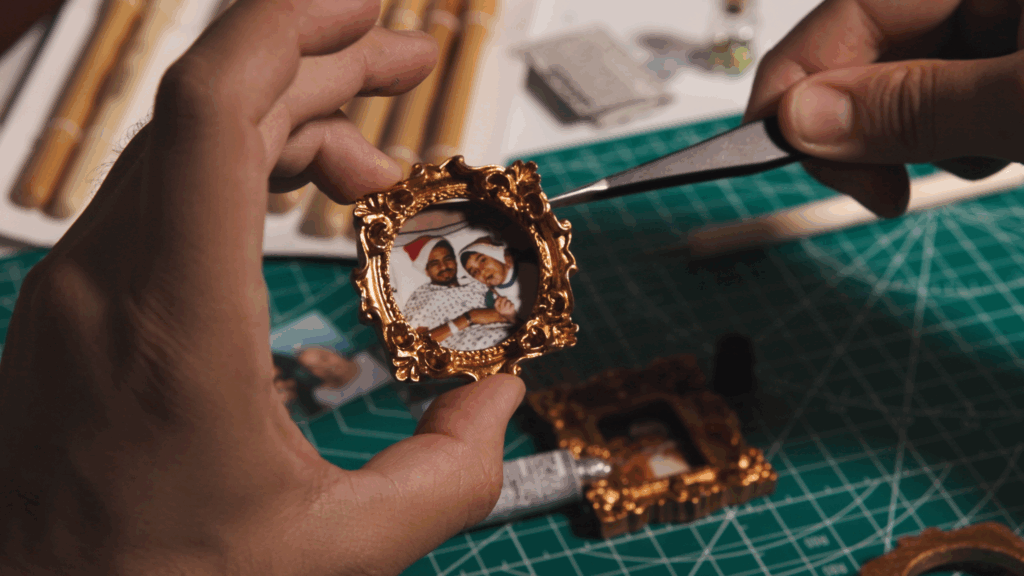
Using motion-capture technology and miniatures, Caballero and his mother, Milly, weave together memories of their family through audio from recorded conversations and footage from home movies, giving new life to those who have passed on. The process of making TheyDream became an exercise in healing, and Caballero hopes the finished project will resonate with anyone who has endured the same feeling of loss.
“This film is for everyone who has grieved the loss of a loved one. It’s an experience that is universal, transcending all cultures and backgrounds,” he says. “One of the things I’ve loved most about screening my other animated films about my family is when members of the audience have approached me afterward — people of all different ages, ethnicities, genders, sexualities, etc. — to tell me, ‘Wow, your grandpa reminds me of MY grandpa.’ I’ve come to understand that by showcasing my family’s unique stories, my art serves a larger purpose — it helps others remember their own families, honor those they’ve lost, and heal.”
Read on to learn more about TheyDream and its director, including Caballero’s favorite memories from filming and the artists he counts as his creative heroes.

What was the biggest inspiration behind TheyDream?
My Puerto Rican family is my biggest inspiration. Over the years, we have had countless conversations that are funny, candid, heartfelt, and honest. Gems of folksy Boricua wisdom from my grandparents, Nuyorican street smarts from my dad, and concerned advice from my overprotective mom. I am lucky to have recorded many of these conversations, which has allowed me to “bring them to life” using macro filmmaking and 2D and 3D animations, which really help make my film shine.
Films are lasting artistic legacies; what do you want yours to say?
I want my film to empower underrepresented communities to tell their own stories in their own unique voice. This is especially important now when [diversity, equity, and inclusion] is under attack. I want viewers to get to know my family and see fully realized Puerto Rican characters living complex, specific lives. I also want it to showcase the power of artistic expression and collaboration as a way to heal ourselves from grief and trauma. Ultimately, I hope it inspires audiences to explore their own family dynamics and personal histories — to see the universal power in the particular and to recognize that every story, when told honestly, has the capacity to move us.
Your favorite part of making the film? Memories from the process?
My favorite part of the film is the spontaneous collaboration I experienced with my mom as she became an active participant alongside me. It was her first foray into animation — a medium that has been my home for the past 20 years — and she loved it. Watching her come alive during this process emboldened me to use my art as a vehicle for making animation accessible to everyone and normalizing it as a tool for healing.
Why does this story need to be told now?
In this political climate, diversity itself has become demonized. I will continue to fight against this because it’s fundamentally wrong. Excluding people from the American narrative, whether by ignoring our stories or demanding conformity for acceptance, goes against everything we should hold dear. My film celebrates my Puerto Rican family, disabled people, LGBTQ+ acceptance, and the power of creativity to help us understand ourselves beyond the pressure to conform.
Why is filmmaking important to you? Why is it important to the world?
Filmmaking is how I make sense of my life and connect with others. It’s important to the world because it gives people permission to see themselves as worthy of being seen, to share their imagination, and to speak truths that might otherwise go unheard.

If you weren’t a filmmaker, what would you be doing?
I would probably be a film composer. There’s something powerful about storytelling, whether through visual mediums or music. I played violin for many years before transitioning to filmmaking, and it’s an artistic gift I still hold close to my heart.
What is something that all filmmakers should keep in mind in order to become better cinematic storytellers?
Make work that only you can make. Your specific perspective, your family, your experiences — these are what make your stories irreplaceable. The world doesn’t need another copy of something that already exists. It needs your truth.
Who are your creative heroes?
Ludwig van Beethoven, Gustav Mahler, Alejandro Jodorowsky, Pablo Picasso, Frida Kahlo, Philip Glass, James Baldwin, and Stanley Kubrick… just to name a few!
What was the last thing you saw that you wish you made?
Marcel the Shell with Shoes On
Which of your personal characteristics contributes most to your success as a storyteller?
I would say my resourcefulness. I have been able to create award-winning films with teams as small as 3–4 people, and sometimes even solo. You don’t need the best gear or the biggest budgets — you just need conviction and a belief in yourself and your mission.
Tell us about your history with Sundance Institute. When was the first time you engaged with us? Why did you want your film to premiere with us?
My first short film, Victor & Isolina, premiered at Sundance in 2017, and I loved every minute of that experience. Since then, Sundance has continued to support my work as a 2017 New Voices fellow, through the 2022 Festival premiere of my short film Chilly and Milly, and as a 2022 Documentary Humanities fellow. You guys rock!
Who was the first person you told when you learned you got into the Sundance Film Festival?
My mother! She was so incredibly proud of my journey — and less excited when I joked that she was going to become a celebrity, swarmed by paparazzi and rabid fans.
What’s your favorite film that has come from the Sundance Institute or Festival?
I often find myself thinking about Reid Davenport (who was a 2022 Creative Capital awardee like myself) and his film I Didn’t See You There. I had never seen a film like his before, with such a visceral, first-person perspective on what it is like to live with a disability. Watching it made me acutely aware of my own responsibility as an able-bodied person to help make the world more accessible to people living with disabilities, not just my parents, but also my neighbors and strangers.