



By Lucy Spicer
One of the most exciting things about the Sundance Film Festival is having a front-row seat for the bright future of independent filmmaking. While we can learn a lot about the filmmakers from the 2025 Sundance Film Festival through the art that these storytellers share with us, there’s always more we can learn about them as people. We decided to get to the bottom of those artistic wells with our ongoing series: Give Me the Backstory!
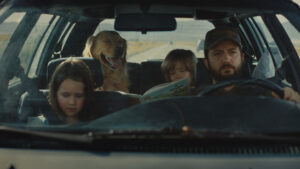
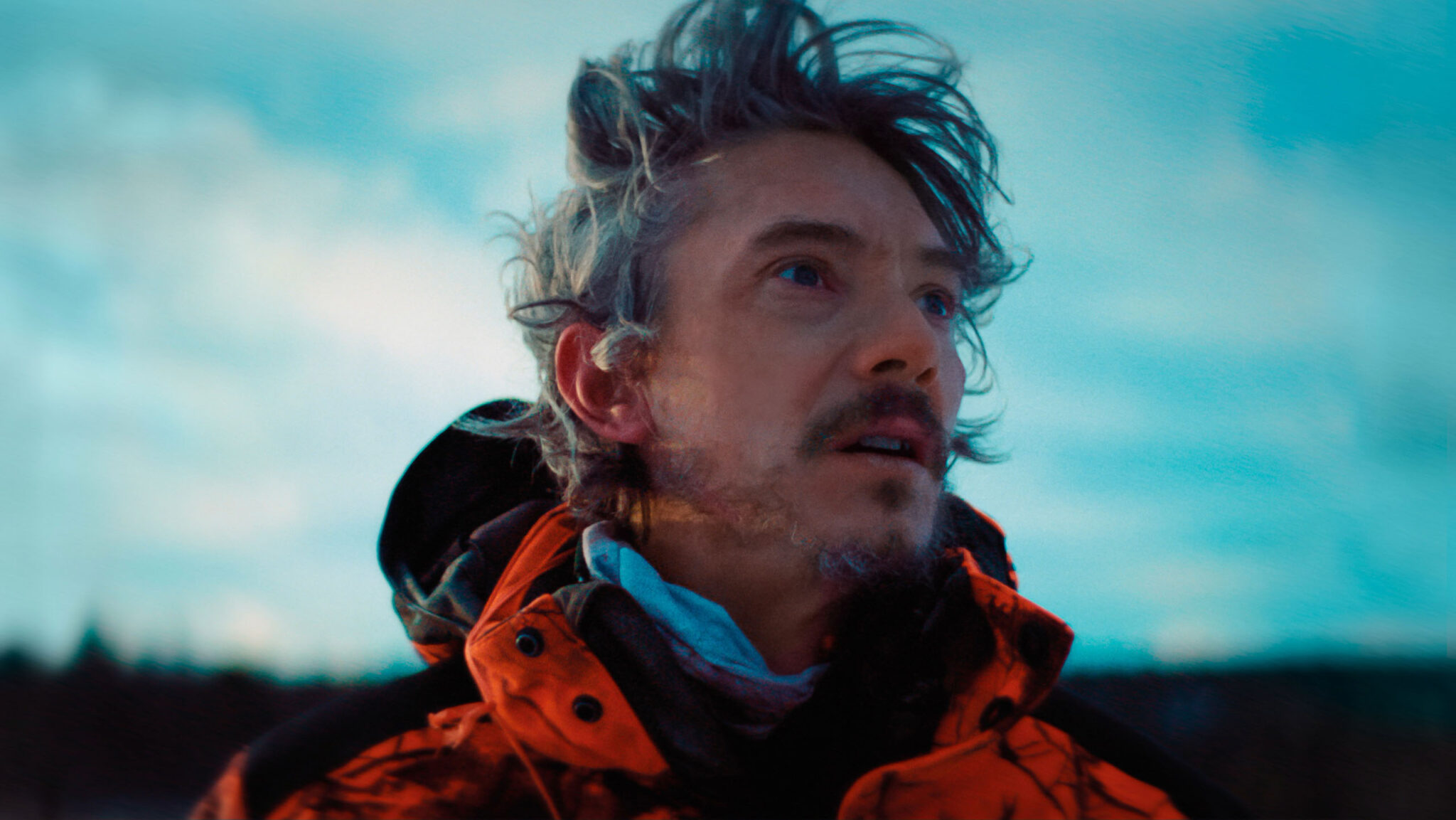
When writer-director Vladimir de Fontenay chose to adapt David Vann’s short story “Sukkwan Island” for his sophomore feature, he knew he was taking on some challenging material. Lifted from Vann’s book Legend of a Suicide, the story follows an estranged father and his 13-year-old son as they attempt to reconnect by spending an extended period together on a remote Alaskan island. But the father is racked with guilt over his failed marriage and shortcomings as a role model, and the isolated pair’s lack of sufficient preparation for their harsh natural surroundings exacerbates their emotional turmoil.
For his screen vision of Sukkwan Island, which premiered in the World Cinema Dramatic Competition at the 2025 Sundance Film Festival, de Fontenay entrusted the roles of father and son to Swann Arlaud and Woody Norman respectively, who manage the rising tension and unraveling psyches with aplomb. But de Fontenay’s choice to move the story’s setting from Alaska to the fjords of Norway didn’t lessen any potential environmental challenges during production — in fact, it may have increased them.
“The Arctic weather was relentless. Freezing temperatures, brutal winds — it was survival filmmaking at its best,” recalls de Fontenay. “And then there were the animals. We had crows, reindeer, and even a bear on set. On my first film, I worked with roosters; it was much easier. But animals are always so unpredictable; there is always something amazing that comes out of the chaos they bring with them.
“We also faced the extremes of light in Norway. During winter, it was night almost all the time. By summer, it was the opposite — perpetual daylight. This made scheduling a nightmare, but we leaned into it, using the disorientation to inform the story’s emotional landscape.” But despite these physical extremes, de Fontenay believes the emotional core of the film transcends its setting: “The themes — grief, trauma, redemption, guilt, the fractures and repairs of family — are universal.”
Read on to learn more about Sukkwan Island and its director, including what his favorite part of filming was and how he balances chaos with vision.
What was the biggest inspiration behind this film?
The book by David Vann was a massive inspiration. It’s not just a story but a labyrinth of emotions, with so much hidden beneath the surface. I was captivated by its exploration of tragedy — how deeply it can shape us and, paradoxically, how art has the power to confront and even begin to heal those wounds. At its heart, the film examines the complexity of a father-son relationship — the guilt and burden left by a fractured family, and how children often feel the weight of trying to piece things back together.
This is also a story of contrasts: vast, epic nature and the tight confines of an emotional huis clos. I wanted the environment to reflect the turmoil of the characters — a powerful mirror of their inner lives.
Films are lasting artistic legacies; what do you want yours to say?
If I had a clear answer to that, I might not make films. But maybe that’s the point: Filmmaking is a way of asking questions, not answering them.
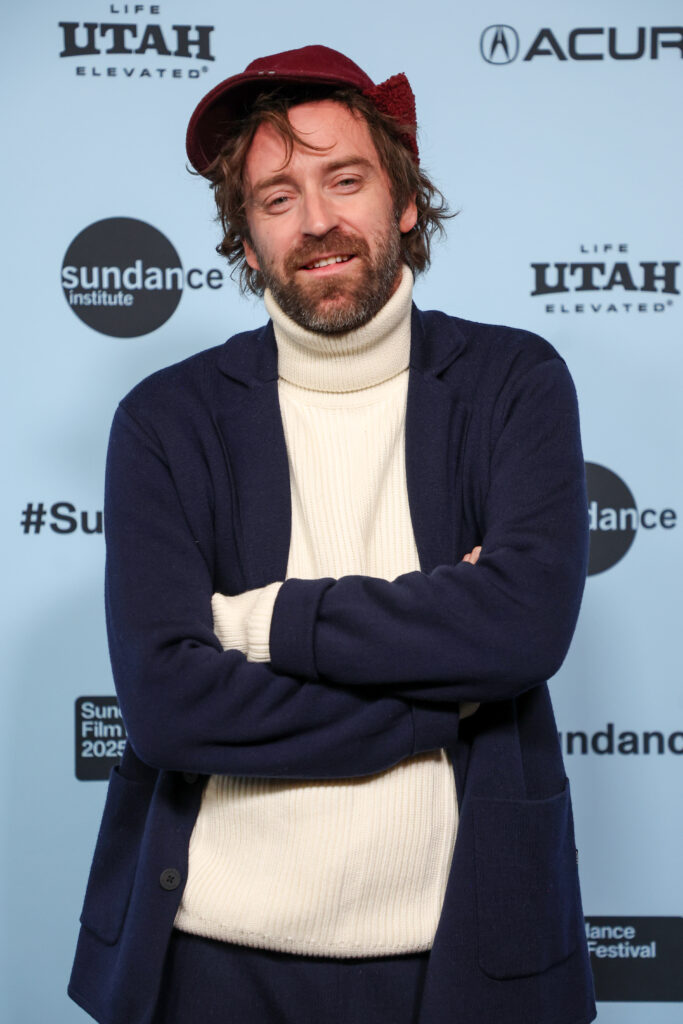
If my films could say one thing, it would be this: that tragedy, however devastating, has beauty in its depths. That humanity is at its most poignant when it’s flawed, vulnerable, and struggling to connect.
Tell us an anecdote about casting or working with your actors.
Swann Arlaud and Woody Norman didn’t know each other before the shoot, and we structured the filming in such a way that they had to do something really challenging. At the start, when their characters are meant to have a deep bond, they had just met in real life. By the end, after spending months together, they had to pretend to be strangers again.
It was fascinating to watch them navigate this — Swann brought a quiet intensity, and Woody had this raw, open energy. Their dynamic shifted naturally over time, and it added layers of authenticity to their performances.
Your favorite part of making the film? Memories from the process?
Two things stand out. First, shooting in two parts over different seasons. It’s rare when you’re making a film to get to come back together with your cast and crew, months later to shoot again, and it felt like a reunion — almost like returning to family. Watching the seasons change while working on the same story gave the project a sense of evolution.
And then there were the auroras. I’m a firm believer that the more time you spend in a location, the more it gives you in return. On the final days of shooting in Norway, the sky lit up with northern lights. It was magical and gratifying somehow for everyone who had given so much to this adventure.
Why does this story need to be told now?
If I’d known exactly why, I might not have needed to tell it.
But maybe that’s what makes it feel timely — the questions it raises about family, guilt, and redemption are timeless, yet they feel urgent in an age where fractured relationships are so common.
Tell us why and how you got into filmmaking.
I’ve always been drawn to visual storytelling. It started with photography and playing around with a Super 8 camera. From there, I worked as a PA, made short films, and eventually studied at NYU’s Tisch School of the Arts, where I did my MFA.
What keeps me in filmmaking is the medium’s ability to create empathy. It lets you step into someone else’s life — feel what they feel, see what they see. There’s a magic in the shared experience of sitting in a dark theater, where a story unfolds and, for a moment, we all believe in it together.
If you weren’t a filmmaker, what would you be doing?
I’d want to be a doctor. The ones I’ve met since becoming a filmmaker have left me in awe — they’re the real deal. The only problem is that I faint at the sight of blood. So maybe not.
What is something that all filmmakers should keep in mind in order to become better cinematic storytellers?
Embrace chaos, but protect your vision. Filmmaking is messy — things will go wrong, and that’s okay. But your vision is the lighthouse that guides you through the storm.
And remember, every story you tell is also the story of you telling it. Your voice, your perspective — it’s what makes the film unique.
Who are your creative heroes?
Werner Herzog for his boldness and vision. Spike Lee for his unapologetic voice. Gus Van Sant and Chantal Akerman for their sensitivity. Wim Wenders for his visual poetry. And Giulietta Masina, whose performances are pure magic. Russell Banks, Hiroshi Sugimoto, Tadashi Kawamata…
What three things do you always have in your refrigerator?
Crab sticks, pickles, and a beer.
What was the last thing you saw that you wish you made?
Anora. For the performances that are so incredible, and Sean’s Baker ability to show us, film after film, that there’s beauty everywhere, if only you can look at it.
One thing people don’t know about me is _____.
I talk to myself. A lot. It’s even where some of my ideas come from.
Which of your personal characteristics contributes most to your success as a storyteller?
I think my warmth and curiosity. I genuinely love getting to know people and their stories.
Who was the first person you told when you learned you got into the Sundance Film Festival?
Peter Newman, a former professor and dear friend who produced The Squid and the Whale, which screened at the 2005 Sundance Film Festival.
What’s your favorite film that has come from the Sundance Institute or Festival?
That’s a tough one, but Memento holds a special place for me. Its storytelling was a game changer.