



By Lucy Spicer
One of the most exciting things about the Sundance Film Festival is having a front-row seat for the bright future of independent filmmaking. While we can learn a lot about the filmmakers from the 2026 Sundance Film Festival through the art that these storytellers share with us, there’s always more we can learn about them as people. We decided to get to the bottom of those artistic wells with our ongoing series: Give Me the Backstory!
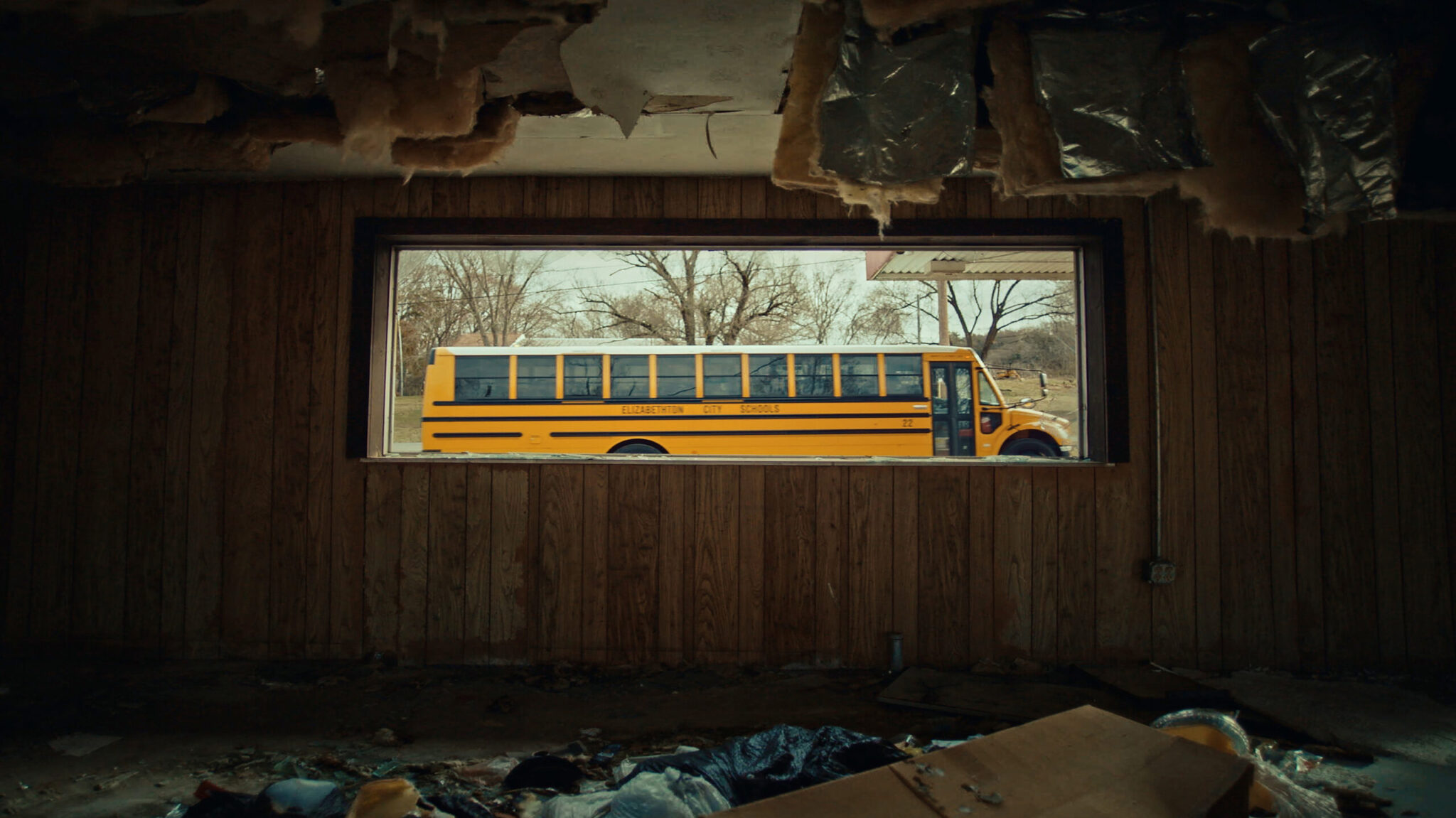
In 2018, a high school sociology teacher in a small Tennessee town gave his students an assignment: to investigate a local cold case from 30 years prior. The students delivered, developing a profile for the serial killer — a profile that helped revive a decades-old investigation into a present-day hunt for a killer. The class and their research made headlines, leading to a podcast called Murder 101 in 2024. And now the project is at the center of a docu-series — also called Murder 101 — whose first episode will premiere as part of the Episodic Nonfiction Pilot Showcase at the 2026 Sundance Film Festival.
Directed by Stacey Lee (The Secrets of Hillsong, Olivia Rodrigo: driving home 2 u), the series does more than rehash the story told in the podcast. “This was my first time exploring something in the true-crime genre, and I was immediately inspired by the ways a coming-of-age lens could refresh this oversaturated genre,” says Lee. “To me, it was an opportunity to set a new tone that is equal parts Dead Poets Society, Mindhunter, and Friday Night Lights. Where joy and gore, hope and heartbreak, youth and investigative rigor are portrayed in equal measure.” This new lens also sheds light on the state of the education system and teenagers’ willingness to face difficult subjects with curiosity and empathy.
Lee has always appreciated the eye-opening — and challenging — aspects of documentary filmmaking. “I got into filmmaking out of a mixture of curiosity, boredom, and naïveté. I was living in another country, working in another career, when I stumbled upon an interesting story with larger-than-life subjects and incredible archive materials. Naturally, armed with no experience, no technical skills, and no money, I set about — some would say recklessly — to make my first feature film,” she says. “Fortunately I had a circle of friends with enough enthusiasm to cobble together a crew, and over the course of the next two years’ worth of weekends, we hustled together something to share with the world. While testing, and not always fun, I caught the bug. Shortly after, my side hustle became my main hustle, and, a decade later, I finally started calling myself a filmmaker.”
She continues: “Since the beginning, being a documentarian has forced me outside my comfort zone; no two stories are the same, and so each project is a fresh opportunity to immerse myself in completely new points of view that help me better understand the complexity of the human experience.” Read on to learn more about Lee and how she immersed herself in the world of Murder 101.
Describe whom you want this series to reach.
We would love this series to reach audiences well beyond typical true-crime fans; this is a coming-of-age story as much as it is a murder mystery.
Why does this story need to be told now?
Right now, more than ever, the education system is at a crossroads. Student dropout rates and engagement are worse than they have ever been, and the system of mass standardized testing to measure academic achievement is failing the majority of students. This film serves as a case study for how school can feel when students are encouraged to engage in deep, meaningful tasks. In activities that have real impact in the world, where results are measured in helping others and in bringing awareness to neglected issues. Not only does it help them process the material they are learning and make it relevant to their lives, but it also allows them to be better equipped to cope with the challenges life will inevitably throw their way.
Your favorite part of making Murder 101? Memories from the process?
I grew up in New Zealand, so I never got to experience American high school until our small, immersive crew moved into Elizabethton High. Day after day we roamed the halls, attended sociology class, recess, and band practice and even got to dress up and go to prom.

We had a little staging area right outside the science rooms, and, over time, students, teachers, and administrators came to see us as part of the furniture. I even had to go to the principal’s office once, which I can attest continues to be one of the most scary and humbling experiences.
What was a big challenge you faced while making this series?
One of the biggest challenges was getting access to film inside a school. Understandably there are a lot of restrictions with filming in schools, and Tennessee actually has the strictest standards in the country. So it was a long, slow process of building trust, which started with me going to speak in front of the community school board, to the principal, and to every student’s parent. But ultimately it was that legwork that won over this small community; everyone knows everyone, so word spread quickly about the “film crew” and the director with the funny accent no one could understand.

Why is filmmaking important to you? Why is it important to the world?
For me, it provides a safe and palatable way to explore the complexity of what it means to be a human. You come to be entertained, but the best films leave you enlightened and more deeply connected to people beyond your immediate world.
Films are lasting artistic legacies; what do you want yours to say?
I think the power of a good teacher is the biggest takeaway I want audiences to feel from this film. How one person who believes in you, treats you with respect, and encourages you to push beyond what you think is possible can truly transform what you are capable of. Mr. Campbell might have a lot of wild ideas, but like many good teachers out there, he’s the kind of teacher who changes the way a student thinks about themselves. That’s something that is not found in a textbook.
If you weren’t a filmmaker, what would you be doing?
A journalist or a writer
What was the last thing you saw that you wish you made?
Come See Me in the Good Light — I just watched this and immediately was struck by the way such a morbid subject was captured with such joy, beauty, and humanity. Cry-laughed the whole way through.