



By Bailey Pennick
One of the most exciting things about the Sundance Film Festival is having a front-row seat for the bright future of independent filmmaking. While we can learn a lot about the filmmakers from the 2026 Sundance Film Festival through the art that these storytellers share with us, there’s always more we can learn about them as people. We decided to get to the bottom of those artistic wells with our ongoing series: Give Me the Backstory!
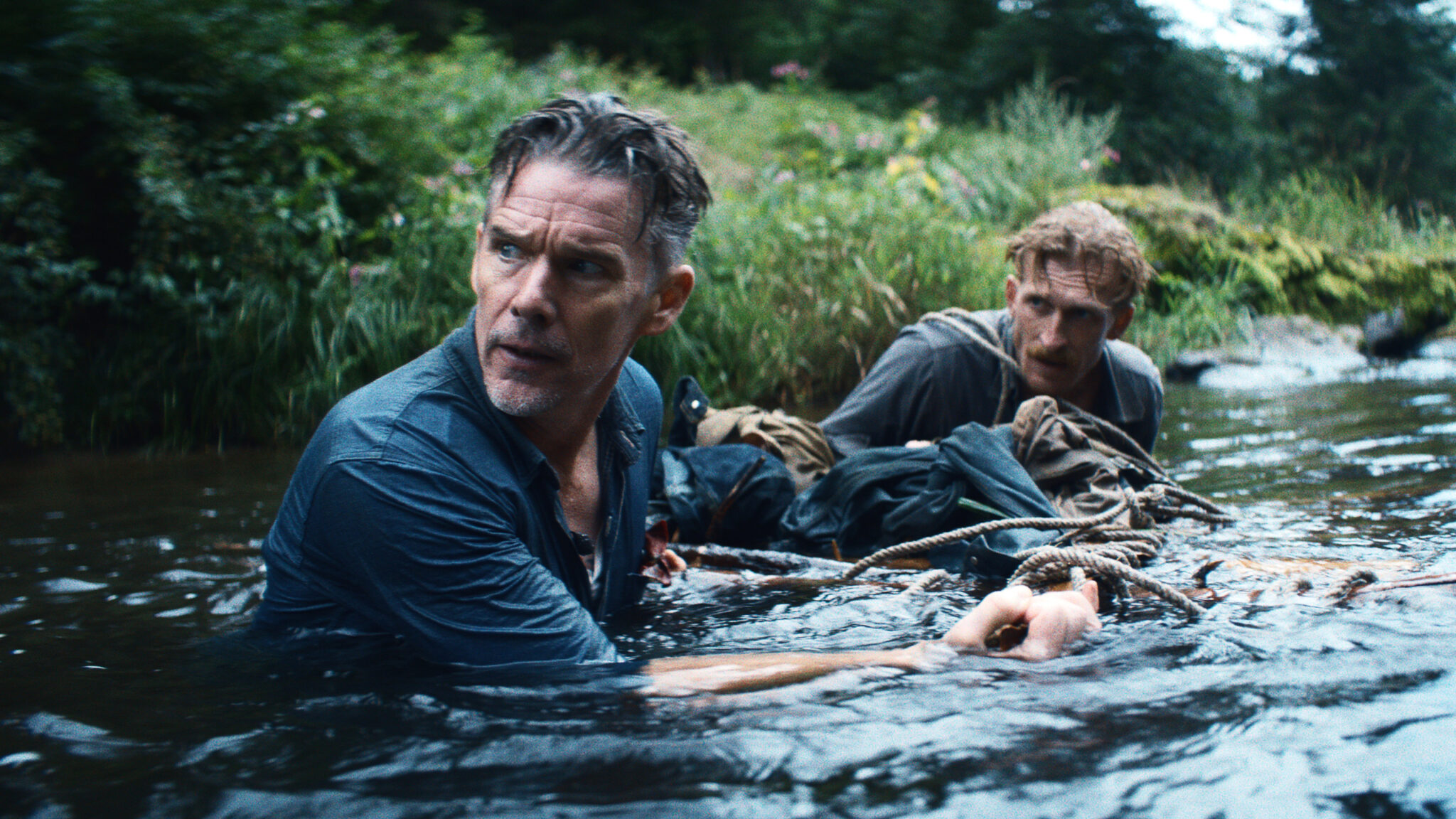
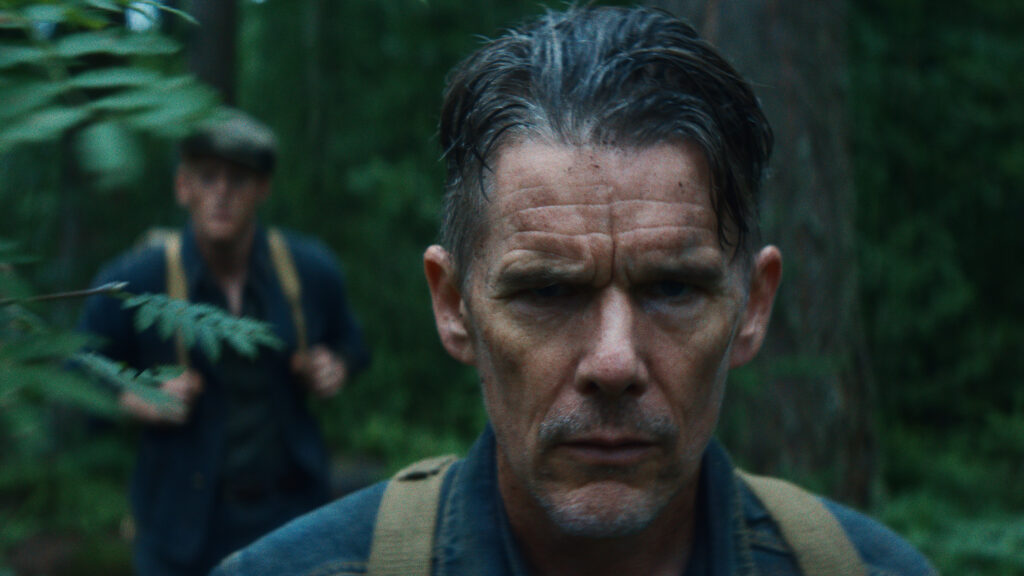
Lush forests and internal conflict fill the frames of Padraic McKinley’s debut feature as a director. You can feel the damp that refuses to leave the backs of the characters, you can’t shake the distinct feeling of dirt under your fingernails. While the overarching action of The Weight is following a relentless group of prisoners smuggle gold across the treacherous Oregon woods in order to receive early release from their work camp sentencing, the true heart of the story is Samuel Murphy (a pensive and pained Ethan Hawke) — a desperate man trying to get back to his young daughter during the Great Depression.
Even though The Weight is a period piece, don’t be surprised if the echoes of history start to get louder and more familiar as you watch the film. “When we first started talking about the film, we talked about the themes. We talked about the ‘heartbroken soul of America’ during the Great Depression,” McKinley says when asked about why this story needed to be told right now. “The divide between the haves and the have-nots. Greed shown by those in power and callousness towards anyone infringing on that greed. Families being torn apart. The ‘America First’ attitude from people who were desperate for their own government to help them, rather than focusing on a country overseas. Cut to 2025, and it seems to me those themes are still pretty relevant.”
Below read on about how McKinley got into filmmaking in the first place, his extensive creative heroes list, and the essential rule that he and Hawke had on set.
What was the biggest inspiration behind The Weight?
The love of family always resonates. As a father, especially lately, it feels like we all have to put on that armor and slay dragons every day. Financial. Social. Just making it through these times. All the bullshit. I think we all feel that. And I always want to make my family proud. Especially my daughters. I want them to know you never gave up. Weather the storm, come out on the other side.
The Weight hit me on two levels: a father willing to do whatever it takes for his family, and the opportunity to make a film in the style of a 1970s or 1980s adventure movie. Put together, those two elements felt like something special.
Films are lasting artistic legacies, what do you want yours to say?
Oh boy. I hope films are lasting legacies. Sometimes I get discouraged by all the short-attention-span content — the swiping when you’re bored, or when something isn’t curated exactly for you. I think films are like albums, and scenes are like songs. TikToks are like jingles. I want to make a great album, if you know what I mean? A few hits, a few deep cuts, hopefully no filler, and maybe even hints of what’s going to be exciting about the next one. The cliché is that a great film is a few great scenes and no bad ones. Suppose if we’re emulating films or albums from 40, 50, 60 years ago, that’d be a cool legacy for this one. Perchance to dream.
Your favorite part of making The Weight? Memories from the process?
The whole damn film was just an absolute pleasure to shoot. It felt like a funeral when we finally wrapped. “We have to stop shooting?” Like I said, it really was like a family from the actors through all the departments. Production office. PAs. Everyone. Lots of family visits — my wife was with us for a lot of the shoot and both my daughters were able to make it out. Ethan and Ryan’s daughters as well. Julia had her little one with us and she absolutely made my mornings when we’d all get to have breakfast together.
As for the actual work? It was so rewarding developing the material, prepping, shooting, and then baking the cake in the cut. I personally loved all the campfire scenes: night shoots, singalongs, keeping warm, and having a blast.
What was a big challenge you faced while making this film?
Aside from the usual main challenge of making an independent film (days and money)? I think it was probably doubling Munich for 1933 Eugene, Oregon. But that was only for a couple of weeks. I know the actors would say it was the water work. But, I was on dry land with a heater. We all sacrifice in different ways.
Narrative Films Only: Tell us an anecdote about casting or working with your actor(s)
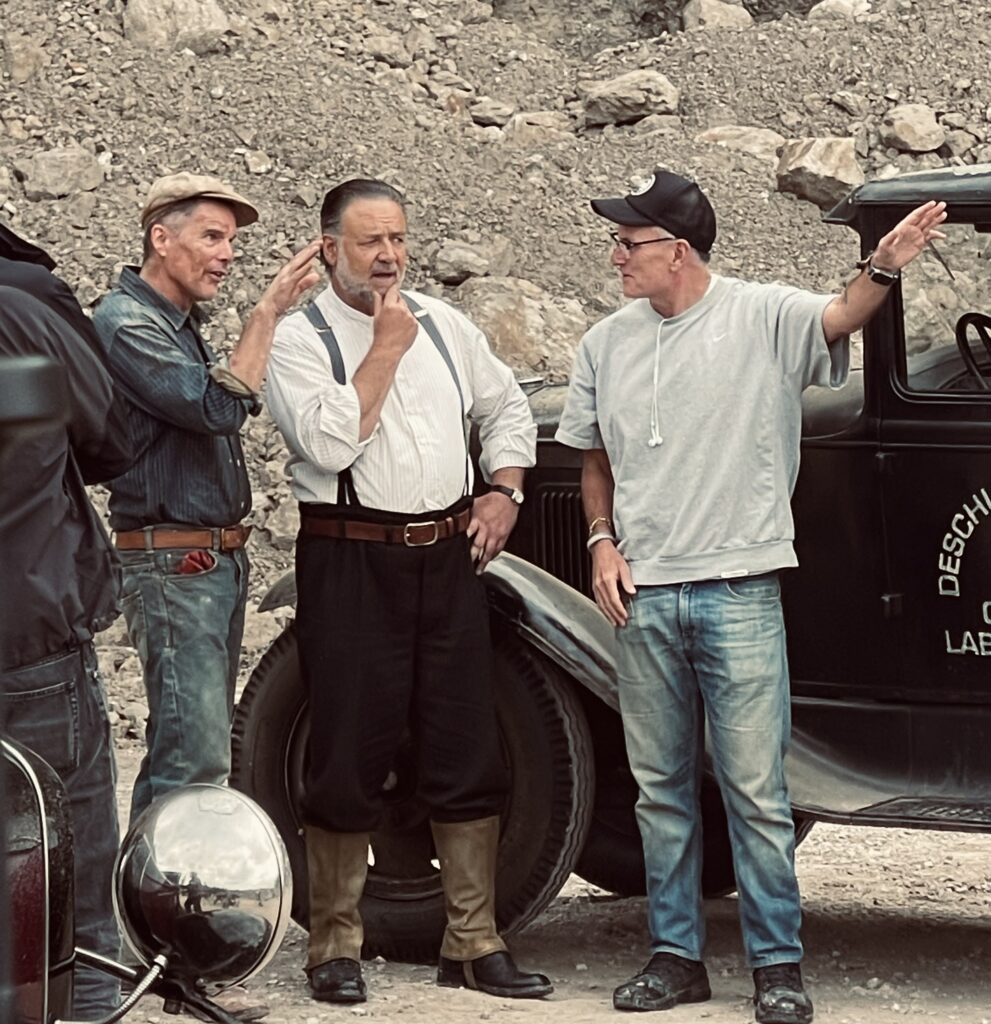
When it came to casting the film, from the way back Ethan and I said that at all costs we keep a “no assholes policy.” And I think we nailed it across the board, it was just an amazing group. In a (sort of) road film with seven actors for much of the shoot, one bad seed could’ve really tanked the vibe — tanked everyone’s work. I feel the opposite happened: everyone became like a little family, hanging out and going on adventures around Lower Bavaria. Going for swims on the weekend. Screening Ethan’s documentary. A couple of weeks ago, two of the fellas even showed up unannounced at my house in California with some Guinness. True brothers. But they should’ve called, I would’ve put pants on.
Tell us why and how you got into filmmaking?
I was studying music in college, and after spending my first summer filling up my electives with “basketball” and “weight training,” my parents weren’t buying that shit for a second summer. So I had to get a J.O.B. My uncle Bill was a film editor, and I sheepishly asked if I could come work for him. He got me a job with a music editor that paid $500 a week. Working on movies? Living in the LA sunshine? Making $500 a week??!! Definitely wasn’t going back to rainy, cold Eugene after that kind of hedonism.
Cutting film and music was a revelation — it somehow lit up the same part of the brain as playing music. And when I say we were a film family growing up, I mean we went to the theater every Friday. Sometimes Saturdays, too. Rainy days. Hot days. Any excuse.
Then video rentals came along and it just shifted my whole life. Interesting — I can pretty much remember where I saw just about every film I saw growing up, who I saw it with, and how much those films meant to me. And now? We can just piss away two hours staring at a phone on any given night. That education turned out to be way more useful than hooping and lifting weights.
Why is filmmaking important to you? Why is it important to the world?
Films are a handmade art form that combines all the best of the other arts: acting, writing, photography, music, fashion — everything — all under one umbrella. Filmmaking matters to me because, honestly, it just matters.
If you weren’t a filmmaker, what would you be doing?
FBI forensic profiler. Not joking.
What is something that all filmmakers should keep in mind in order to become better cinematic storytellers?
Be influenced, but do you. Write you. Shoot you. Cut you. Place the music where you see fit. Tell the story at your pace. Be in close when you want, pull out wide if it feels right. That’s how you develop your unique voice.
But the most important “you” you can do? Hire collaborators who represent you — and then let them cook. When you pick to work with people you love and respect, you’ve already communicated the direction of your film without even trying.
Who are your creative heroes?
Lennon, Strummer, MacKaye, Weir, Ashby, Friedkin, Keith, Perryman, Helm, Bonham, QT, Thompson, Kerouac, Nelson, Jennings, Cash, Dylan, Scorsese, Lynch, Scott, Byrne, Petty, Jordan, Day-Lewis, Sturgill, Nashville, Ireland, LA, SF, Berry, Vallée, Joanou, Penn, Oldman, Anderson, McGowan, Hawke, Crowe, and about 6 bazillion others. We could do this for days.
Tell us about your history with Sundance Institute. When was the first time you engaged with us? Why did you want your film to premiere/screen with us?
The first time I engaged with Sundance was when we submitted The Weight.
I wanted to premier at the Festival because I’ve always thought the coolest, freshest, most unique flicks came out of Sundance. Everyone does, right? Sundance is the pinnacle for independent films.
What’s your favorite film that has come from the Sundance Institute or Festival?
Four-way tie:
Before Sunrise
Reservoir Dogs
Napoleon Dynamite
The Last Black Man in San Francisco