



By Jessica Herndon
One of the most exciting things about the Sundance Film Festival is having a front-row seat for the bright future of independent filmmaking. While we can learn a lot about the filmmakers from the 2026 Sundance Film Festival through the art that these storytellers share with us, there’s always more we can learn about them as people. We decided to get to the bottom of those artistic wells with our ongoing series: Give Me the Backstory
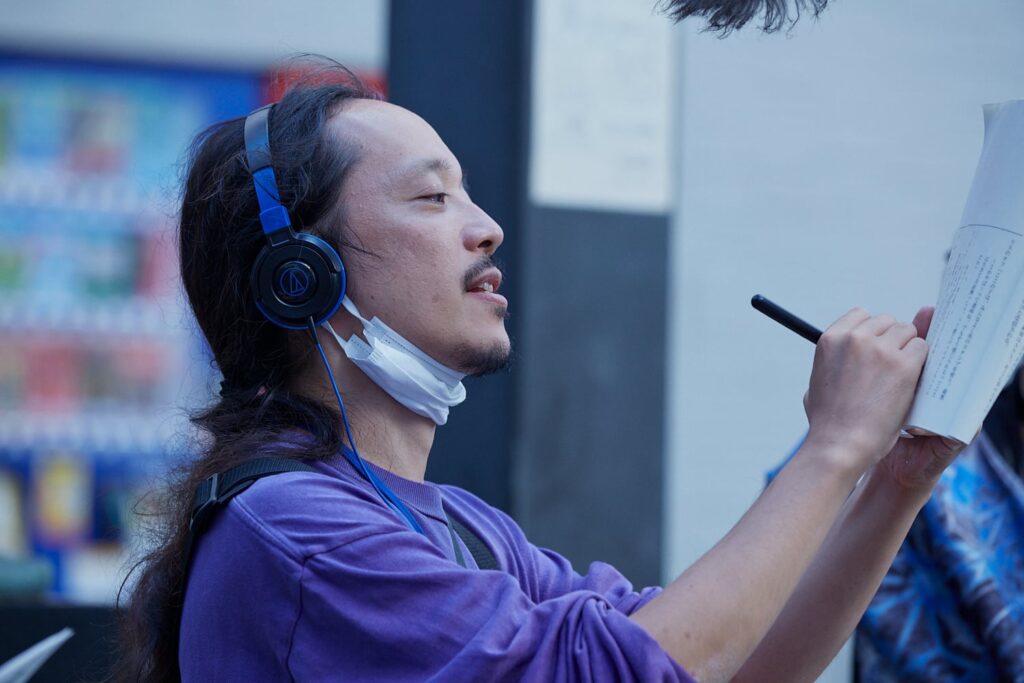
When it came to depicting the lives of misfit runaway teens in the twisted drama BURN, writer-director Makoto Nagahisa was determined to shoot in Tokyo locations that felt unmistakably authentic to the world he was building.
“We shot in the square that the actual street kids gather around,” says Nagahisa. “We were constantly surrounded by homeless people and rowdy drunks, and there was also a lot of loud music and yelling, so we couldn’t really use any of the sound that was recorded on set. For me, though, filming on the actual location was far more important than sound quality.”
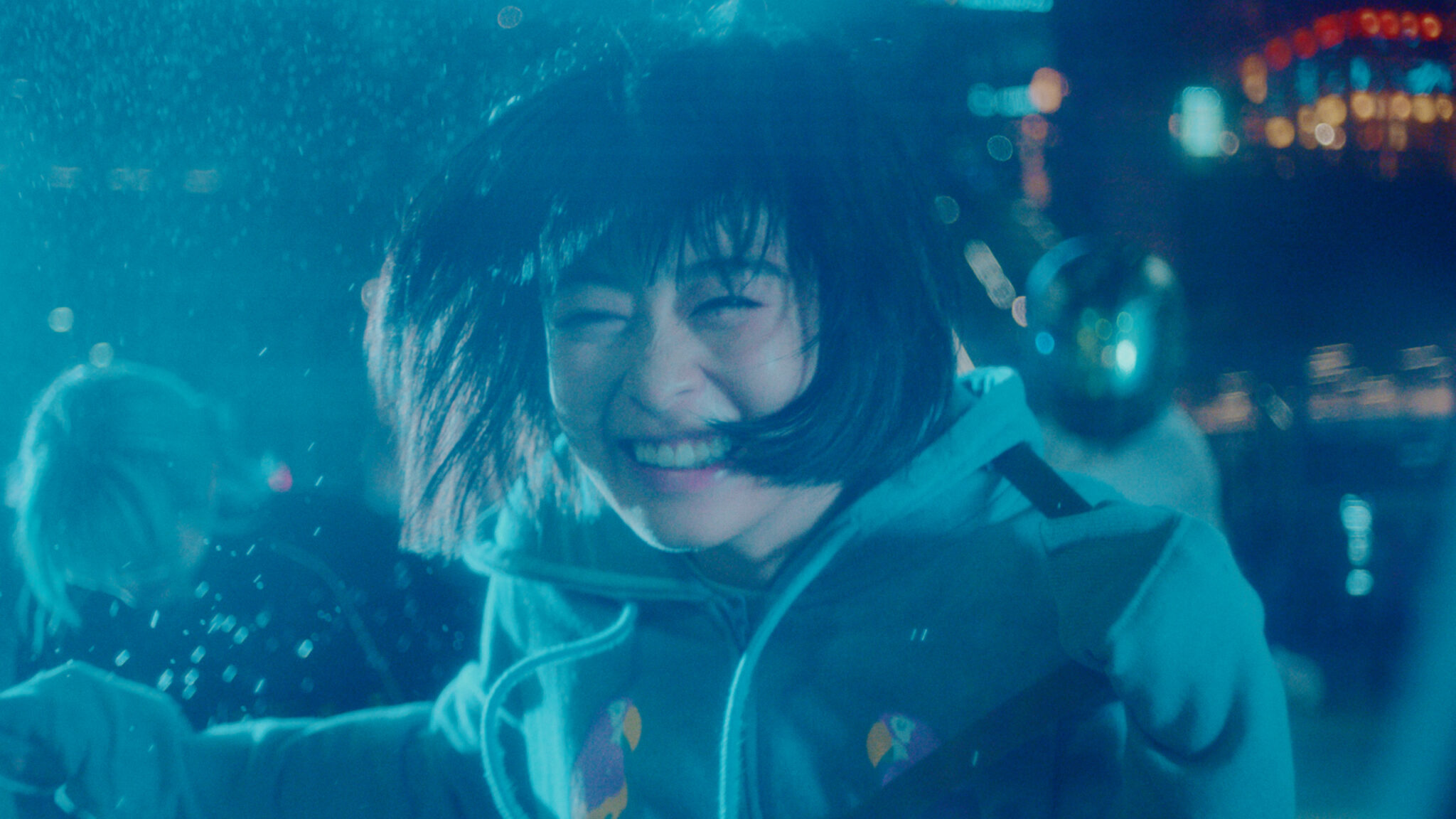
BURN, premiering in the NEXT section of the 2026 Sundance Film Festival, follows Ju-Ju, a runaway teen (played with raw magnetism by Nana Mori), as she slips into the neon-soaked underground world of the Kabukicho district and briefly finds the family she’s been missing. But when loyalty fractures, her new sanctuary becomes a trap, and she is pushed to reclaim her power. Crafting an intoxicating Tokyo, Nagahisa’s film is an enthralling mix of hypercolor, heartbreak, and originality.
A Sundance Film Festival alum, Nagahisa’s has taken home many Fest awards for his dynamic work, including the Short Film Grand Jury Prize for his short And so we put goldfish in the pool., which premiered during the 2017 Festival, the World Cinema Dramatic Special Jury Award for Originality for WE ARE LITTLE ZOMBIES, a 2019 Festival premiere, and the Short Film Special Jury Prize for Directing for 2024’s Pisko the Crab Child is in Love.
Read on as Nagahisa discusses the new technology he used for the film, the importance of bringing the realities of street kids to the screen, and his love for his cast.
What was the biggest inspiration behind BURN?
This film is inspired by the street children of Japan and the issues surrounding them. We witnessed many actual runaway girls gathered in a square in Shinjuku while we were shooting this film.
Films are lasting artistic legacies. What do you want yours to say?
Through my films, I want to explore and keep exploring what it means to live. And through this film, I want to express that we are equally free to dream, regardless of wealth, race, or gender.

Describe who you want this film to reach.
All the people in the world that are oblivious to the issues surrounding street children in Japan [and] all teenagers.
Tell us an anecdote about casting or working with your actor(s).
I’ve always wanted to work with Nana Mori, the leading actress of this film. From her roles in director Hirokazu Kore-eda’s films to her singing career, I have a lot of respect for her flexibility. That’s why I offered her the role of Juju. She really responded to my expectations. She spent nights around where the street children gather to fully immerse into her character.
For the other street kids, we chose to cast people with very little acting experience. They’re all students,
dancers, idols, or filmmakers. I feel like it was the right move casting them.
What was your favorite part of making BURN? Memories from the process?
We tried incorporating some state-of-the-art technology into this film. We used something called “NeRF” for Juju’s nightmare sequences, where we scan figures and convert them into rough 3D data files. I’m very proud that we were able to use this new technology not just for the sake of being on trend, but as an integral way of visually expressing the story. It’s always fun to experiment.
Why does this story need to be told now?
The issue of street children in Japan is gaining attention nationally, but there are no films that properly deal with it — they’re either too serious or too popularized. It’s not a problem that can easily be dealt with. I think it has to be dealt with seriously, but it also needs to be accessible. As I interviewed many runaway girls for this film, I came to understand that they have learned to confront serious problems with a light-hearted and frivolous attitude. This is what I felt had to be at the heart of my film. It was an emotion that cannot be conveyed through documentation, and can only be conveyed through storytelling.
I think that many foreigners visiting Japan are unaware of the reality of street children. By making their stories into a film, I wanted the girls to be seen by the world.
Why does this story need to be told now?
The issue of street children in Japan is gaining attention nationally, but there are no films that properly deal with it — they’re either too serious or too popularized. It’s not a problem that can easily be dealt with. I think it has to be dealt with seriously, but it also needs to be accessible. As I interviewed many runaway girls for this film, I came to understand that they have learned to confront serious problems with a light-hearted and frivolous attitude. This is what I felt had to be at the heart of my film. It was an emotion that cannot be conveyed through documentation, and can only be conveyed through storytelling.
I think that many foreigners visiting Japan are unaware of the reality of street children. By making their stories into a film, I wanted the girls to be seen by the world.
Tell us why and how you got into filmmaking.
I got into the film industry 15 years ago, not as a director, but as a copywriter for TV adverts. But I eventually got sick of it because what I wanted to express was something more inefficient, more ambiguous, purer, and more surreal. Basically, everything that can’t be done in advertising. That’s why I decided to make films.
Why is filmmaking important to you? Why is it important to the world?
People these days are so busy that they have no time to dream. Films are the same as dreams, and I think it’s something that we all need. That’s why I make films.
What is something that all filmmakers should keep in mind in order to become better cinematic storytellers?
The story should be fuelled by what you truly feel.
Which of your personal characteristics contributes most to your success as a storyteller?
My experience of working in the advertising industry for 15 years. That and my punk spirit.
Tell us about your history with Sundance Institute. When was the first time you engaged with us? Why did you want your film to premiere with us?
I first submitted my short film And so we put goldfish in the pool. in 2017, and received the Short Film Grand Jury Prize. It was my first ever film, and for it to have been accepted by Sundance really helped mark the beginning of my life as a film director.
My first feature-length film WE ARE LITTLE ZOMBIES was then screened in 2019, and my second short film, Pisko the Crab Child is in Love, was screened in 2023. This will be my fourth time attending the Sundance Film Festival.
To me, Sundance is where my career as a film director began. It’s my hometown. It’s a warm and stimulating place that I truly love from the bottom of my heart. That is why I really wanted to screen my second feature-length film here.