



By Lucy Spicer
One of the most exciting things about the Sundance Film Festival is having a front-row seat for the bright future of independent filmmaking. While we can learn a lot about the filmmakers from the 2026 Sundance Film Festival through the art that these storytellers share with us, there’s always more we can learn about them as people. We decided to get to the bottom of those artistic wells with our ongoing series: Give Me the Backstory!
Liz Sargent didn’t go to film school. In fact, her background is in modern dance and experimental theater. “News flash: There is not a huge audience for modern dance or experimental theater. It is hard, ethereal work,” she explains. “And I found that I want to share my stories with a broader audience to be in conversation with something that can find people throughout time, to hold the existence of the things I value and ponder.” Film became the medium by which Sargent would share her feature debut, Take Me Home, which is premiering in the U.S. Dramatic Competition at the 2026 Sundance Film Festival.
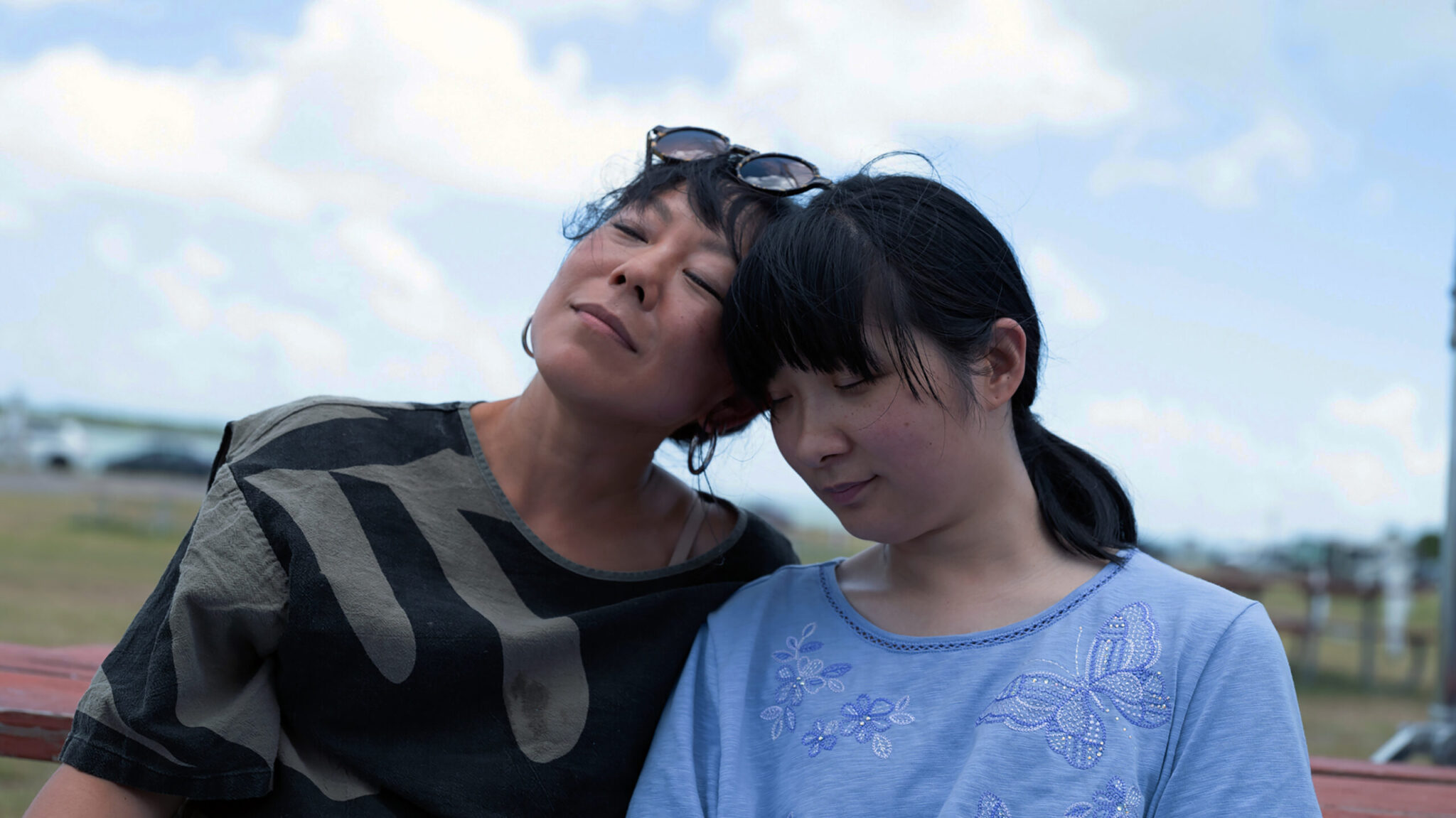
Expanded from a proof-of-concept short film that premiered at the 2023 Sundance Film Festival, Take Me Home follows Anna (played by the writer-director’s real-life sister Anna), a 38-year-old Korean adoptee with a cognitive disability, as she navigates caregiving responsibilities for her aging parents within a health care system where resources and support for individuals with disabilities are scant. “This is my most personal and vulnerable story,” says Sargent. “Shot in my parents’ home, built from moments we lived together — so getting to world-premiere it for a Sundance audience that’s open-minded and excited about new voices feels like the perfect way to send it into the world.”
In addition to resonating with anyone who has had to face the complications of caregiving, Take Me Home provides a rare opportunity for audiences to see a big-screen performance by a lead actor with a cognitive disability. “Expanding the industry’s idea of who gets to lead a film isn’t just a creative choice; it’s a practical, human one. When we build a set and a process around an actor like Anna — when communication, pacing, and expectations shift to meet her where she is — we see that the work becomes richer,” says Sargent. “If Take Me Home leaves any lasting message, I hope it’s that making space for people who think, speak, and move through the world differently isn’t charity — it’s an artistic advantage. It’s good storytelling. And it’s good business.”
Below, find more insight from Sargent about the making of Take Me Home, including one of her favorite memories from production — discovering that Anna is “a frat boy at heart.”

What was the biggest inspiration behind Take Me Home?
My sister Anna is a real boss lady. Her stubborn nature can drive me nuts, but her hugs can also totally disarm me with the most sincere loving goodness I could ever experience. SMH — sisters!
This project was born from thinking about how the world isn’t set up for Anna, who was born with a cognitive disability that left her with little short-term memory and other unique disabilities. Anna is spicy, she is blunt in the best way, and she feels everything deeply.
Anna is the youngest of 11 children. My parents had four biological children then adopted seven more, six of whom are Korean, several with disabilities. Our home had a natural chaos and also an innate value of symbiotic caregiving. As we grew older, a deep anxiety developed and I found myself overwhelmed by the lack of supportive resources and bureaucracy in the health care system and the ways in which so much of our country isn’t set up for disabled people or their families to thrive.
When I first began writing, the script felt like a diary entry. The entry point was my anxiety for what Anna’s future will look like when my aging parents can no longer take care of her. What is our responsibility to our family as we grow older?
But as I kept writing, I realized the perspective that mattered most wasn’t mine — it was Anna’s. Her original heart and humor are the truth that made this film. She is my muse, my guide, and the emotional backbone of the story. When you meet her, you’ll realize it was an obvious choice. Anna is a star.
Describe whom you want this film to reach.
This film is for anyone who has a complicated family. If you love someone, then you will be a caregiver one day.
While this story is rooted in the specific lived experiences of adoptees and people with disabilities, it is through the specificity that the film opens into something universal: the profound, often messy, always human reality of caregiving and the ethical questions it stirs.
Because if you love someone (a parent, a partner, a child, a sibling, a friend), then at some point, in some form, you will be faced with these caregiving questions. This film is an invitation to reflect on that inevitability with compassion and without judgment. But it also hopes to ignite action, to create support systems and health care that gives us all the support we need to age with dignity.
Tell us an anecdote about casting or working with your actors.
Anna has very little short-term memory. Her acting coach, Terra Mackintosh, created bespoke rehearsals to help her understand the dynamics of each scene, while the autobiographical script gave her a shortcut understanding of the relationships.
Often we would prompt lines to help guide Anna during the shoot, while also trying to allow space to use her own language or improvise a bit. We had such incredible actors for this film — talent with deep understanding of their characters and flexibility as we pivoted daily, hourly — and truly even in the moment.
I remember one scene with complicated emotional beats for both Anna and her sister, Emily, played by Ali Ahn. I’ve always viewed the actors as guiding forces in this project. Ali offered full emotional range that varied in every take to help guide Anna’s performance and understanding of the scene — it was gymnastics. What was incredible was that Anna was so deep in the moment that she suddenly recalled the beats from the script and nailed the scene. These moments of pure resonance were incredible to watch, bringing tears to crew members at the monitor.
Being the No. 1 on a project is a big undertaking for any actor, but Anna rose to the occasion. It wasn’t a perfect process, but Anna deserves to be challenged and have growth opportunities like everyone else. That is something too many disabled people don’t have — the dignity of risk — to try new things, to struggle, and to succeed beyond anyone’s expectations. Having new friends, caregivers, and opportunity has changed my sister forever. There was such incredible growth in her independence, language skills, and leadership during the shoot because she was engaged in community and knew she mattered.

Your favorite part of making Take Me Home? Memories from the process?
During one of our many pauses for shelter during lightning storms, we had to find a way to keep making use of the time. While most of the crew was huddled in the hero home, lucky Anna was stuck at base camp with our actor Shane Harper and the dudes that play his party friends. Our production base camp just so happened to be in a church community room. So Shane, Anna, and the rest of the “college boy crew” took advantage of the downtime and shot hoops and played games in the youth room. And long story short, we realized Anna is a frat boy at heart — these are her people!
When we finally got around to shooting that night, Anna was on a roll. I’ve never seen her more comfortable in front of the camera AND surrounded by boys. Anna and Shane’s energy really affected the crew — it felt like a scene we could shoot forever. Anna loves to win, and I think we could’ve made a whole film of her just chillin’ with the dudes.
These were the days when we were really in the groove of things and the crew felt invincible. Even with weather shutdowns, when the team was loose and creative, we came up with some of my favorite scenes of the film.
Why does this story need to be told now?
This story needs to be told now because it reflects an urgent American reality — one that is unfolding quietly in households across the country, especially in places like Florida where working-class families are stretched thin. It sheds light on the lower-middle-class communities who rarely receive the resources, visibility, or support they need as they navigate adulthood without a road map for future caregiving.
Until our country meaningfully changes how we support care for our aging and disabled family members, this story will remain painfully relevant. By centering Anna’s experience, the film invites empathy, but it also uses the sibling character — caught in the pressures of the sandwich generation — to remind us that caregiving is the invisible labor that makes all other labor possible.
The film insists on Anna’s full humanity and complexity. She is disabled, yes, but she is also an Asian adoptee, a sister, and a caregiver to her parents. If audiences can see Anna as the badass, hilarious force she truly is, they may be more willing to fight for her and to recognize that her disability is not a limitation but part of her power.
The film ends with an invitation to imagine. In a moment when many people feel overwhelmed or hopeless, the ability to envision something better — and attainable — is one of the most radical and necessary offerings we can make.
Why is filmmaking important to you? Why is it important to the world?
Filmmaking is where I try to capture the quiet, beautiful, and harrowing moments. These moments offer insight into the people I love and the lives I want to preserve and celebrate. I wrote this film during a time when I felt completely alone in my struggles and overwhelmed by the weight of these huge emotions. A film reminds us that humans are flawed and complex, and that the full range of our emotions — humiliation, anger, sadness, guilt, fear — are all expressions of a deep, intricate love.
Film is such a powerful form of communication. Through film, I can speak about the things we’re often afraid to share. I want these very specific stories to reach a broad, worldwide audience so people can recognize that our struggles are universal — and also offer a vision of how we could make a world where everyone’s needs are met.
If you weren’t a filmmaker, what would you be doing?
I would make large-scale cat houses in Cyprus out of used Ikea bookshelves and host screenings of cat movies in parks. Tagline: Cats for Cats.
What is something that all filmmakers should keep in mind in order to become better cinematic storytellers?
Love an idea so deeply that you can live with it forever. If you know it that well, then it can grow and change into a short, a feature, a TV show, a commercial. Like all artists, even a broad career is an exploration or a body of work. If you know it that well, then you’ll know all the answers and you’ll be able to pivot for any opportunity with vision and clarity.
Who are your creative heroes?
Chloé Zhao, Kelly Reichert, Yoko Ono
What was the last thing you saw that you wish you made?
Dying for Sex — ugh!! It did everything for me! I binge-watched it overnight in my father’s hospital room as he was recovering from colon surgery.
One thing people don’t know about me is _____.
I was sorta obsessed with musical theater in high school, but unfortunately I can’t sing to save my life.
Which of your personal characteristics contributes most to your success as a storyteller?
As an adult, I’m realizing how much of my identity is formed by being a sibling of disabled persons and an adoptee — two experiences that impact the way I see the world, that only people with this same lived experience can truly understand. It’s a feeling so unique that it is impossible to articulate. I’ve recently learned the term “glass child” — the term for siblings of children with disabilities, whose inner lives are shaped by deep love, protection, and anxiety about their loved ones’ futures.
I also think I have a great ability to pivot. The chaos is normal to me as the middle child of 11, and the ability to create new, messy, and alive ideas comes from my downtown performance background.
Who was the first person you told when you learned you got into the Sundance Film Festival?
Minos Papas, my partner in everything. He is my real teacher in filmmaking, and I couldn’t have survived this first feature without him. Everyone needs a touchstone whom you know always protects your best interest and believes in you when you’re doing the hard stuff.
What’s your favorite film that has come from the Sundance Institute or Festival?
Minari. A very different film from Take Me Home, but they both feel like they’re questioning the American Dream — who gets to chase their dreams and who ends up stuck in survival. It’s a quiet film that could have been pigeonholed as “Asian” or “immigrant,” but instead it spoke to a universal audience. That, to me, is the power of great cinema.