



By Lucy Spicer
One of the most exciting things about the Sundance Film Festival is having a front-row seat for the bright future of independent filmmaking. While we can learn a lot about the filmmakers from the 2026 Sundance Film Festival through the art that these storytellers share with us, there’s always more we can learn about them as people. We decided to get to the bottom of those artistic wells with our ongoing series: Give Me the Backstory!
After making his feature directorial debut at the 2024 Sundance Film Festival with As We Speak, J.M. Harper is back in 2026 with Soul Patrol, a new film premiering in the U.S. Documentary Competition about the first special operations team made up of all Black soldiers during the Vietnam War. At the heart of the project was Ed Emanuel’s memoir, Soul Patrol: The Riveting True Story of the First African American LRRP Team in Vietnam. “Ed had been trying to get this story told for years. Decades, really. He’d approached filmmakers, producers, networks. The story kept getting passed on. And I understood why on one level — it’s a niche story, Vietnam exhaustion is real, finding funding for a documentary about a 50-year reunion is genuinely difficult,” says Harper. “ But it also felt like the ultimate irony: These men had been silent for so many years, and now that Ed was finally ready to break that silence, no one was listening.”
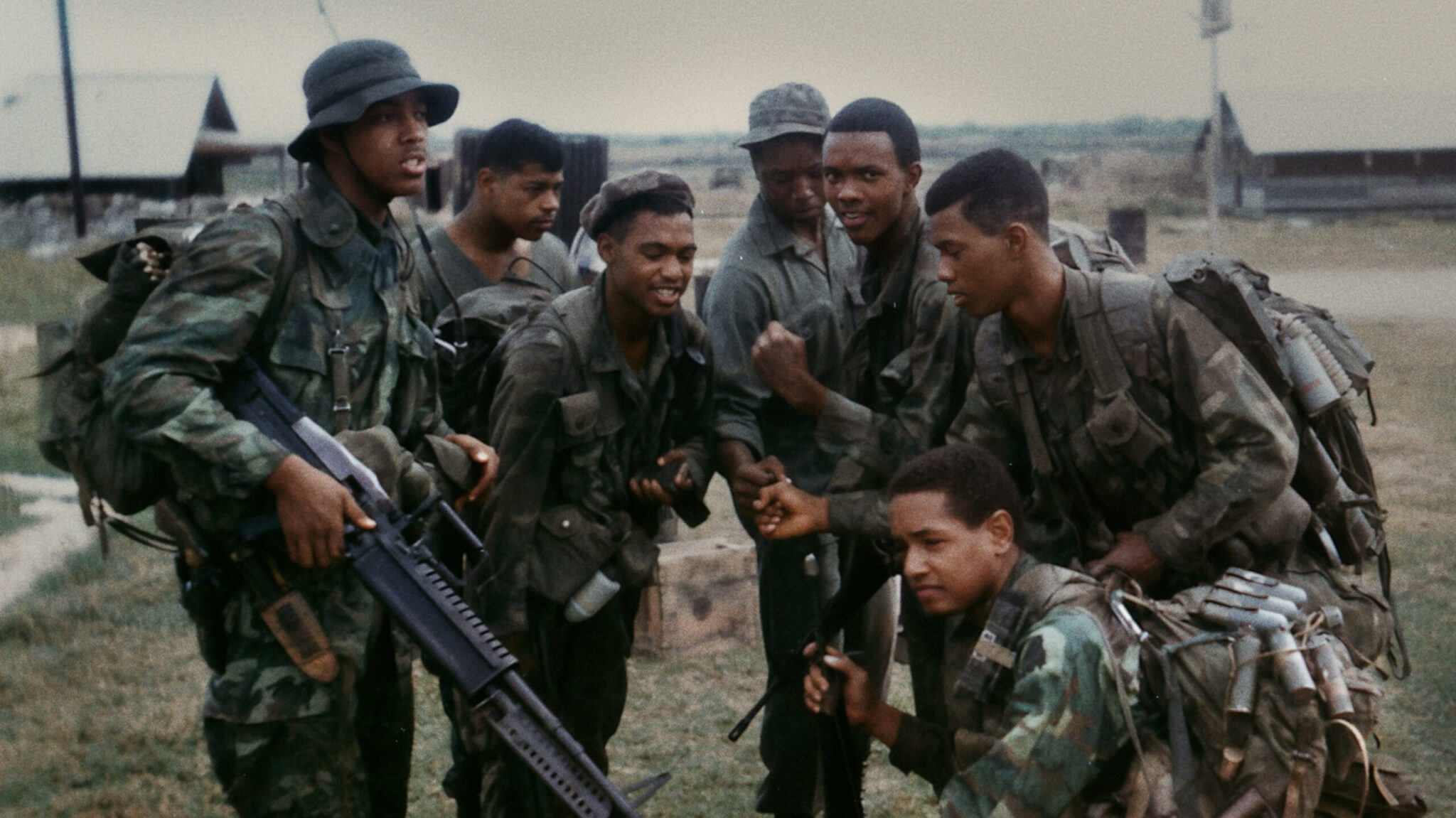
Harper not only listened; he made a film to amplify the voices of those who have been overlooked — or purposefully kept out of recorded history. Using archival footage and reenactments interspersed with film and photos shot in Vietnam by the young men comprising the “soul patrol,” Harper crafts a backdrop of a country that was readily sending Black men to risk their lives in the jungle even as their civil rights were being disputed back home. And the team’s reunion 50 years later brings to light the urgency of telling their story right now.
“For me personally, documentary is about bearing witness. It’s about saying, ‘I see you. And I’m going to do the work to make sure others see you too.’ But for the world, filmmaking is resistance. It’s how we refuse erasure. Governments, systems, time itself work to make people disappear, to make inconvenient truths vanish,” explains Harper. “Documentation is a counter to that. When you film someone’s testimony, when you preserve their voice, when you make space for their story to be heard, you’re saying, ‘This person existed. This happened. You cannot delete this.’ It’s a record. It’s an archive that says, ‘We were here.’”
Read on to learn more about Harper and Soul Patrol, including how it felt to film the reenactments in South Carolina and how a Craigslist ad prompted the director’s filmmaking career.

What was the biggest inspiration behind Soul Patrol?
The biggest inspiration was Ed Emanuel himself — his willingness, after 50 years of silence, to break that seal and tell the truth about what really happened. But what moved me most was realizing this story had never been told. These were the first Black soldiers in special operations during Vietnam, operating in the shadows, and their silence became part of the military history. The reunion gave us a moment where healing and historical truth could meet. The country is still grappling with how we tell the stories of Vietnam, how we reckon with that war. But more importantly, these men are in their 70s and 80s. The window for their voices doesn’t stay open forever. There’s an urgency to it.
Your favorite part of making the film? Memories from the process?
There are two parts that stay with me most vividly. First, the reunion footage — seeing grief and relief and recognition all at once. But equally profound was shooting the dramatized sequences from Ed’s book in the jungles of South Carolina — the same location where Forrest Gump shot its Vietnam scenes. That experience was both the most difficult and most life-altering part of making this film. The heat, the rain, the stories, the schedule — it was intense.
But there was something about the crew working through that together, understanding on a visceral level what these soldiers endured, that changed everyone who was there. I’ve never experienced a creative team more transformed by a shoot. We were in the body of the story. When you’re sweating through your clothes, mosquitoes everywhere, moving through dense brush to capture scenes of young soldiers in that same terrain, something shifts. And when those dramatized sequences play alongside the veterans’ actual testimony and the Super 8 footage, they sit differently. That wasn’t the easiest part of making Soul Patrol. But it was the most meaningful.
Films are lasting artistic legacies; what do you want yours to say?
I want this film to say: the truth is worth waiting for. That sometimes the most powerful documentaries are the ones that let witnesses finally speak for themselves. Secondly, Soul Patrol pushes against the conventions of how we tell war stories on film. We’re weaving together present-day testimony with Super 8 footage shot by 18- and 19-year-old soldiers who were doing exactly what teenagers do now with their phones — documenting their own reality in real time, creating an archive without knowing it would become one. There’s something perennially human about that impulse: young people witnessing war, capturing it, trying to make sense of it through whatever technology is in their hands. By juxtaposing that intimate, handheld footage with dramatized excerpts from Nietzsche, we’re asking: What does it mean to be a warrior? How do we process violence? These aren’t new questions — they’re ancient — but they’re being asked here by real men, real footage, real silence broken.
Why does this story need to be told now?
On the most immediate level: these men are dying. Several of the veterans we documented passed away before the reunion, and others since. We’re in a race against time. Once they’re gone, we lose the chance to hear directly from them. But there’s something more urgent happening right now. Black military history is being actively erased. Under the current administration, the Department of Defense is systematically rolling back initiatives around diversity, equity, and inclusion. There’s a deliberate effort to disappear the stories of Black soldiers, Black service, Black sacrifice from the official record. And Soul Patrol is a direct counter to that erasure. Black soldiers’ stories belong in the archive of American warfare, American courage, American sacrifice. The window to do that is closing — both because of their age and because of the political moment we’re in. Soul Patrol exists to hold the line against forgetting.
Tell us why and how you got into filmmaking.
I answered a Craigslist ad. That’s the honest answer. It led me to Senegal, to the public university in Dakar where students were protesting and getting tear-gassed. I was suddenly just there, immersed in their world, trying to understand what they were fighting for through my camera. And something shifted in me watching how documentary could capture that reality, how a filmmaker could bear witness. That was the moment I understood the power of documentary. Not as a medium to explain things to people, but as a tool to let people see, to make them feel what it’s like to be inside a moment of truth. I committed myself to the craft right there — in that solidarity with those students. I’ve been chasing that feeling ever since.
If you weren’t a filmmaker, what would you be doing?
A professor. I’d want to be teaching — not just film, but the practice of bearing witness. How to listen. How to ask the right questions.
What is something that all filmmakers should keep in mind in order to become better cinematic storytellers?
Have a point of view and commit to it completely. The films that matter are the ones that stand for something, not the ones trying to stand for everything.
What three things do you always have in your refrigerator?
Oat milk, eggs, and Kodak 7219
What was the last thing you saw that you wish you made?
Sans Soleil by Chris Marker
Who was the first person you told when you learned you got into the Sundance Film Festival?
My cinematographer, Logan Triplett. We were on set shooting another documentary when I got the call. I just walked up and gave him a big hug without saying anything. He was completely confused — had no idea what was happening. Logan was with me through so much of Soul Patrol, from its earliest days.