



Give Me the Backstory: Get to Know David Greaves, the Co-Director of “Once Upon A Time in Harlem”

By Jessica Herndon

One of the most exciting things about the Sundance Film Festival is having a front-row seat for the bright future of independent filmmaking. While we can learn a lot about the filmmakers from the 2026 Sundance Film Festival through the art that these storytellers share with us, there’s always more we can learn about them as people. We decided to get to the bottom of those artistic wells with our ongoing series: Give Me the Backstory!

David and William Greaves’s documentary Once Upon A Time in Harlem opens with Duke Ellington’s dazzling “Black Beauty” playing as a text overlay reads: You are invited to a cocktail party at the home of Duke Ellington. It will be a gathering of artists and intellectuals — the living luminaries of the Harlem Renaissance. I hope you will join me for this special afternoon. Yours truly, William Greaves.

It’s an irresistible invitation and a fitting entry point into the mind of the late William Greaves, a trailblazing filmmaker whose five-decade career left a transformative mark on nonfiction cinema by challenging stereotypes of Black people through films like his 1968 Emmy-nominated documentary Still a Brother: Inside the Negro Middle Class.

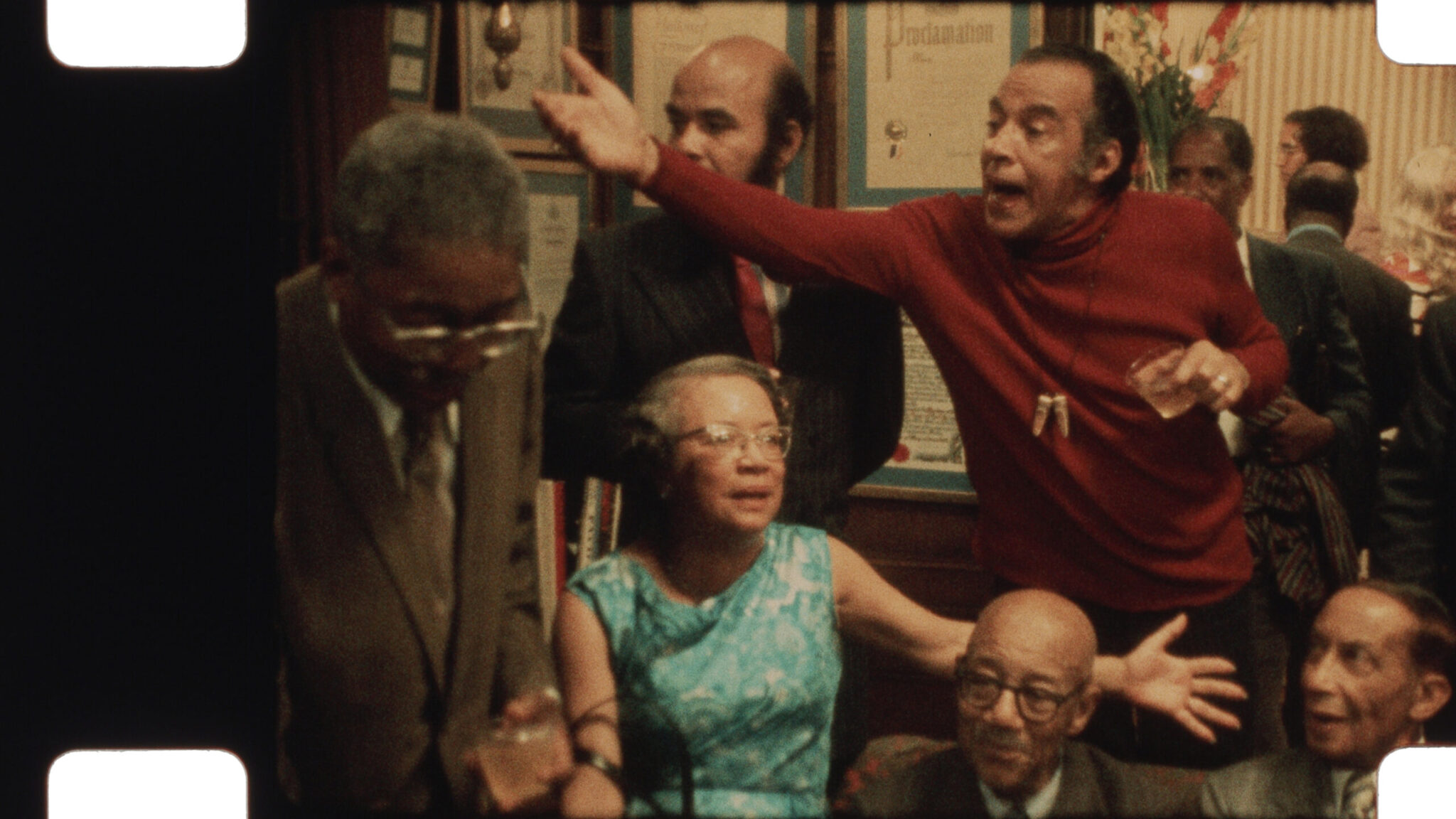
Now, more than a decade after his passing, Greaves’s Once Upon A Time in Harlem, co-directed by his son David, will debut in the 2026 Sundance Film Festival Premieres section. The film transports us back to 1972, when the elder Greaves orchestrated an afternoon gathering at Duke Ellington’s apartment. The event, filmed by David, was filled with the architects of the Harlem Renaissance. Artists, poets, librarians, photographers, critics, and musicians mingle and reminisce — and we are let in on the profound and revelrous conversations of an invaluable creative community.

The significance of this gathering becomes even clearer when viewed alongside Greaves’s incredible career, during which he made more than 75 films. Following his induction into the Black Filmmakers Hall of Fame in 1980, he joined the 1985 Sundance Institute Directors Lab to develop The Sweet Flypaper of Life. He went on to premiere his boundary-pushing Symbiopsychotaxiplasm: Take One at the 1992 Sundance Film Festival and return in 2001 with Ralph Bunche: An American Odyssey and again in 2005 with Symbiopsychotaxiplasm: Take 2½, further affirming his status as an inventive voice in documentary film.

Below, David discusses why Once Upon A Time in Harlem is essential viewing, what documentary filmmakers should remember when storytelling, and William’s inspiration for the film.

David Greaves, director of Once Upon A Time In Harlem, an official selection of the 2026 Sundance Film Festival. Courtesy of Sundance Institute.

Why does this story need to be told now?

At a time when Black history is being officially erased wherever possible, it is important that the story of the Harlem Renaissance be told by the people who lived it.

Films are lasting artistic legacies. What do you want yours to say?

We want our film to fulfill William Greaves’ desire to share with the world the phenomenon of the Harlem Renaissance. He was curious to see what this creative epicenter might reveal about Africans in America after 400 years of slavery. What he discovered reveals the nature and complexity of creativity and the drive of the human spirit. 

What was the biggest inspiration behind Once Upon a Time in Harlem?

[I’ll share] what William wrote 40 years after filming the party: “I am more keenly aware of why I shot this footage — these people in this place called Harlem are what shaped me as I was growing up. They compelled me to get behind the camera to tell our story. I saw myself as part of a process in which Harlem and the artists of the Renaissance were at the forefront of our people’s search for identity and recognition. I now see that culture is what defines a people, and I see this film as an exploration and an appreciation of African American culture and the role the artist plays in creating that culture and defining who we are as a people.”

Why is filmmaking important to you? Why is it important to the world?

I’ve learned that the kind of cinema vérité filmmaking that my father did, captured on camera not only the individuals, but also the time. And in that sense, filmmaking is a series of time capsules and character studies, allowing us to expand horizons and understanding of the world we live in.

What is something that all filmmakers should keep in mind in order to become better cinematic storytellers?

The camera loves truth. Let the story unfold as it was meant to, and you’ll be fine.

Who are your creative heroes?

William Greaves, Ossie Davis, Colson Whitehead.

What was the last thing you saw that you wish you made?

Make Way for Tomorrow, 1937. Bringing that much emotion to the screen is special.


News title Lorem Ipsum

Donate copy lorem ipsum dolor sit amet

Lorem ipsum dolor sit amet, consectetur adipiscing elit. Ut elit tellus, luctus nec ullamcorper mattis, pulvinar dapibus leo. Lorem ipsum dolor sit amet, consectetur adipiscing elit. Ut elit tellus, luctus nec ullamcorper mattis, pulvinar dapibus leo. Lorem ipsum dolor sit amet, consectetur adipiscing elit. Ut elit tellus, luctus nec ullamcorper mattis, pulvinar dapibus leo. Lorem ipsum dolor sit amet, consectetur adipiscing elit. Ut elit tellus, luctus nec ullamcorper mattis, pulvinar dapib.