



By Jessica Herndon
One of the most exciting things about the Sundance Film Festival is having a front-row seat for the bright future of independent filmmaking. While we can learn a lot about the filmmakers from the 2026 Sundance Film Festival through the art that these storytellers share with us, there’s always more we can learn about them as people. We decided to get to the bottom of those artistic wells with our ongoing series: Give Me the Backstory!
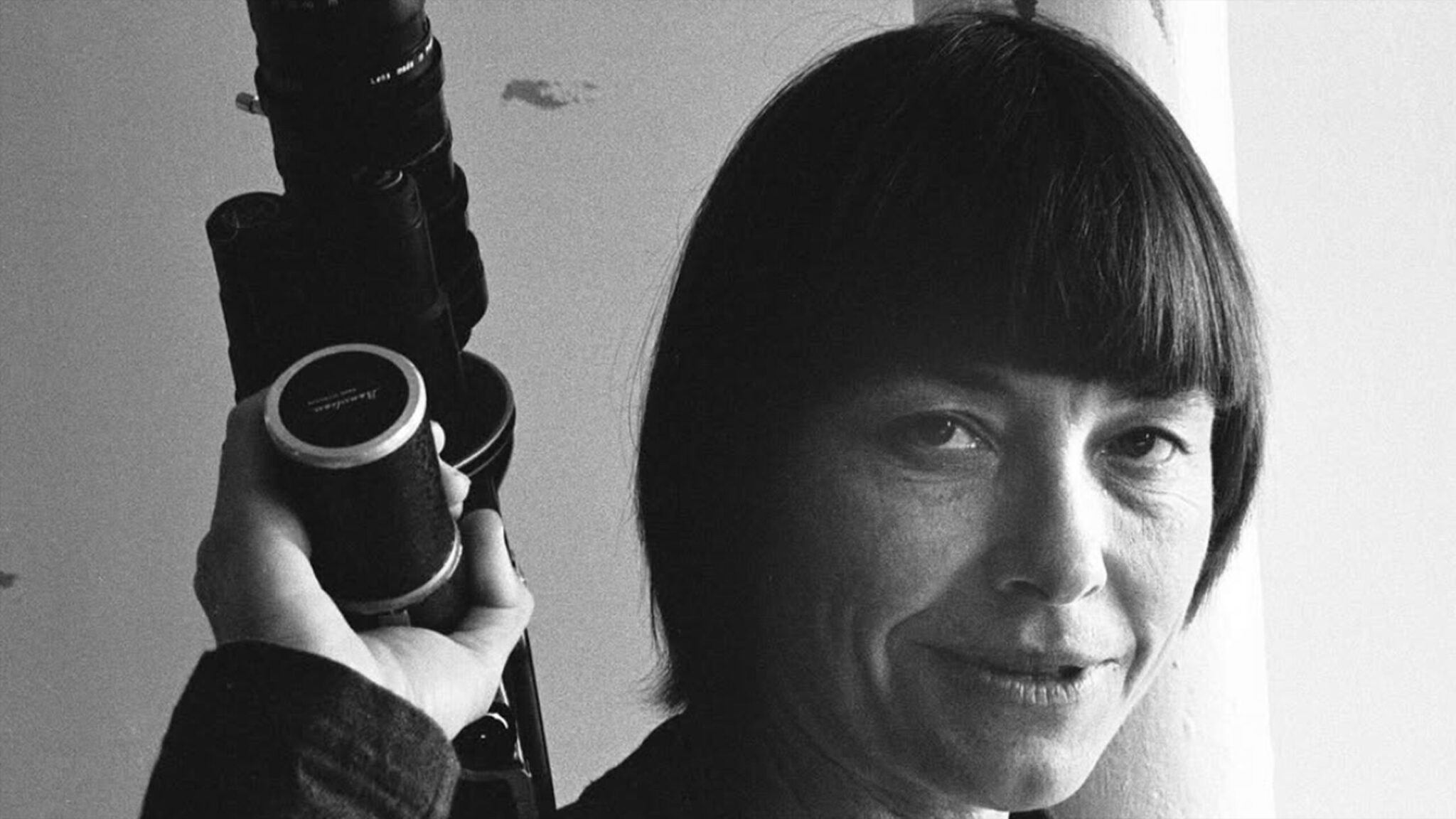
As the documentary Barbara Forever opens, iconic filmmaker Barbara Hammer, the subject of the film, can be heard saying, “I’m creating a lesbian history in a world where we’re invisible.” A pioneering artist who began releasing films in the early 1970s, Hammer spent five decades insisting on a presence where virtually none was afforded. Turning the camera toward her own body, her lovers, and her community, she reshaped experimental film into something fiercely political, inventive, and joyous, ultimately making more than 80 films. Barbara Forever, premiering at the 2026 Sundance Film Festival in the U.S. Documentary Competition, looks back at a radical artist who refused to be hidden.
Directed by Brydie O’Connor, the documentary is a rich look at Hammer’s life and work. Built from an incredible archive and guided by Hammer’s own voice, the film moves through decades of footage, offering a first-person encounter with a filmmaker who believed turning the camera on herself could be an act of liberation. Inspired by Hammer’s “unrelenting and playful documentation of herself, her surroundings, and her desire to create an authentic record of a whole lesbian life,” says O’Connor, the filmmaker captures Hammer’s restless drive to showcase the lesbian experience.
O’Connor’s Barbara Forever is a beautiful — and fun! — meditation on Hammer’s commitment to recording queer life on her own terms. The film affirms her enduring influence on generations of artists who followed and underscores the urgency of safeguarding voices too invaluable to be silenced.
“Looking to Barbara as one of the first filmmakers to put a lesbian life on screen to create a cultural record, her work becomes a blueprint for a new generation of queer and radical artists to write our own histories into existence,” says O’Connor.
Below, O’Connor chats about the sweet message she received from Hammer before she passed away in 2019, the joys of connecting with the late filmmaker’s spouse, and the desire to introduce Hammer’s influential work to a new audience.

Tell us why and how you got into filmmaking.
I studied American Studies and History in undergraduate, hoping to be a writer or film critic. I was writing my thesis on Barbara Hammer’s early filmography and was totally inspired. Barbara’s approach to filmmaking struck me as intently fearless and sparked the idea that I could try to make my own films.
Barbara and I had been in touch intermittently about my thesis research, and I emailed her in January 2019 to let her know I was in pre-production on my first short film. She shared that she was in advanced stages of cancer, and wished me the best of luck with my filmmaking. I made a collection of short films, both documentary and scripted, in the years following, and remained steeped in the Hammer world —– making a short on her love story with Florrie Burke, and now, the feature documentary.
Why does this story need to be told now?
Barbara Hammer is still under-recognized in the broader history of cinema, even within American avant-garde film and queer cinema. She spent her entire career pushing boundaries in her work, and ultimately didn’t fit neatly into either canon. With this documentary, I hope to offer a narrative and historical intervention — to affirm Barbara’s place in film history, highlight the reverberating impact she’s had on generations of artists, and introduce her life and work to audiences who may be meeting her for the first time.
At a time in our current socio-political moment when right-wing ideologies push to erase and stifle queer histories, the urgency of Barbara Hammer’s vision for an expansive future comes into clear focus. Barbara Forever restores Barbara’s work within today’s queer cultural zeitgeist, calling attention to challenges historically faced by queer and feminist artists and activists, and offers a guide for how we can preserve our histories and carry them forward in collective memory.
Films are lasting artistic legacies. What do you want yours to say?
I hope Barbara Forever inspires viewers to go out into the world and do exactly what they want to do with their life, artistic or otherwise.
Describe who you want this film to reach.
Artists, queer people, dreamers and beyond who can point to Barbara Hammer’s path as a blueprint for creating a future that we want to exist in. I’m really excited to share Barbara with audiences who don’t yet know her or her cultural impact.
What was your favorite part of making Barbara Forever? Memories from the process?
Spending time with Florrie Burke, Barbara Hammer’s spouse. In the early days of the project, I would spend at least a day a week at her and Barbara’s shared home in Greenwich Village scanning photographs, listening to stories about Barbara, chatting about the world. Meeting Florrie has been one of the biggest gifts Barbara has given me.
I also just really love the edit phase. My editor Matt Hixon and I have a collaboration for the ages, and it was the most intense period of the process being so immersed in Barbara’s images and her literal voice. Watching scenes, and the film at large, shape up day by day felt like seeing magic.
What was a big challenge you faced while making Barbara Forever?
Balancing making this film and making a living. Much of the time I was directing this film, I was working full-time as an archival producer on some incredible projects that I have been privileged to be a part of. I found that I was consistently checking in with myself to make sure I was managing a work-life balance that held enough space for creativity and curiosity throughout the process.
What is something that all filmmakers should keep in mind in order to become better cinematic storytellers?
Why, why, why are you telling this story? How can you tell it to reflect that why?
Tell us about your history with Sundance Institute. When was the first time you engaged with us? Why did you want your film to premiere with us?
Premiering a film at Sundance is such a dream for any filmmaker! The Festival has a long history of championing Barbara Hammer’s work and her contributions to queer cinema, beginning with Nitrate Kisses in 1993 and Tender Fictions in 1996. Sundance has also been a distinct steward of queer storytelling at large, creating space for not only LGBTQIA+ films and artists, but unconventional work that continues to expand the form of documentary filmmaking, in particular.