



By Jessica Herndon
One of the most exciting things about the Sundance Film Festival is having a front-row seat for the bright future of independent filmmaking. While we can learn a lot about the filmmakers from the 2026 Sundance Film Festival through the art that these storytellers share with us, there’s always more we can learn about them as people. We decided to get to the bottom of those artistic wells with our ongoing series: Give Me the Backstory!
For director Andrew H. Brown, documentary filmmaking relies heavily on access and closeness to a story. “The documentary process is rooted in trust,” he says. “When someone invites me into their life, it’s not a small thing. It’s invasive and sacrificial. Filmmaking gives me a responsibility to treat that trust with care, to represent people honestly, and to create something beautiful with them.”
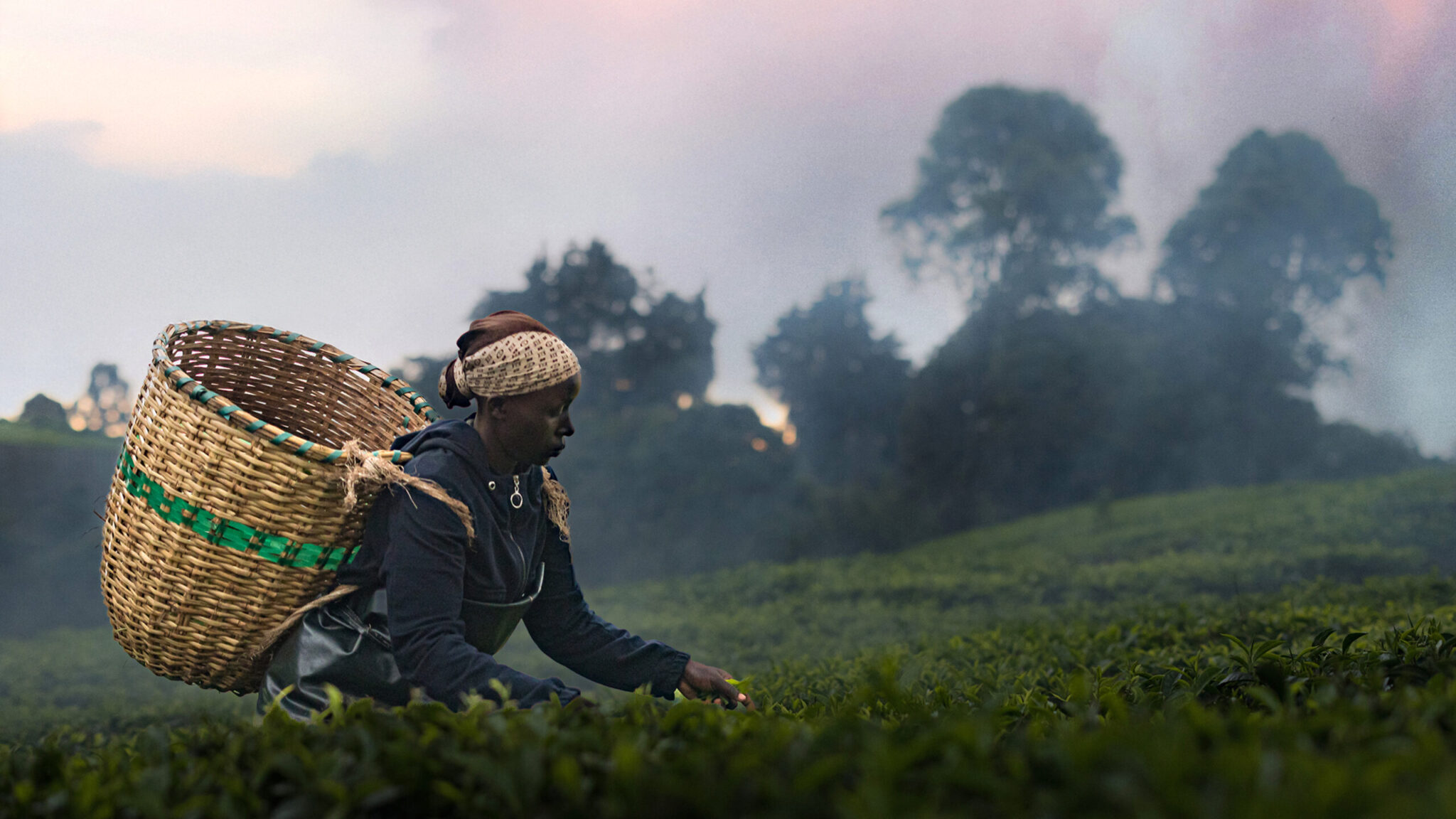
In Kikuyu Land, premiering in the World Cinematic Documentary Competition at the 2026 Sundance Film Festival, Brown and co-director Bea Wangondu explore a land battle in Kenya, shedding light on the legacy of the Indigenous people and the decades of mistreatment they’ve endured at the hands of a corporation profiting from their labor.
“I want this film to reach anyone who has ever questioned who benefits from the land beneath their feet and at what cost,” he explains. “I hope it speaks to audiences around the world who may be connected to these injustices without realizing it through the products they buy and the systems they participate in.”
Kikuyu Land marks Brown’s first time directing a film premiering at the Festival, but it isn’t his first project to receive support from the Institute. Brown produced When Lambs Become Lions, a documentary on wildlife conservation and the ivory trade in Kenya, which received the 2017 Sundance Documentary Film Grant and premiered at the 2018 Tribeca Film Festival, where it won the Best Editing in a Documentary Film award. Dedicated to revealing profound truths through his storytelling, Brown says the Institute’s “belief in the project meant a lot to me.”
Below, Brown discusses which of his personal traits make him a compelling storyteller, tips for creating a great doc, and how his film crew gained the intimate access featured in the film.
What was the biggest inspiration behind Kikuyu Land?
The biggest inspiration behind this film is my co-director, Bea Wangondu. We met years before this project, while on assignment for National Geographic. I remember hearing her talk about her community and her family. The way she spoke about it stayed with me. Years later, she told me she wanted to chase after this story, but that she wanted to make it together. That promise is where this film began.

Films are lasting artistic legacies. What do you want yours to say?
I hope my films say that people and places are never defined by what was taken from them, but also by what they continue to build, protect, and imagine for the future. I want them to honor the communities that trust me with their stories and to challenge the systems that silence or take from them.
What was your favorite part of making Kikuyu Land? Memories from the process?
My favorite part of making this film was the time we spent with the families at the heart of it. But on a personal level, what meant most to me was the chance I had to bring my family to Kenya at the end of production. I’ve spent most of the last decade working there and I knew that, once the film came out, there was a real chance the current government might not allow me back. Sharing that place and having my family spend time in the homes of some of my closest friends before everything changed was something I will never forget.
What was a big challenge you faced while making Kikuyu Land?
One of the biggest challenges was gaining access to the tea plantations themselves. These estates are heavily guarded and largely closed off to anyone from the outside — especially journalists and filmmakers. We were determined not to endanger any of the workers whose lives and livelihoods were already vulnerable. Our biggest and most constant worry was making sure that we didn’t expose any of the tea workers to retaliation.
What made it possible was our producer, Joseph Njenga. He grew up on those plantations and understood the rhythms of the land in a way none of us could have from the outside. He knew the backroads, the footpaths, and even some of the men stationed at the guard posts because they had grown up together. His knowledge and relationships allowed us to move carefully and with respect, and without compromising the safety of the people whose stories we were there to film.
Why does this story need to be told now?
This story needs to be told now because the colonial systems that carved up land and lives in the past are not gone. They have simply changed shape. They still influence who holds power, who profits, and whose labor fuels industries that serve the rest of the world. When those systems remain intact, they create cracks large enough for corruption to take root. In those cracks, powerful men can exploit and intimidate workers they see as beneath them.
By telling this story now, we are naming a truth that is too often hidden behind the language of global markets and supply chains.
Tell us why and how you got into filmmaking.
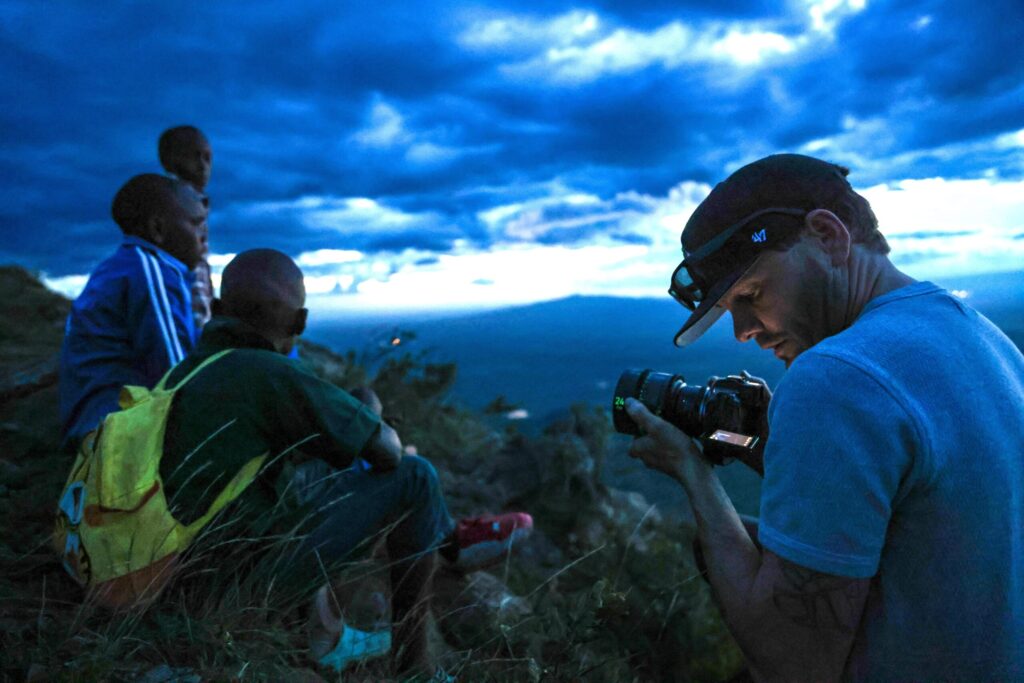
The plan was never to become a filmmaker. After I was medically discharged from the U.S. Army, I found myself without direction. I was searching for a sense of purpose again. That search led me to volunteer with humanitarian projects in several developing countries. Along the way, I saw lives shaped by conflict, and I realized how little of that complexity ever reached wider audiences.
I never went to film school. I walked into a Target and bought the best camera I could afford at the time. It was not a great camera, but it gave me a way to process the world around me.
As a kid, I always dreamed of being a writer, but I struggled to put what I felt into words. The camera changed that. It gave me a way to tell stories I didn’t yet know how to write and to help other people share their stories in their own voice. I became obsessed with learning how to do it well: how to listen and create space for others to share their stories.
If you weren’t a filmmaker, what would you be doing?
If I were not a filmmaker, I would probably be writing truly awful novels that only a few very patient friends would pretend to enjoy. Storytelling has always been a pull for me, even before I knew how to express it, so I imagine I would still be chasing it in some form.
And I hope I’d be working in the nonprofit world, hopefully supporting various socioeconomic development or community-centered solutions.
What is something that all filmmakers should keep in mind in order to become better cinematic storytellers?
I think all filmmakers should remember that cinematic storytelling isn’t created by the gear we carry. In vérité filmmaking, the most beautiful moments are given to us by the people in front of the camera and the communities that trust us enough to let us in.
That’s why I keep my setup as lean and stripped down as possible. Every piece of equipment we add creates distance. My goal is to remove anything that is not necessary, anything that might feel invasive or get in the way. When there’s almost nothing between you and the person you are filming, they have room to breathe, to be themselves, and to share what they choose to share.