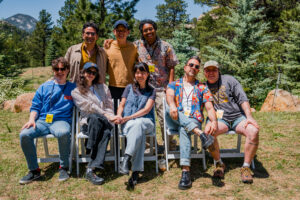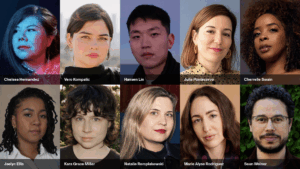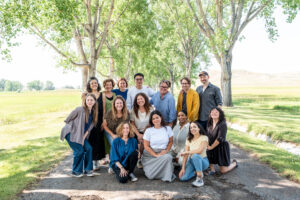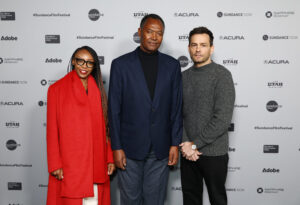



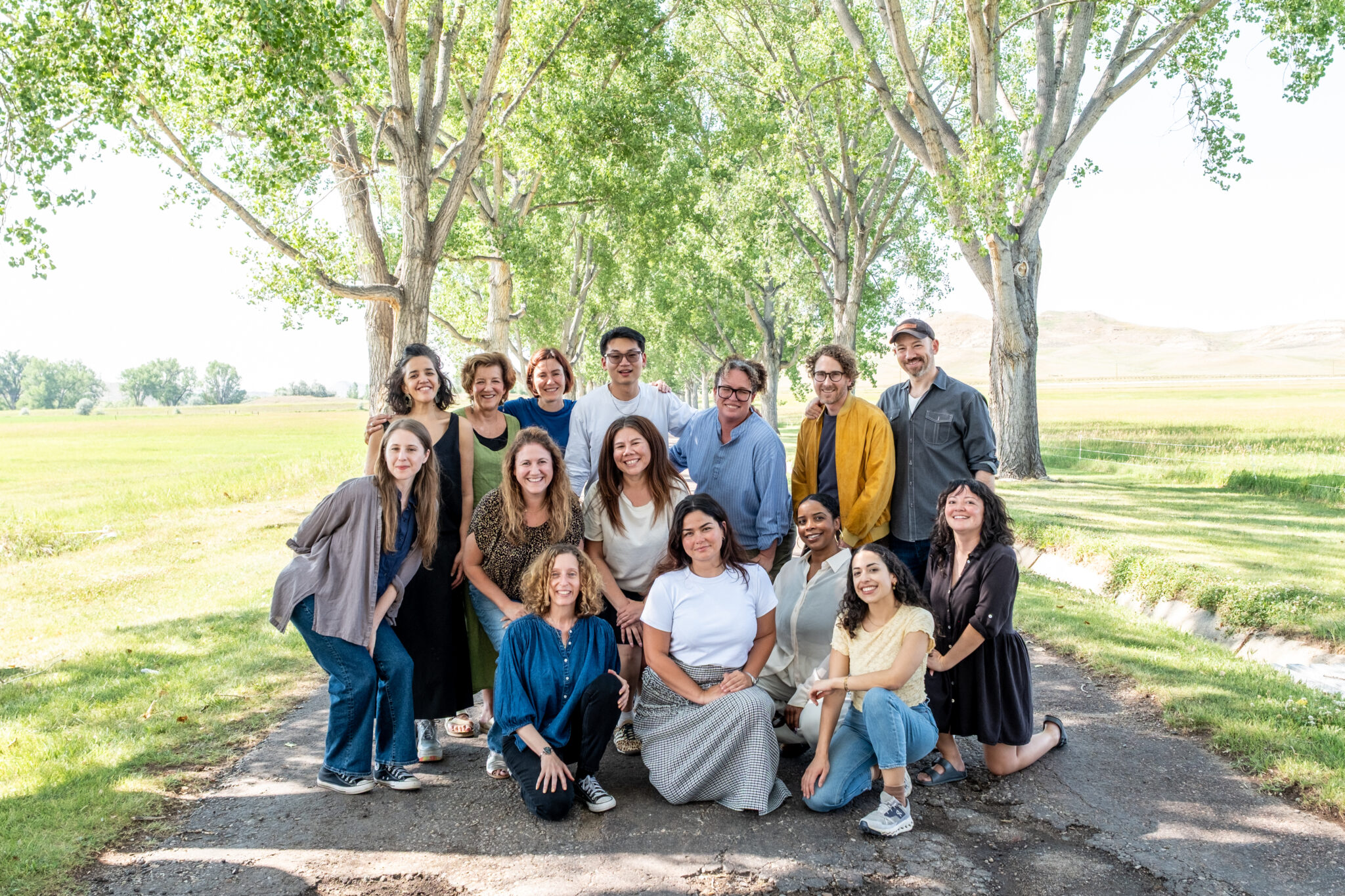
Sundance Institute’s 2026 Documentary Producers Lab fellows and advisors (Photo by Jenae Neeson)
By Kristin Feeley
“The past is our definition. We may strive with good reason to escape it, or to escape what is bad in it. But we will escape it only by adding something better to it.” — Wendell Berry
Fall is a time of reflection — to think, as the late poet and activist Wendell Berry once said, about carrying forward what is good in us and leaving the rest behind. Reflection is an active process, not necessarily a quiet, solitary endeavor. It is also an essential part of how we build knowledge, which is a collective exercise. Film, documentary film specifically, is an art form that mines the past and, by inviting active reflection, creates meaning from the interaction between the footage and the viewer. The camera mediates reality, but perception is shaped by the human being behind the lens and the audience. The power that documentary films hold comes from the ways they reveal the many facets of ourselves and our shared experience of the world.
Making documentaries often requires the filmmakers to be present for what’s unfolding in front of the camera and then spend years building relationships and shaping hundreds of hours of footage into a film. It’s the simplest way to summarize the process of shooting, editing, and releasing a film in the world. What seems like a solitary endeavor (a person with a camera) is actually a collective one — films are a result of hundreds of decisions made by the director, cinematographer, editor, producers, and people connected to the community you’re making a film about and, finally, the audience. As the saying goes: If you end in the same place that you started, you haven’t learned anything!
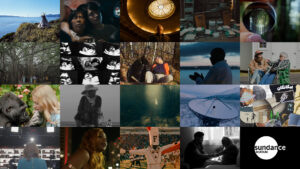
At the Sundance Institute Documentary Film Program, the fall is when we announce the annual list of artists who received grants and participated in labs in the past year. This year’s list of 19 films from 14 countries is the result of hundreds of hours of work — watching, discussing, and curating films that weave a tapestry of filmmaking styles and stories that celebrate our shared humanity. This year, a theme that ran throughout was the infrastructure of memory: questioning who controls the public record and what narratives are considered worthy of remembering. In reclaiming suppressed histories, these films treat archives as vital spaces where truth and power are actively negotiated.
Other projects investigate constructed social and physical borders alongside systemic exclusion, as well as the intersection of modern-day colonialism and environmental collapse. Several filmmakers delve into the complexities of generational dynamics and the struggle of carrying ancestral legacies while forging individual identities. Finally, a significant number of projects leverage science to challenge traditional definitions of where humanity ends and the natural world begins. All of these films touch on driving questions of our time.
As natural, political, and social forces larger than ourselves continue to collide, documentary opens a space that helps us grapple with the structural challenges through a lens focused on the small intimacies that make us human. We also believe it’s not just these essential stories but the necessary dialogue around them — spaces to grieve, to argue, to celebrate — that empower us to be active and inspire the work to make things better. Art, and particularly documentary film, is a crucial part of progress.
The coming year marks the 25th anniversary of the Documentary Film Program, founded in 2002. The program was built on a fund started at Open Society Foundations by founding director Diane Weyermann. The fund was originally based in Hungary and supported emerging nonfiction films of varying lengths from countries in transition. In the late ’90s this meant supporting work across Eastern Europe, the MENA region, and Africa. Countless stories emerged that focused on how societies in transition grappled with profound change and the forces at play that were often in conflict.
Looking across a body of almost 750 films, you can see some of the most significant historical and cultural movements of the 21st century, feeling their impact and echoes into the present day. This important program milestone also allows us to engage with the ways the nonfiction form has evolved across three decades as the form itself has been democratized, and technological change has embedded cameras into almost every aspect of our lives, profoundly shaping modern culture. Through it all, documentary films continue to create an active dialogue between the past and the present, and supporting filmmakers who are documenting these moments of transition is essential to the process of looking at what was and what is in order to understand more about what will be.