



By Ramona Flume
One of the most exciting things about the Sundance Film Festival is having a front-row seat for the bright future of independent filmmaking. While we can learn a lot about the filmmakers from the 2026 Sundance Film Festival through the art that these storytellers share with us, there’s always more we can learn about them as people. We decided to get to the bottom of those artistic wells with our ongoing series: Give Me the Backstory!
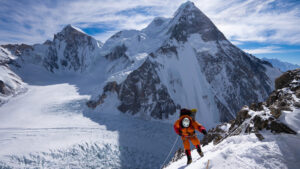
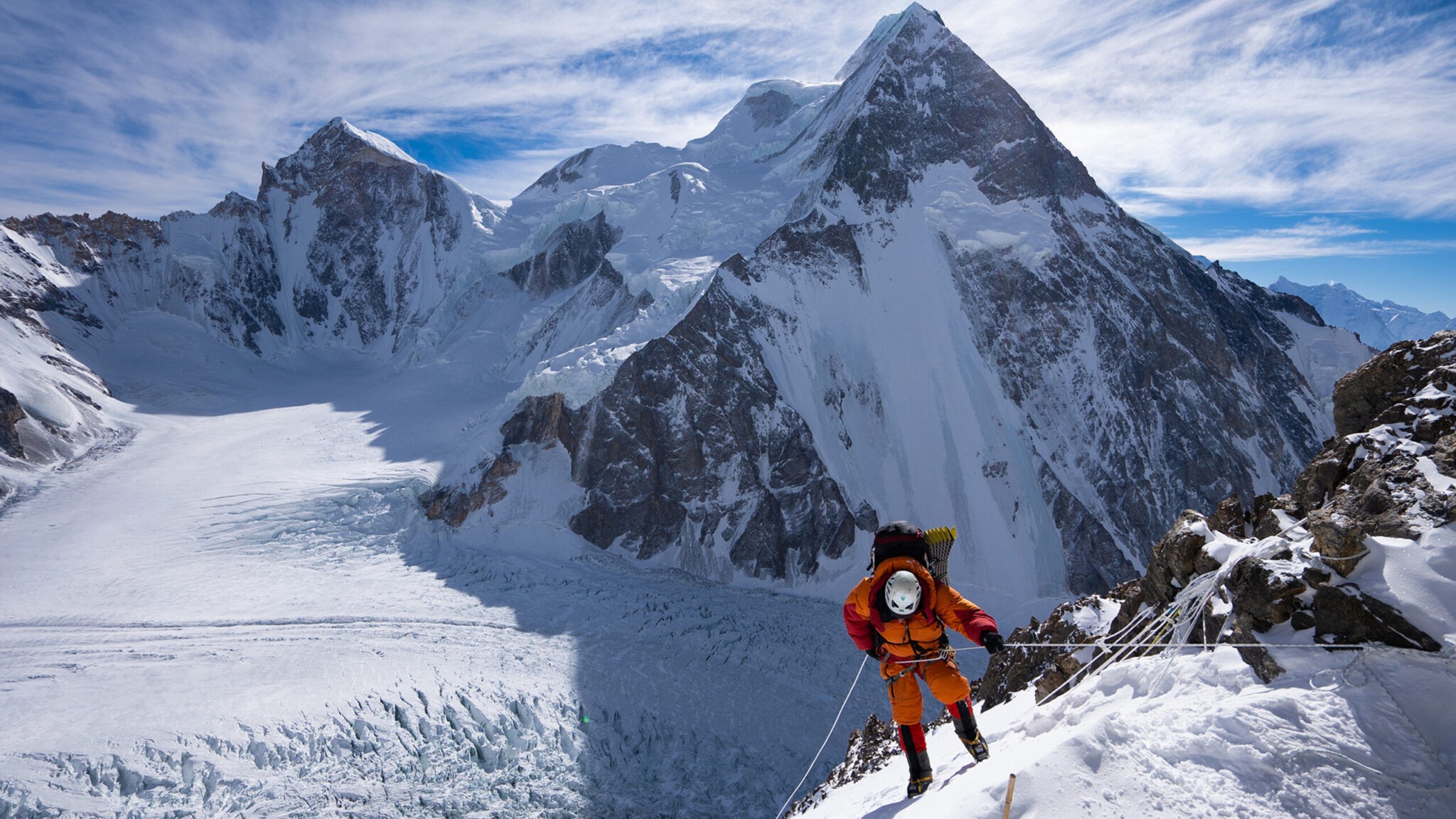
You can sense the thin air — and even thinner margins for error — from the first frames of The Last First: Winter K2, the new documentary from director Amir Bar-Lev that follows several mountaineering teams in 2020–2021 as they compete, and occasionally clash, in a death-defying race to become the first to summit K2 in the middle of winter.
Shot with the suspense of a true-crime story, the film, which premiered at the 2026 Sundance Film Festival, tracks the audacious, ill-fated expeditions — divided by nationality, class, and wildly different motivations — as they attempt a nearly impossible winter summit. And understanding what went wrong on the mountain that season — from powerful ego collisions to overcrowded base camps — “required a widening of the lens, to where there are no clear heroes and villains,” Bar-Lev says. “If we’ve done our job, this is a film that says as much about life at sea level as it does about the high mountains.”
In a world where comfort is an insulated privilege and adventure can be bought, Bar-Lev wanted to explore why more people pursue extreme experiences in hostile environments, such as breaking records on K2. Who gets to access those distinctly aspirational peaks? And who ultimately foots the bill? “The majority of people on the mountain during Winter K2 weren’t there because they were seeking the sublime experience of risk,” Bar-Lev says when discussing modern mountaineering’s vast disparities and dangerous overcommercialization seen in his film. “They were there because work is scarce in the Himalayas, and dangerous mountain work is how people feed their families. So this is a story about socioeconomics as much as it is a story about adventure.”
Below, Bar-Lev talks through his unique approach to this story, the Jean-Paul Sartre play that helped shape his perspective, and why he thinks all his films are ultimately about religion.
What was the biggest inspiration behind The Last First: Winter K2?
I was immediately drawn to this story. The Last First: Winter K2 seemed to have it all: bare-knuckle competition, romance, bromance, and a tender father-and-son story. Coupled with allegations of foul play by the Nepalese that may have proved fatal, it also had an almost “alpine true crime” angle. We spent a good amount of time trying to treat the expedition forensically, looking at each event that occurred and the subsequent outcomes that led to ultimate tragedy. In the end, it came down to the old [Walt Kelly] line: “We have met the enemy and he is us.”
Films are lasting artistic legacies, what do you want yours to say?
The Last First: Winter K2 was a gathering of people from all over the world, with different motivations and wildly different socioeconomic backgrounds, all converging on what might have been the surface of the moon or Mars — a totally inhospitable place where humans are, for all intents and purposes, not meant to be.
That sense of a gathering of humans in an otherworldly, alien place reminded me a little of Sartre’s No Exit — where the “lesson” is that we are damned by being thrown into existence with humans of other perspectives. It gave us a road map to how to treat the narrative: No single perspective should be privileged, and the takeaways of the film should be as varied as the 60-odd people who participated in Winter K2.
Once this road map was in place, we set about trying to find a cast of interviewees to support this prismatic approach. Our hope is that we’ve let everyone put their best foot forward, and the audience will have to decide for themselves whom they “side with,” and on which points. Do you chalk up the tragedy to overcommercialization and feel that adventure tourism is to blame? Or do you see the ubiquity of cameras on the mountain as contributing to the tragedies? Is a brass-knuckled approach to winning warranted — given the unbalanced history of mountaineering? How should we feel about the assumption of risk taken by all the climbers, particularly those with kids at home? There are no easy answers to these questions.
Describe who you want this film to reach?
I aim for the believers and the detractors alike with my films. Some of my favorite reviews of my documentary about the Grateful Dead were the ones in which the critic said, “I still hate the Grateful Dead, but now at least I get it.” Our hope is that there is something in The Last First: Winter K2 for those who love mountaineering films and something for those who really don’t think much of them. Think of it as an “anti–mountaineering film mountaineering film.”
Your favorite part of making the film? Memories from the process?
This may sound cloying but it’s really true. We had a terrific team on this film. It was like a band of superheroes, each one taking a turn saving the film. With the public life of the film just beginning, the story of the creative process often narrows toward the story of the director’s choices — hence the “director’s statement” you’re reading. In actuality, all parts of the making of a film are creative choices, and many more hands and hearts are involved than just mine.
What was a big challenge you faced while making this film?
People always ask me if directing this project meant I got to visit the Himalayas. The reality is that there were so many cameras on the mountain that we didn’t have to. That said, none of the footage was collected with our story in mind, and much of it was shot in quick bursts on iPhones for social media. One giant challenge was not just organizing this material, but, more importantly, finding meaningful moments that were often accidentally and briefly shot along the way. We were essentially trying to turn an archival documentary into something that presented more like a vérité film.
Tell us why and how you got into filmmaking.
I studied comparative religion in college. Whenever I finish a film and get to answer big questions about my œuvre, I find myself saying that every one of my films is about religion, no matter what it’s about. If it’s about mountaineering, I find a way to make it about religion. If it’s about art or rock music or football — it’s religion. I’m a one-trick pony.
What is something that all filmmakers should keep in mind in order to become better cinematic storytellers?
Gather a bunch of people around you whom you trust, but who have different ways of going about things. Then duke it out.
Who are your creative heroes?
The poets.
What three things do you always have in your refrigerator?
Beer, condiments, empty space.
What was the last thing you saw that you wish you made?
Secret Mall Apartment by Jeremy Workman. A brilliantly edited art caper documentary that made me want to be 20 again — in the time before the iPhone.
Tell us about your history with Sundance Institute. When was the first time you engaged with us? Why did you want your film to premiere with us?
I’ve sold four (out of my five) films at the Sundance Film Festival, so it’s been an integral part of my creative life. Before I was bringing films, I was coming to Park City in the internet boom years with friends throwing parties in town. That’s a fun thing about Sundance. There are a wide variety of Sundances, all layered on top of each other at the same time. Some people are there for the terrific films; others couldn’t care less about the films. I started out coming to the Festival to film a friend while he snuck into parties without an invite. Now I bring my kids and (try to) go to bed at a reasonable hour.
Who was the first person you told when you learned you got into the Sundance Film Festival?
My mother, of course.
What’s your favorite film that has come from the Sundance Institute or Festival?
Too many to list, so I’ll limit myself to one recent film. I loved Lana Wilson’s Look Into My Eyes from the 2024 Festival. That film made living in New York an even better day-to-day experience. I think about it all the time. And I likely wouldn’t even have known about it, had it not gotten a nice push at its Sundance Film Festival premiere. That says something about the potential of bold storytellers — and bold festival programming.