



“Broken English” Is a Loving Ode to the Unforgettable Marianne Faithfull

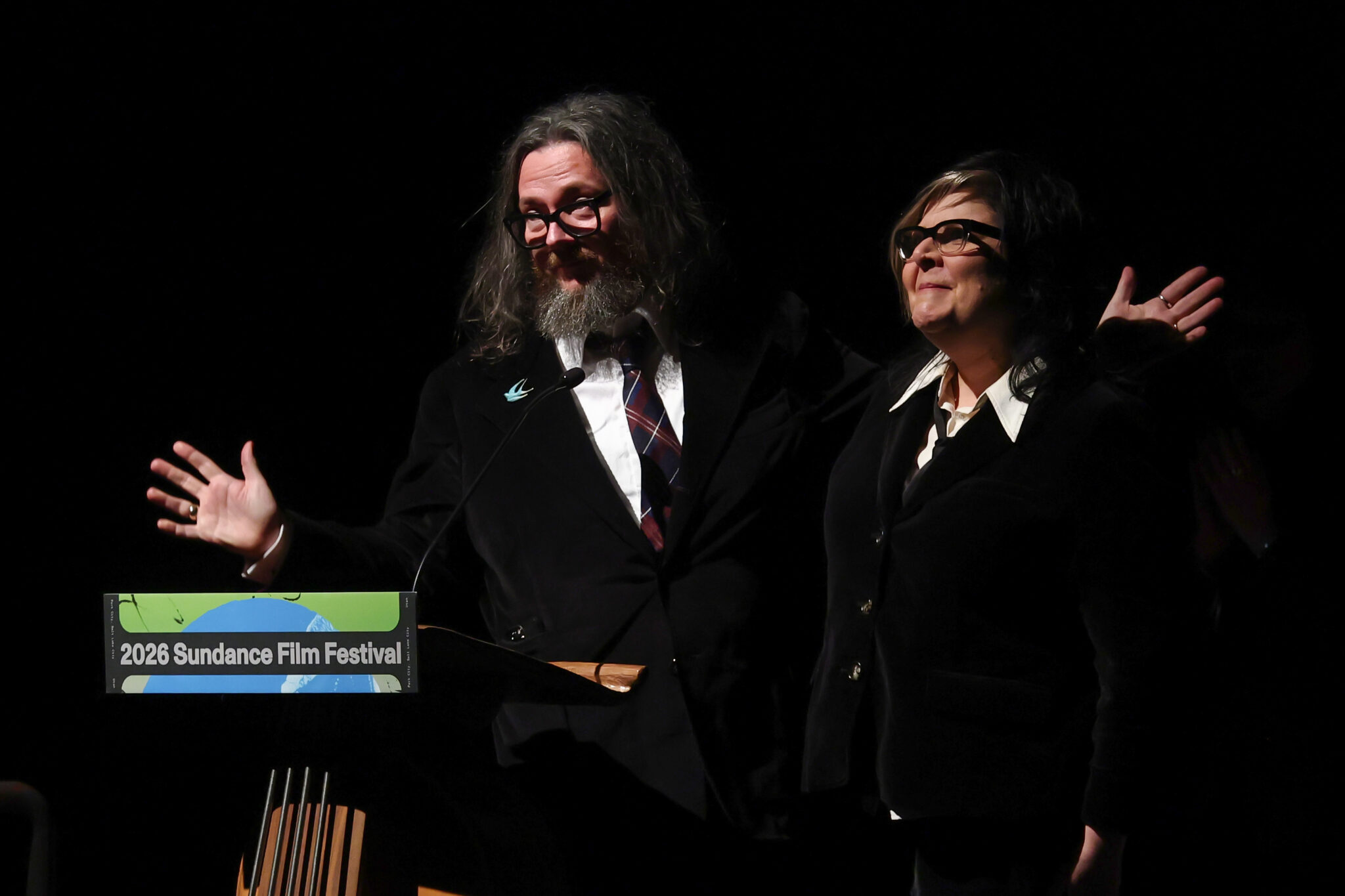
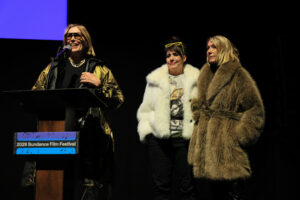
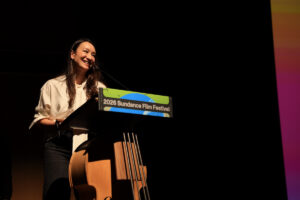
(L–R) Iain Forsyth and Jane Pollard speak during the “Broken English” U.S. premiere during the 2026 Sundance Film Festival at Eccles Theatre on January 25, 2026, in Park City, Utah. (Photo by Cindy Ord/Getty Images for Sundance Film Festival)

By Lucy Spicer

“Hello, Sundance!” greets Iain Forsyth to an energetic Eccles Theatre audience. “I’ve waited 12 years to say that again.” The last time Forsyth and Jane Pollard screened a film at the Sundance Film Festival, the year was 2014 and the film, 20,000 Days on Earth, was the directing duo’s feature debut — and winner of awards for directing and editing in the Festival’s World Cinema Documentary Competition. A blend of fiction and nonfiction in its portrait of musician Nick Cave’s life and creative process, 20,000 Days on Earth would introduce moviegoers to the filmmakers’ innovative style, which returns to the Sundance Film Festival in 2026 in Broken English as part of the Festival’s Spotlight section.

Broken English is having its U.S. premiere in Park City after originally screening at the 2025 Venice Film Festival. Named after the title track of Marianne Faithfull’s 1979 album, the documentary is a multifaceted chronicle of Faithfull’s career, which started when she was a teenager and continued to grow and shift until the singer-songwriter-actor died in January 2025. 

“I wish Marianne could be here with us. There’s a bit of her here, this you’ll see,” says Pollard, motioning to herself as she introduces the film to the Eccles audience with Forsyth. “This jacket and shirt is what she’s wearing in the film. We wanted to bring them with us here tonight.” And indeed, when we meet Faithfull in the film, she’s wearing the very shirt, jacket, and tie that Pollard sports at the documentary’s U.S. premiere. 

Faithfull’s participation in the film, which includes her last recorded performance, returns agency to an artist whom the media continuously attempted to mold into the most sensationalist shape it could for decades. And though she relies on supplemental oxygen throughout her interview — a necessity after a COVID-19 infection in 2020 — Faithfull glows on screen, smiling, candid, a picture of resilience. 

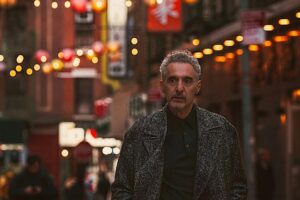
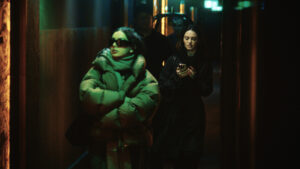
And true to Forsyth and Pollard’s distinctive style, the interview itself exists outside of the framework of your typical talking head documentary. The larger film is depicted as a project of the fictional Ministry of Not Forgetting, a research facility helmed by the Overseer (Tilda Swinton). The project, as the Overseer tells the Researcher (George MacKay), is to ensure that Faithfull is not forgotten — which is different from being remembered. Memories can warp, creating a false impression of someone or something. Rather than creating an impression, not forgetting suggests an imprint, an echo of truthful resonance. 

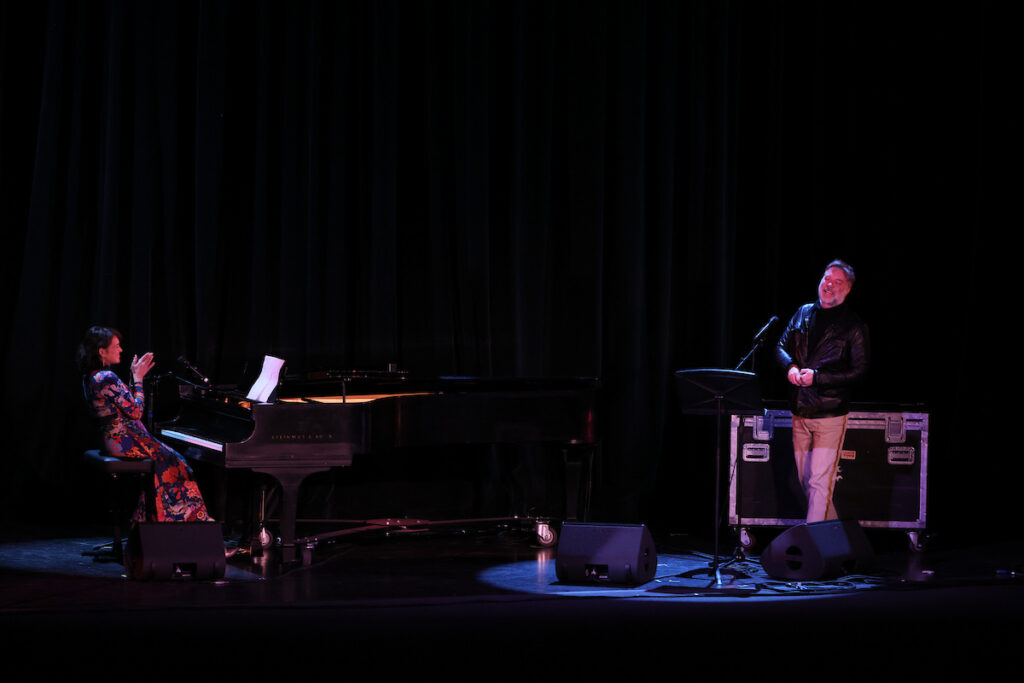
(L–R) Norah Jones and Rufus Wainwright perform at the U.S. premiere of “Broken English” by Iain Forsyth and Jane Pollard, an official selection of the 2026 Sundance Film Festival. (Photo by Jemal Countess/Sundance Institute)

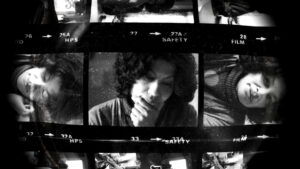
There’s an urgency to this not forgetting, made clearer with every piece of archival footage shown to us and to Faithfull in real time during her conversations with the Researcher. Despite her many artistic contributions over the years, archival interviews show a repeated attempt to focus on her personal life, from her highly publicized relationship with Mick Jagger in the 1960s to her yearslong struggle with drug use. But no matter how many times Faithfull responds with a generous nature and forward-thinking ideas, the impertinent questions persist. “Why are we happier to believe that female artists are the product of everything that happened to them rather than giving them full credit and agency for their work?” Swinton’s character asks herself in the film. 

But the documentary’s inclusion of this footage doesn’t serve to rake over the coals of a scandalous past. “Archive matters so much to Iain and I, and we love using it as creatively as possible,” says Pollard during her introduction to the film’s screening. In Broken English, archival clips prompt roundtable discussions about the damaging effects of irresponsible reporting. They also allow Faithfull to respond and reflect on her own legacy.

The overall focus of Forsyth and Pollard’s film is to document and celebrate Faithfull’s vast artistic contributions, from her singing and songwriting — including the Rolling Stones’ “Sister Morphine” — in the 1960s to her subversive new wave music in the late 1970s and beyond, as well as years worth of mesmerizing acting performances, including Ophelia in Hamlet (1969) and Pirate Jenny in The Threepenny Opera (1991).

Faithfull’s enduring influence is further felt in the film through covers of her original songs by artists such as Suki Waterhouse, Courtney Love, and Jehnny Beth. And after the credits roll at the documentary’s Park City premiere, the audience is treated to two surprise live performances of songs popularized by Faithfull: a Rufus Wainwright rendition of “Ballad of the Soldier’s Wife” and Norah Jones on “The Ballad of Lucy Jordan.” Performed with passion and care to an enraptured audience, the songs — and the artists who will continue to keep them alive — are proof that although Faithfull may be gone, she’s certainly not forgotten.

News title Lorem Ipsum

Donate copy lorem ipsum dolor sit amet

Lorem ipsum dolor sit amet, consectetur adipiscing elit. Ut elit tellus, luctus nec ullamcorper mattis, pulvinar dapibus leo. Lorem ipsum dolor sit amet, consectetur adipiscing elit. Ut elit tellus, luctus nec ullamcorper mattis, pulvinar dapibus leo. Lorem ipsum dolor sit amet, consectetur adipiscing elit. Ut elit tellus, luctus nec ullamcorper mattis, pulvinar dapibus leo. Lorem ipsum dolor sit amet, consectetur adipiscing elit. Ut elit tellus, luctus nec ullamcorper mattis, pulvinar dapib.