



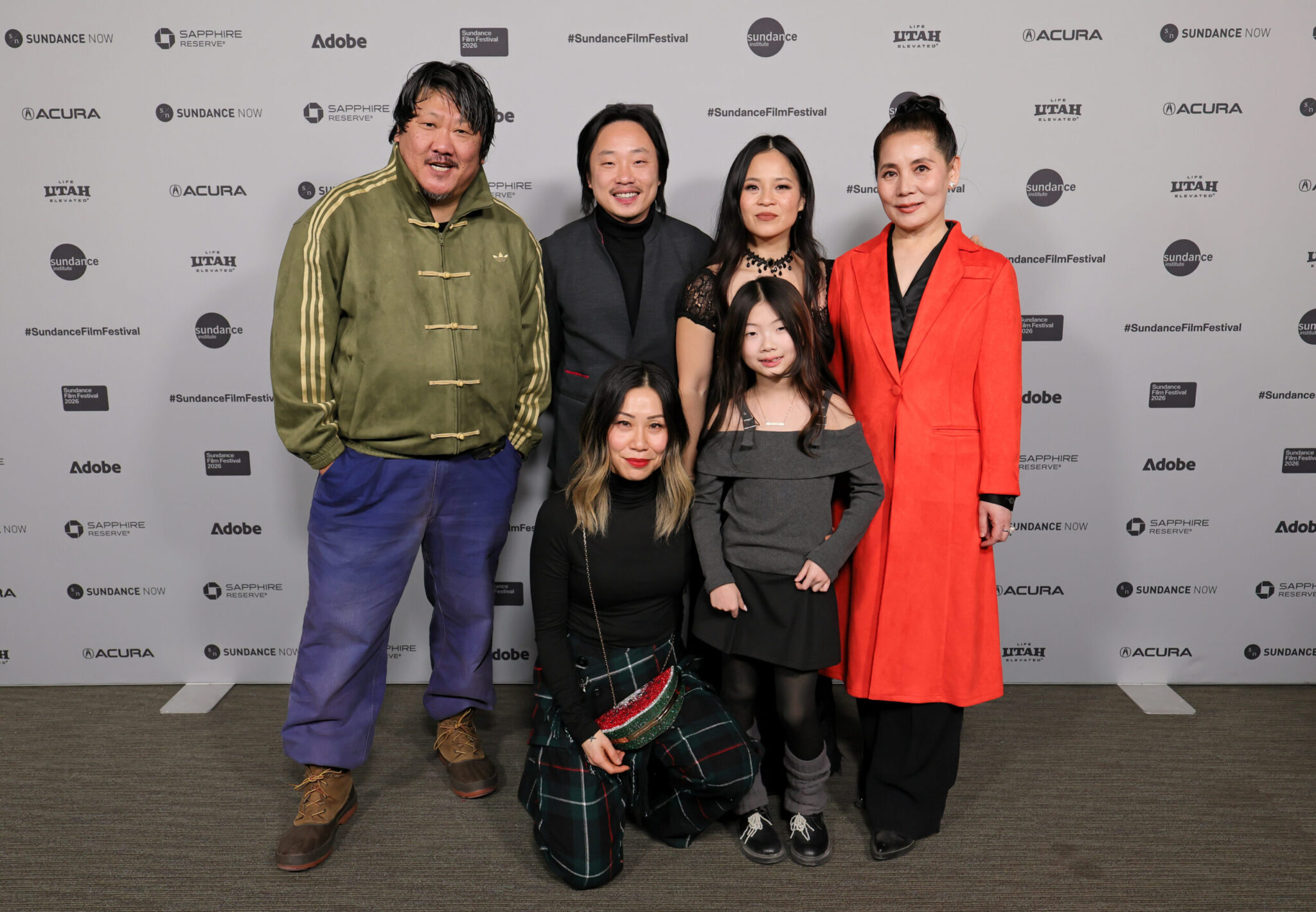
(L-R) Benedict Wong, Jimmy O. Yang, Vera Miao, Kelly Marie Tran, Aria Kim, and Fiona Fu attend the “Rock Springs” Premiere during the 2026 Sundance Film Festival at Library Center Theatre on January 25, 2026 in Park City, Utah. (Photo by Dia Dipasupil/Getty Images for Sundance Film Festival)
By Ramona Flume
“The beginning of this process came from a question that popped into my head fully formed,” director Vera Miao says at the premiere of her new film Rock Springs, screening in the Midnight section of this year’s Festival. “Could I explore diaspora through horror?”
Miao, the daughter of Chinese immigrants and a horror fan from “a very inappropriate young age,” wasn’t interested in the academic definition of diaspora. She wanted to explore the deep well of abstract emotions and felt experiences of scattered diasporic communities: loneliness, rootlessness, a fragmented grief over a loss of something you aren’t even sure belongs to you.
“I knew this was going to be a contemporary ghost story,” she says at the film’s post-premiere Q&A. “But I wanted to feature an untold history of the early Chinese communities in America.”
Her resulting supernatural thriller is grounded in the real-life massacre of Chinese coal miners that took place in rural Rock Springs, Wyoming, in 1885 — a little known, or perhaps purposefully forgotten, historical atrocity that shocked Miao when she stumbled upon it in her long, winding rabbit holes of research. The appalling event, which occurred three years after the Chinese Exclusion Act, sparked a protracted wave of anti-Chinese violence across the American West. “It was a history I couldn’t believe I didn’t know,” Miao says. “And I also couldn’t find that much information about.”
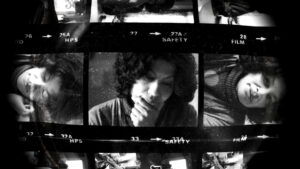
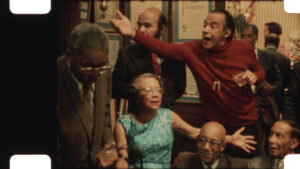
She realized there was no surviving primary source material from the first Chinese communities in this country. Their stories were only told by people who had observed them. So, the act of Miao’s research for this film was also an act of imagination. And her masterful script, inspired by these nameless victims of the past, captures the real and imagined horrors of personal loss and anti-immigrant atrocities, fluctuating between present and past, natural and otherworldly.
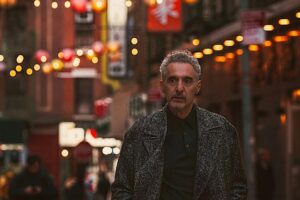
The nonlinear, multi-perspective storyline of Rock Springs spans three generations within one family (and centuries within one town’s history) to depict a layered tale that immediately unnerves audiences, and continues to compound as the story of a heavily haunted rural town unfolds. The film jumps back and forth in time but mainly focuses on a grief-stricken family in modern times — a mother, daughter, and mother-in-law that move into a new home after the tragic death of their husband/father/son in an eerie small town surrounded by dark forests — and darker historical secrets.
“We’d never get nature like this in the city,” Emily (Kelly Marie Tran) says to her young daughter, Gracie (Aria Kim), as they reluctantly unpack boxes in their new house. But we quickly see that this nature isn’t natural. Something terrifying is lurking in the woods: Is it a nameless ghost? A wandering ancestor? The wind? Something from below or before? Gracie is told by her grandmother (Fiona Fu) that their move coincides with the seventh lunar month, called the Hungry Ghost Month, when the boundary blurs between the real world and the ghost world. We’re not sure what is rustling in their backyard treeline, but we know the veil is thin.
“There are spirits all around us,” Gracie’s grandmother says. “We must always pay our respects to our ancestors. In turn, they watch over us.”
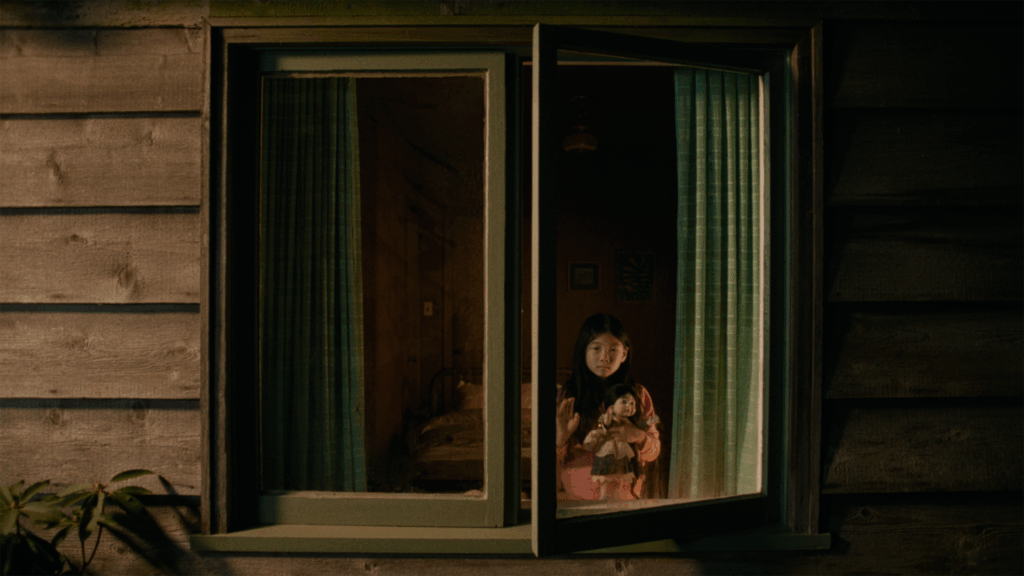
Working with DP Heyjin Jun, Miao uses collaborative focus and perspective in the framing and cinematography to pull us into the shifting psyches of the characters from the very first scenes, whether it’s mother, daughter, or monster. “Part of what I was trying to do with this film was to collapse the sense of linear time,” Miao says. “I wanted to really explode the idea of past, present, and future.” She wanted to use cinematography and sound design to disorient but also preoccupy audiences with questions of “what is body or spirit, heaven and earth, up or down.”
Without giving away too many spoilers of this mystical, but deeply authentic, film, there is real historical racial violence portrayed on screen that trumps the terror of any type of implied or imagined supernatural entity.
“Seeing the day-to-day struggle of current day immigrants and the scary similarities between today and [what happened in Rock Springs] … I just can’t believe we’re premiering it at this time in history,” actor Jimmy O. Yang, who plays one of the real, recorded victims of the 1885 massacre, says after the film’s premiere. “The fact that assimilation, or the lack thereof, the fear of being an immigrant, the inability to fit in, it’s all still so true today. … And to see the people today that are getting kidnapped, getting killed … if we don’t know about our own history, some bad parts could repeat themselves and I think there’s no better, more important time to tell this story.”
While Miao’s lens unearths deep historical trauma, her nuanced storyline also sows unassailable seeds of hope, depicting the resilience and strength of immigrants and diasporic communities — and reminding us that honoring our ancestors is a way to help aid our own journeys, and the generations that will continue to come after.
“You know your father always got excited when he saw a dandelion. He loved that they were so strong that they could grow anywhere in the world,” Emily tells her distraught daughter at the beginning of the film. “The seeds, they float, wherever the wind takes them, and wherever they land, they take root and bloom. … Just like we will.”