



By Cecilia Santini
Short Film Program 3 premiered on January 24 at The Yarrow Theatre. Over the course of an hour and a half, audiences were treated to six stories — five dramatic films and one documentary — that showcased a strange addiction, a young mother’s intense connection to her child, the complexity of shared trauma, the unique beauty of a Louisiana community, a tetchy and tender relationship between a woman and her employer, and a Lebanese woman’s complicated pursuit of a different life.
First up was the anxiety-inducing Stairs, a tense depiction of a recently engaged woman, Ally (Betsey Brown), who realizes falling down stairs turns her on. She’s not sure what’s going on or why, and neither is her oblivious fiance (Will Duncan). A jangly, edgy score accompanies Ally as she goes to increasingly brutal extremes.
Writer-director Riley Donigan spoke at the Q&A after the screening. “I fell in love with that visual, of someone willingly throwing themselves down a flight of stairs,” he says. “As it was developing and I was messing around with the idea, I thought it was a very good metaphor for addiction.”
While Ally’s motivations are open to interpretation, the feelings her actions provoke are visceral. “We’re not showcasing [the emotion] through dialogue, so it’s all through sound, through score, through Betsey’s performance,” Donigan says.
The main character of Without Kelly (Utan Kelly) is also in a state of distress. Esther (Medea Strid) is the young mother of a very young daughter, Kelly, and recently separated from Kelly’s father (Truls Carlberg). At the beginning of the short, Esther drops Kelly off for her first weeklong stay with the father, but she feels lost without her child, leading her to act in desperate ways.
The director and writer of the film, Lovisa Sirén, recently gave birth and couldn’t make it to the Festival, but producer Siri Hjorton Wagner is in attendance and explains Without Kelly’s origin. “[Sirén] had her first baby when she was 21, so it was inspired by her experience being super young and divorcing the father early on,” Hjorton Wagner says. “She really wanted to make a film to catch the physical and raw longing for your child.”
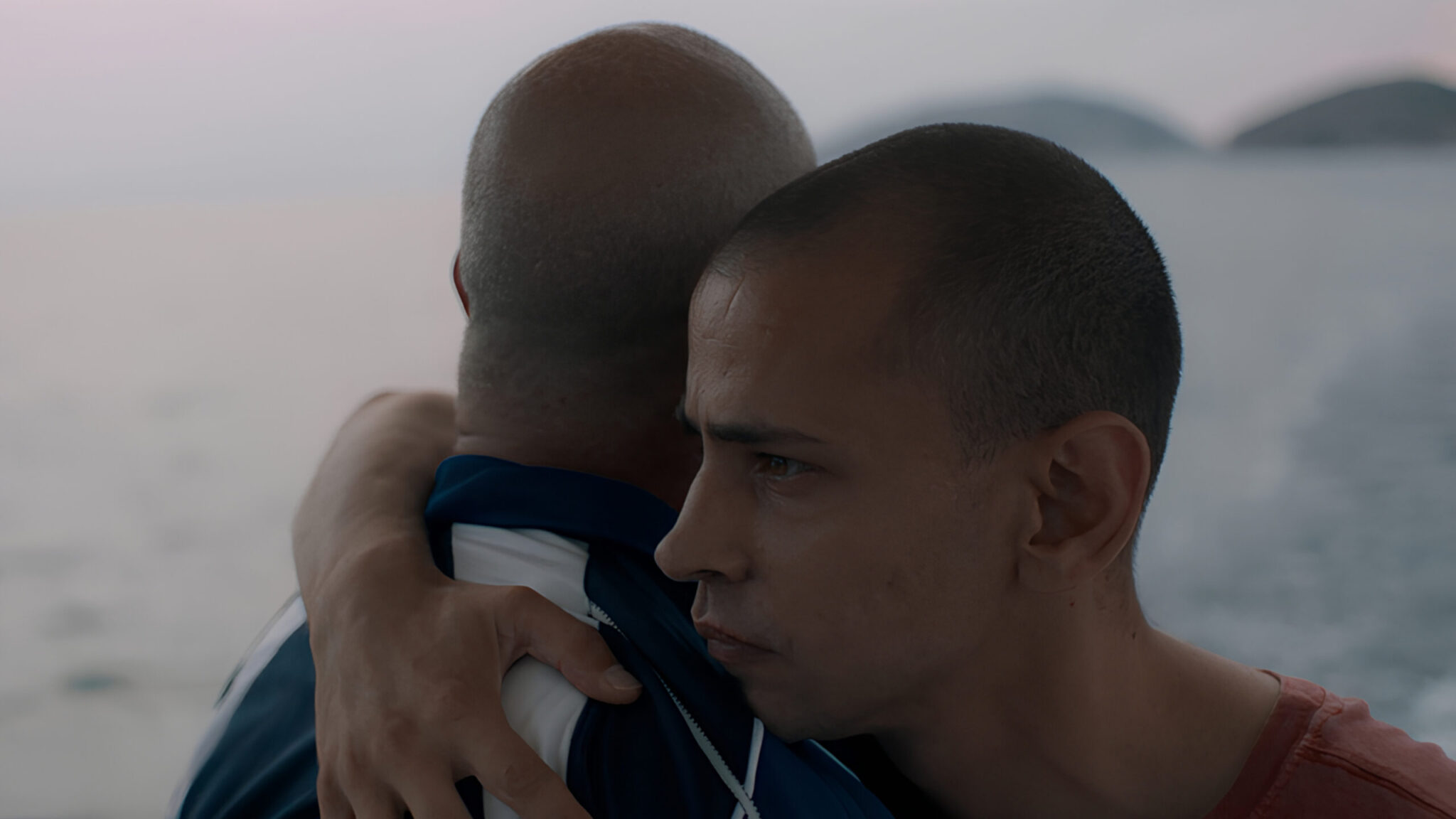
The emotional intensity continues in Palestinian writer-director Tawfeek Barhom’s I’m Glad You’re Dead Now, which follows two brothers in the immediate aftermath of their father’s death. Across 13 minutes, the audience uncovers the hidden layers of their past and the depth of their love for each other. Tawfeek also stars in the film as one of the brothers, Reda. Reda’s quiet and pained stoicism is contrasted with the confusion of his disabled brother, Abu Rushd (Ashraf Barhom), who gradually comes to understand what’s happened.
While this is Tawfeek’s first film as a director, he’s also an experienced actor (Cairo Conspiracy, The First Omen), and he turns in a quiet, powerful performance. His portrayal of Reda contains multitudes beneath a rigid exterior, while Ashraf’s performance as Abu Rushd is moving and tentative.
After three intense shorts depicting people in various stages of grief and desperation, the audience gets to take a breath with the documentary short Some Kind of Refuge. The film is a loving portrait of the Batture community on the banks of the Mississippi River outside New Orleans. The Batture has existed for over 200 years, but only a few homes in the community remain now due to seasonal flooding. Gentle piano and a buzz of insect noises accompany slow camera movements taking in the river, its banks, the houses, two residents — Jules Cote and Macon Fry — Cote’s parrot, and Fry’s goat. “The Batture has always attracted people that were seeking some kind of refuge, whether it was economic refuge, a place they could afford to live, or a spiritual place,” Fry says in the film.
“This was about preservation of one of the last outsider settlements left in America,” director Alexandra Kern says from the Yarrow stage. “We spent a year spending time with the residents here and getting to know all of them, and Macon and Jules really stood out as a beautiful mirror. It was really their wisdom and philosophy that we felt inspired by, and their way of life.”
We move from Louisiana to India in O’Sey Balamma, a sweet story about combative housemaid Balamma (Dhanalakshmi Mudi Bandla) and the woman she works for (Mani Amma K.L.K.). Though the women are separated by class, they know each other well, and the familial estrangements they’re both wrestling with come to light as they prepare for a harvest festival.
Writer-director Raman Nimmala described the very personal origin of the story during the Q&A. “This film started with my grandmother,” he says. “She was my best friend growing up. I’d spend every summer and every extended holiday with her and her housemaid, also named Balamma. They had just the most unique relationship. They knew each other’s daily routines so intimately, they had the funniest banter between each other. They’d confide in each other about people they were longing for in their lives. At the surface level, they’re a house owner and domestic help, but there’s more to it, and I wanted to explore that. I wanted to explore this feeling of loneliness being a way to find companionship.”
The final short of the program is Faux Bijoux, a film about a young Lebanese woman (Maria Shmouri) who tells her family that she’s auditioning for an acting role. In fact, she’s auditioning to be a surrogate for a European couple (Seidi Haarla and Jarkko Lahti) to earn money and a way out of Lebanon.
This story was also inspired by the filmmaker’s own life. Jessy Moussallem, director and co-writer of the film, says, “Thirteen years ago I had cancer and I lost my hair. And my mom obliged me to tell the rest of the family that I was acting. Because it’s about saving face.” She goes on to describe how social pressures and economic conditions contributed to the project: Writing on Faux Bijoux began during an economic crisis in Lebanon, a time when someone like Moussallem’s aunt could be making $3,000 one week and $75 the next. “The term ‘saving face’ was something I wanted to dig deeper into,” she says. “It was very touching for me, [how the main character] faked everything in her life. The only way she could win recognition and validation was to travel.”