




(L-R) David Shadrack Smith and Jake Fogelnest attend the “Public Access” Premiere during the 2026 Sundance Film Festival at The Ray Theatre on January 23, 2026 in Park City, Utah. (Photo by Arturo Holmes/Getty Images)
By Adam Silverstein
Long before algorithms and comment sections, there was public access television — chaotic, lawless, and radically open. Premiering at the Ray Theatre, Public Access excavates that moment with curiosity and affection, assembling a portrait of a channel that let anyone speak, perform, or self-destruct on camera, often all at once.
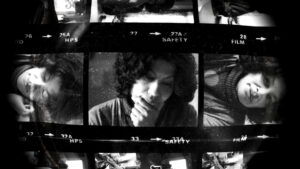
Directed by David Shadrack Smith in his feature debut, Public Access drops the audience straight into the analog wild west of New York City television, beginning in 1971, when cable cracked open a new possibility: media without permission. What unfolds is less a tidy history lesson than a sensory overload — glitchy footage, blown-out audio, naked bodies, political rants, drag performances, psychics, activists, and artists all competing for airtime. The channel wasn’t always good. Often it was barely watchable. But it mattered.
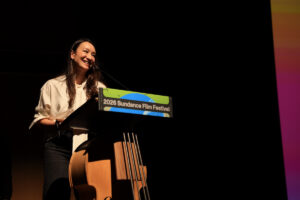
Smith introduces the film by recalling his first appearance at the Sundance Film Festival — when he was a film intern in 1992. It’s a full-circle moment that mirrors the film’s obsession with beginnings. “I wanted to remind everyone of what we used to call screens,” he says. The material for Public Access, he explains, was shot on early video cameras and “has never been seen on a screen like this before.” That sense of resurrection hangs over the entire screening.
The documentary frames public access as a kind of democratic media experiment — an early prototype for everything we now recognize in YouTube, livestreaming, and influencer culture. Except here, nothing is monetized, filtered, or optimized. It’s TV by activists and amateurs, by people shut out of mainstream media, by people who simply want to be seen. Feminism, queer identity, sexuality, and post-Stonewall visibility aren’t subplots; they’re central. The channel becomes a force of representation precisely because no one is curating it.
That freedom, of course, comes with consequences. Public Access doesn’t shy away from the mess. Pornography pushes the limits of censorship. Hostilities erupt with cable companies. At one point, the channel is pulled off the air after too much nudity — naked dancing being naked dancing, after all. But the chaos is the point. This is the First Amendment taken to its most uncomfortable extremes.
A key thread follows Jake Fogelnest and his DIY show Squirt TV, which spirals into a media circus before collapsing under its own weight. Fogelnest appears during the post-premiere Q&A, reflecting candidly on that period. “That was a pretty sad time in my life,” he says. He notes he’s been approached about documentaries before, but this one felt different — less interested in tropes, more invested in truth.
Smith explains that the archival process alone took two and a half years, involving thousands of hours of footage pulled from tapes, MP3s, hard drives, and private collections. At times, the hunt became obsessive. “Someone put a birth on TV?” he recalls thinking. “We gotta find that.” The film thrives on those moments — shocking, intimate, impossible by today’s standards.
Smith talks about sneaking into his grandmother’s den as a kid and stumbling onto public access for the first time. “Whoa — what was that?” he remembers thinking. “You never forget your first encounter with public access. My world expanded.” Later, he connects that feeling to watching his own children discover YouTube. “We’ve been here before,” he says.
Asked by an 18-year-old audience member whether he’d consider a follow-up about the origins of internet culture, Smith grins. “Great idea,” he says. “I would definitely take on the internet. Bring it on.”
By the end of the night, Public Access lands less as nostalgia than as a reminder. This was a different kind of American television — unruly, unsanctioned, deeply flawed — but just as viable. MTV before MTV. Reality TV before it was scripted. The audience leaves buzzing, maybe a little unsettled, and quietly aware that today’s digital chaos has very old roots.