



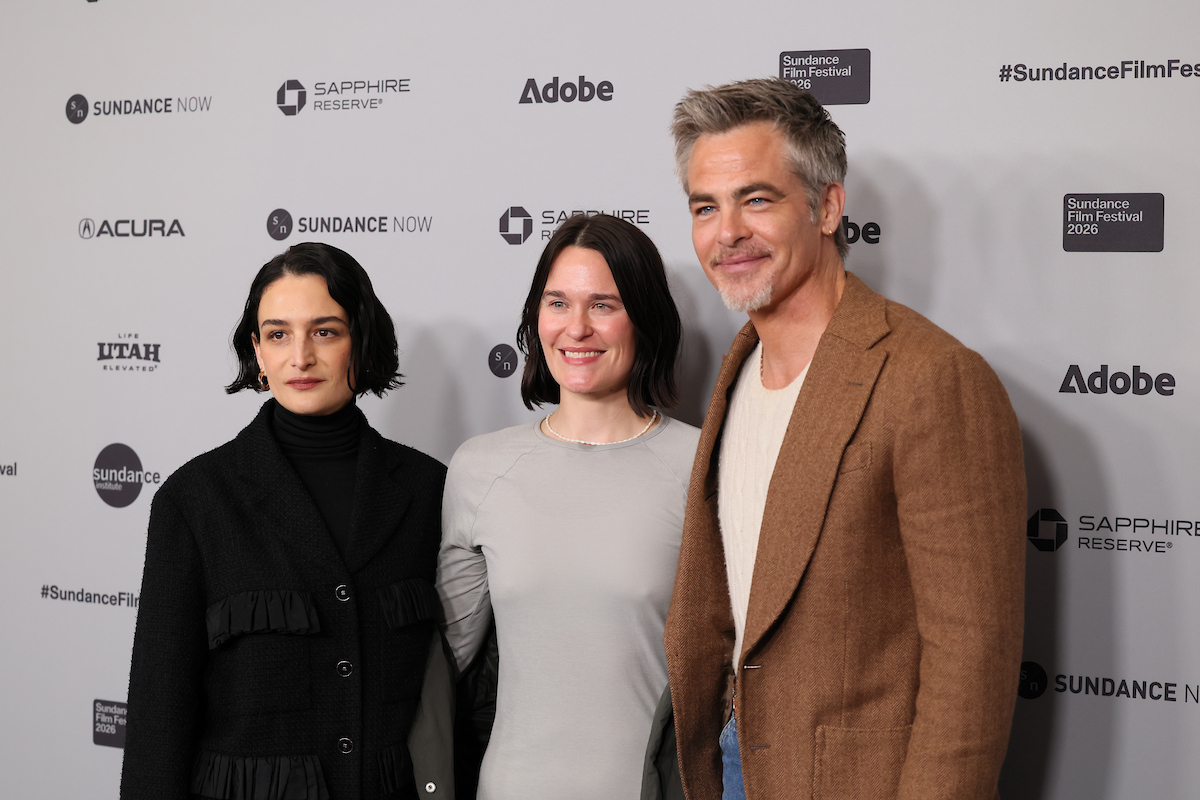
Jenny Slate, Rachel Lambert, and Chris Pine attend the premiere of “Carousel” at Eccles Theatre on January 22, 2026, in Park City, UT. (Photo by Jemal Countess/Sundance Institute)
By Jessica Herndon
When Chris Pine read Rachel Lambert’s script for Carousel, debuting in the U.S. Dramatic Competition at the 2026 Sundance Film Festival, he knew it was unique. “This one so stood out for its delicacy and its intimacy,” he says on stage at the Eccles Theatre following the premiere of the film, in which he stars opposite Jenny Slate. “What Rachel brought to life here, in the sort of obliquity in the silences and the beats and the soft colors and the pastels, was loneliness and human beings desperately trying to touch and connect and being scared off and going back again.”
The quiet confidence in Carousel is the kind that leans on restraint and emotional precision over spectacle. Writer-director Rachel Lambert’s intimate story weaves a nuanced portrait of adult life, where routine can feel safe and loneliness is par for the course for a single parent in a small town.
Set in Cleveland, the film centers on Noah, played with aching subtlety by Pine. Noah is a divorced doctor whose days are shaped by responsibility: running a family medical practice, parenting his deeply anxious daughter, and maintaining a life that works, even if it doesn’t fully satisfy. Parenthood is portrayed here with honesty rather than polish, especially in Noah’s relationship with his teenage daughter, depicted dynamically by Abby Ryder Fortson, who is navigating debate ambitions and emotional vulnerability. Lambert observes these dynamics with care as she explores devotion, sacrifice, and a bit of denial.
The routine Noah relies on shifts when Rebecca, his high school love, unexpectedly returns to town. Slate brings warm complexity to Rebecca, a character shaped by ambition and shared heartbreak. Their reunion is not framed as a grand romantic gesture but as two people confronting who they were, who they’ve become, and whether reopening old wounds is worth another round of heartbreak. In her film, Lambert examines how attraction can persist even when certainty does not.
“It’s sort of like a ghost story, like when you split from somebody, and it’s not resolved, and the rift has happened,” says Slate during the Q&A after the film’s debut. “I think, with our characters, it’s happened because of people who are really not good at communication and are somehow really obedient to terrible fears, brutal fears, that there’s still an energy left, and it’s like a ghost, and that’s terrible. It’s terrible to live with the ghost, but the other side of it is that if you believe in ghosts, that also means magic exists in something more than you can see in front of you, and that offers a large amount of hope. And I saw the script [as] just incredibly hopeful, and I was so drawn to that.”
While writing Carousel, Lambert says she became especially intrigued with Rebecca — particularly in the moments following her brief reunion with ex Noah. She says she remembers thinking, “What was she about?” and “Why can’t we just come right back around?” Revisiting old memories and flirting with the thought of rekindling an old flame “had a lot to do with the carousel and how we can discover people and information in new ways,” adds Lambert, who shot her film in her hometown in Ohio. Neither Pine nor Slate had spent much time in the Midwest, and though the environment was foreign to them, they both came to love it. “Like you’re just sort of a sponge for everything — what does the color look like on the lake, and what does it smell like?” says Pine of how he acclimated. “And look at these birds and look at the sidewalks. There are kids out playing on sidewalks. This is so far out.” The town reminded him of a Norman Rockwell painting, he added. “As a romantic, it was very easy for me to slip into that.”
As with Lambert’s previous work, including Sometimes I Think About Dying, which premiered at the 2023 Festival, Carousel isn’t about tidy resolutions. It’s centered in emotional truth. The performances carry a beautiful vulnerability, and the film captures the ache of feeling alone. Through Lambert’s lens, love and loss go hand in hand, change is unavoidable, and growing older comes with some serious reality checks.