




Why does this story need to be told now?
I feel like everyone is on edge right now, and it’s clear the world is in a dark, divided place. More and more, that division is being fed to us. But I believe this film can remind us that we’re all connected. That we share far more in common than what separates us. The power of art, dance, and cinema can bring people together, and that feels especially important in this moment.
What was the biggest inspiration behind Ha-chan, Shake Your Booty!?
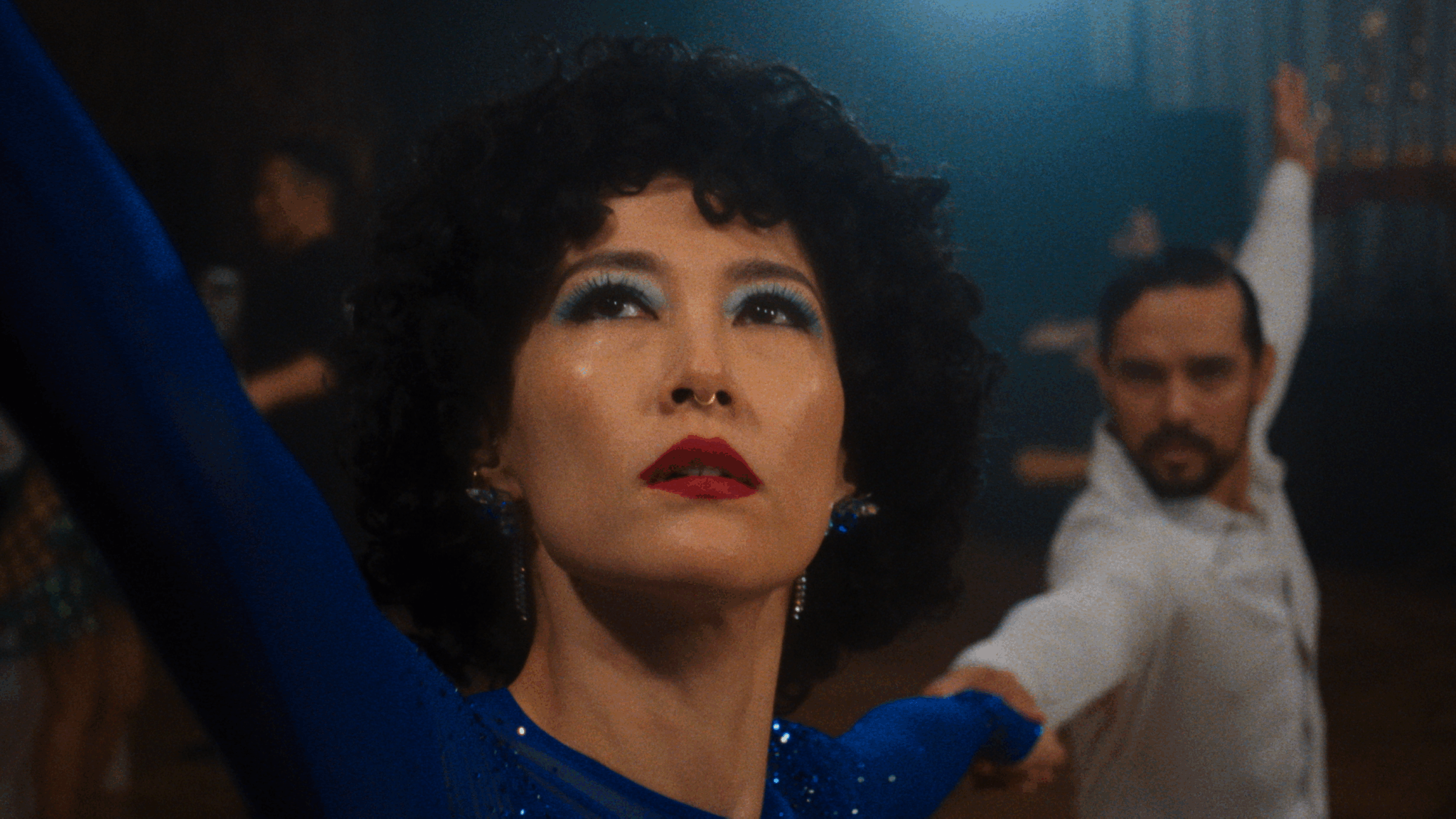
My mother. This film is born from her spirit. It is a dedication to her curious personality, devotion to dance, and love of cinema. I have vivid childhood memories of watching my mother prepare for ballroom dance competitions. She would wear extravagant gowns, paint her face with vibrant colors, and transform into the artist I’ve admired my whole life. As a single mother raising three boys on her own, she faced a lot of turbulence, but no matter how tough times got, my mother always found time to take my brothers and me to the local arthouse cinema. Her three favorite films are Claude Lelouch’s A Man and a Woman, Masayuki Suo’s Shall We Dance?, and Emile Ardolino’s iconic Dirty Dancing. All three have had a huge influence on this film and are a part of its DNA. Dance helped my mother navigate years of hardship, and she continues to compete today at the age of 81.
Films are lasting artistic legacies. What do you want yours to say?
I want our film to say that no matter where we come from, we are all connected. We all experience love, death, and grief, and each of us processes these things in our own beautiful and messy way.
Tell us an anecdote about casting or working with your actors.
I do a lot of TV directing to help pay the bills, and over the years, I’ve been lucky to build relationships with the actors I work with. More than 70% of our cast are people I’ve collaborated with before — artists I trust, admire, and genuinely care about. I’m a creature of comfort, and bringing familiar faces into this film made the process feel like creating something meaningful with family.
What was your favorite part of making Ha-chan, Shake Your Booty!?
My favorite part of making the film was shooting in Japan, especially in Tokyo, where my mother is from. The people, the culture, the food… it all feels magical to me. I only speak very little Japanese, but every time I’m there, I feel deeply connected, like a part of me belongs to that place. Getting to make a film in a city that means so much to my family was a dream come true.
What was a big challenge you faced while making Ha-chan, Shake Your Booty!?
The biggest challenge was preparing and shooting the dance sequences. We had about four weeks of rehearsals, and none of our principal cast had any ballroom dance experience. It became a true crash course — full of blood, sweat, and tears. Thankfully, with the help of our incredible choreographers, Chikako Takemoto and Miri Murano, we got everyone as ready as possible before cameras rolled. And with our amazing camera operator, Scott Ishida, we were able to bring those sequences to life. It was crazy to shoot, but so much fun.
Tell us why and how you got into filmmaking.
I was a terrible student in high school and would do anything to get out of writing papers. In my freshman English class, the teacher let me make a film instead of turning in an essay, so I grabbed a VHS camera and never looked back. I’d always been drawn to film, and cinema was a big part of my parents’ lives, too. That little “cheat” to avoid homework ended up becoming the thing I love most.
Why is filmmaking important to you? Why is it important to the world?
Filmmaking is important to me because it’s my livelihood. It’s also how I make sense of the world. I don’t really exist as a person unless I’m dreaming up and fighting to make the next film. It’s the thing that keeps me moving forward.
And filmmaking is important to the world because it gives us new perspectives, teaches us about the human experience, and carries the tradition of storytelling from generation to generation. It helps us understand one another, and sometimes even ourselves.
What is something that all filmmakers should keep in mind in order to become better cinematic storytellers?
This sounds obvious, but it took me a long time to truly understand: nothing is more important than the life in front of the camera. The technical side matters, of course, but if you’re not capturing truth and real human behavior, you don’t have a film. Don’t let the technical aspects overpower the performances.
Who are your creative heroes?
My mother, Spike Lee, Bong Joon Ho, Agnès Varda, Toshiro Mifune, and Muhammad Ali.
What was the last thing you saw that you wish you made?
Memories of Murder. It’s the one film I revisit a few times every year. The filmmaking is masterful: the blocking, the tone, the humor… it’s all next level. I wish I made it every time I watch it, but I know nobody could ever recreate the magic of that movie.
One thing people don’t know about me is _____.
I used to be a B-Boy. My nickname was “Spinister” because my windmills were very sinister.
Which of your personal characteristics contributes most to your success as a storyteller?
Persistence. No matter how hard it gets, you just have to keep making films. I try to never stop pushing forward.
Tell us about your history with Sundance Institute. When was the first time you engaged with us? Why did you want your film to premiere with us?
I’ve been sending short films, scripts, and features to Sundance for almost 20 years. It’s every indie filmmaker’s dream to premiere there — so many legends have come through the Festival and launched incredible careers. It took a while to get in, but I’m truly honored and grateful to be part of it now, especially for the final Festival in Park City. Having this special film inspired by my mother premiere at Sundance means the world to me and all of my collaborators.
What’s your favorite film that has come from the Sundance Institute or Festival?
There are so many that it’s impossible to pick just one. But in this moment, I’ll say Whiplash. It’s a masterpiece — and it has one of the greatest endings to a film ever made.